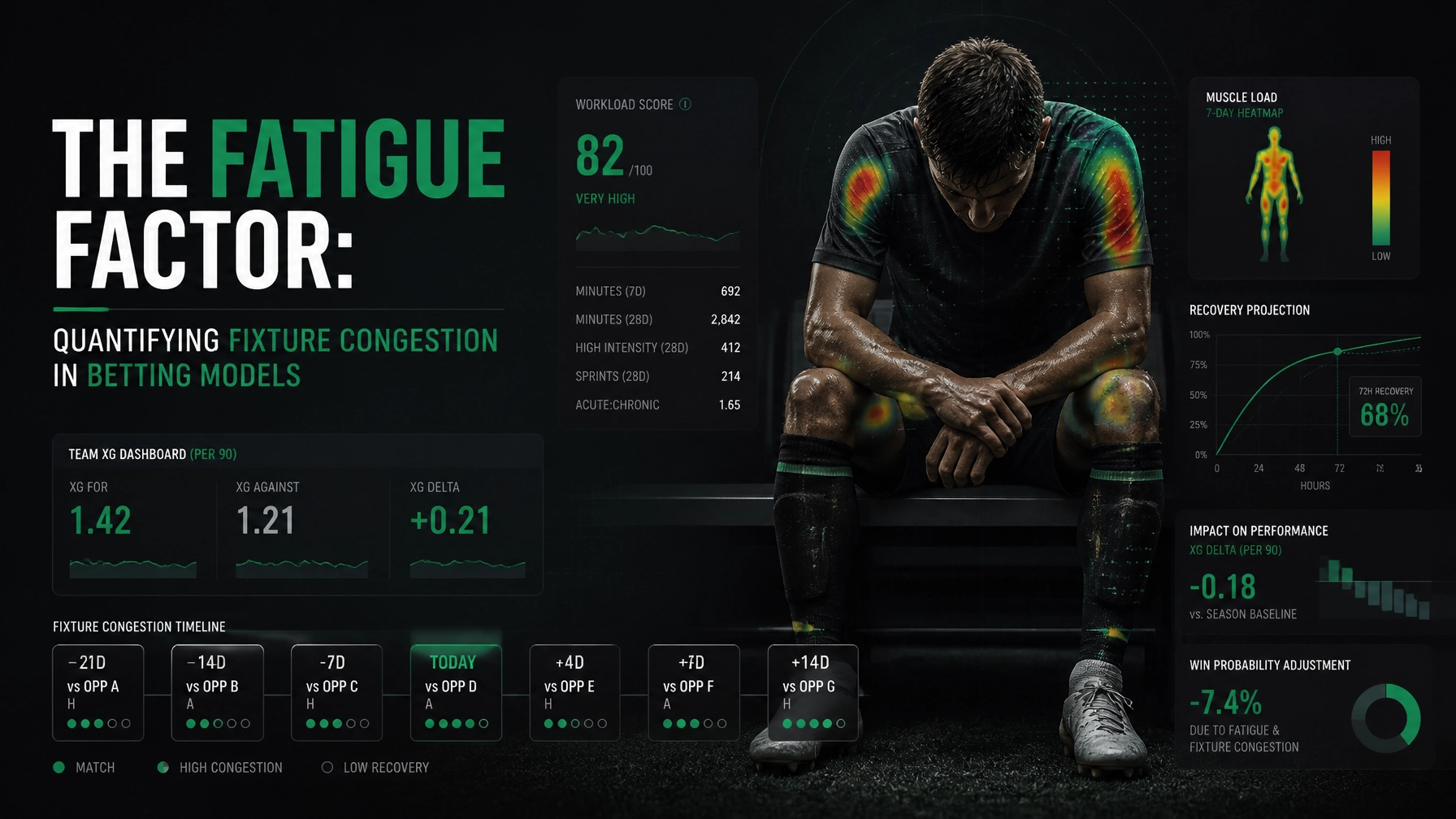
In the modern game, the schedule doesn’t just test a player’s skill; it tests their biology. Fatigue; we’ve all seen it: a high-pressing side that looked invincible on Saturday suddenly looks like they’re running through treacle on Tuesday night. To the casual punter, it’s just a “bad day at the office.” To us, it’s a quantifiable data point.
At Gecko Edge, we don’t believe in “bad days.” We believe in signals. One of the most potent signals in our model is the Fatigue Factor. While the market often prices in squad rotation, it rarely accounts for the subtle, terminal decline in defensive synchronization that happens when a team is pushed past the 72-hour threshold.
If you want to move from guesswork to strategy, you need to understand how tired legs translate into high xG.
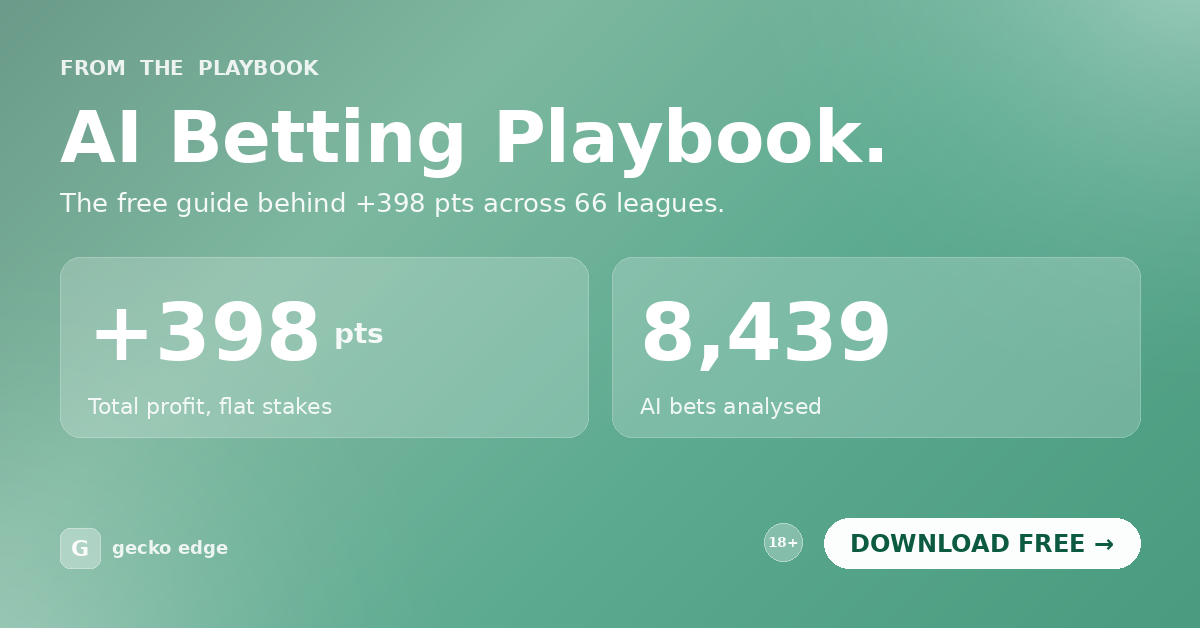
Gecko Edge has tracked 8,439 AI-generated bets and recorded +398pts of profit across 66 competitions. See how the model works →
The Physics of the Fade
Most bettors look at “total distance covered” as a proxy for fitness. It’s a trap. Research into fixture congestion shows that total distance often remains unchanged. Professional athletes are experts at pacing themselves. What does change: and what Gecko Edge tracks with surgical precision: is the intensity profile.
When players are fatigued, they stop making high-intensity sprints. They stop making those 10-yard recovery runs that shut down a counter-attack. Instead of a tackle, they provide a “jockey.” Instead of an interception, they offer a “shadow.”
Our data shows a marked drop in defensive technical actions: specifically tackles and interceptions: once a squad hits its third game in seven days. This isn’t just about fitness; it’s about the central nervous system. When the brain is tired, the feet are a millisecond slower. In the Premier League or the Championship, a millisecond is the difference between a blocked cross and a goal-scoring opportunity.

The Breaking Point: Defensive xG and Tactical Cohesion
The real “edge” lies in understanding how fatigue affects the defensive block. Football is a game of spacing. A compact unit relies on the distance between the right-back and the right-winger remaining constant.
As fatigue sets in, these gaps widen. A tired winger doesn’t track back as far, leaving the full-back exposed. The defensive midfielder is forced to cover more ground to plug the hole, leaving the “D” open for late-arriving runners.
Gecko Edge monitors these tactical fractures. We’ve found that defensive Expected Goals (xGA) doesn’t just rise linearly; it spikes in the final 30 minutes of congested fixtures.
- The 72-Hour Rule: Teams playing with less than three days’ rest show a 12% increase in high-quality chances conceded in the second half.
- The Depth Trap: Teams with low rotation: those who rely on a core “starting XI”: suffer a compounding decay in defensive efficiency that traditional Elo ratings often miss.
When you use the Gecko Edge platform, our AI-powered analysis automatically weights these factors. We aren’t just looking at who is playing; we’re looking at how much they’ve left on the pitch in the last 14 days.
Spotting the “Leggy” Underdog
This is where the value sits. The market often overvalues a “resilient” underdog based on their recent clean sheets. But if that underdog has been playing a high-intensity, low-possession style for three games straight, that resilience is a house of cards.
We look for “transition-heavy” opponents: teams that attack quickly into wide spaces. If they are facing a tired defensive unit, the mismatch isn’t just tactical; it’s physiological.
How to Use the Fatigue Factor in Your Strategy
Strategy isn’t about finding a winner; it’s about finding a price that doesn’t reflect reality. Here is how we approach fixture congestion at Gecko Edge:
- Check the Minutes: Don’t just look at the last result. Look at the rolling minutes for the back four and the holding midfielder. If four of the five have played 270+ minutes in the last 8 days, they are a candidate for a defensive blowout.
- Target the Second Half: Use our in-play intelligence to monitor the live xG trend. If a tired team is holding a 1-0 lead but their “defensive actions per minute” is dropping, the “Late Goal” market becomes high-EV.
- The European Hangover: Midweek travel isn’t just about the flight; it’s about the loss of tactical preparation time. Coaches of congested teams spend their time on recovery, not on the training pitch fixing defensive shape. This leads to “unforced” tactical errors.

Smarter Betting Starts Here
Betting on gut feeling is a hobby. Betting on data is a strategy.
The “Fatigue Factor” is just one of the hundreds of variables the Gecko Edge AI processes every second. While other bettors are chasing trends, we are quantifying the physical reality of the sport.
Whether you’re looking at the Premier League or deep-diving into lower-league value, our platform gives you the context-aware insights needed to stay ahead of the curve. Don’t just watch the game: understand the mechanics behind it.
Ready to stop guessing? Explore our Knowledge Base or dive into our AI Playbook to see how we turn data into an edge.
Analyse the load. Quantify the fatigue. Act with confidence.
{“@type”:”BlogPosting”,”image”:”https://images.typecast.ai/gecko-edge/fatigue-hero-visual.jpg”,”author”:{“name”:”Gecko Edge”,”@type”:”Organization”},”@context”:”https://schema.org”,”headline”:”The Fatigue Factor: Quantifying Fixture Congestion in Betting Models”,”publisher”:{“logo”:{“url”:”https://geckoedge.ai/logo.png”,”@type”:”ImageObject”},”name”:”Gecko Edge”,”@type”:”Organization”},”articleBody”:”In the modern game, the schedule doesn’t just test a player’s skill; it tests their biology… [Full text summary of the article’s core points including the 72-hour rule and defensive synchronization gaps.]”,”description”:”Learn how fixture congestion impacts defensive xG and how Gecko Edge uses AI to quantify fatigue in football betting models.”,”datePublished”:”2026-06-05″}