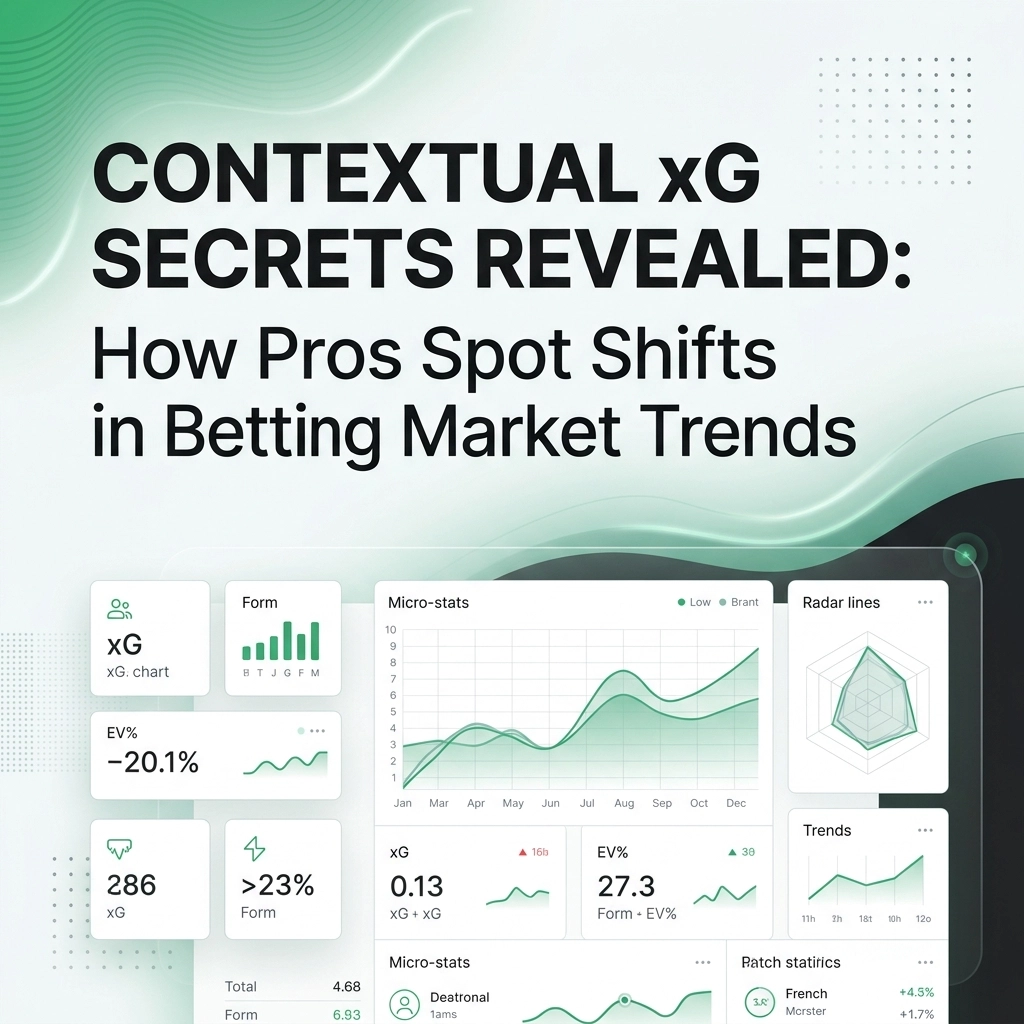
Contextual xG; most bettors think they understand Expected Goals (xG). They see a number on a post-match graphic: perhaps 2.4 vs 0.8: and assume the team with the higher number deserved the win. This is the surface level. It is the information the bookmakers want you to rely on because it is incomplete.
In the professional world, raw xG is a starting point, not the destination. To find a true edge in the modern market, you have to look at contextual xG. It is the difference between knowing what happened and understanding why it happened, and more importantly, what will happen next.
At Gecko Edge, we specialise in stripping away the noise. We use AI to dive into the nuances that the broader market often ignores. If you want to move from a casual observer to a sharp trader, you need to understand how the pros spot shifts in market trends before they become obvious to everyone else.
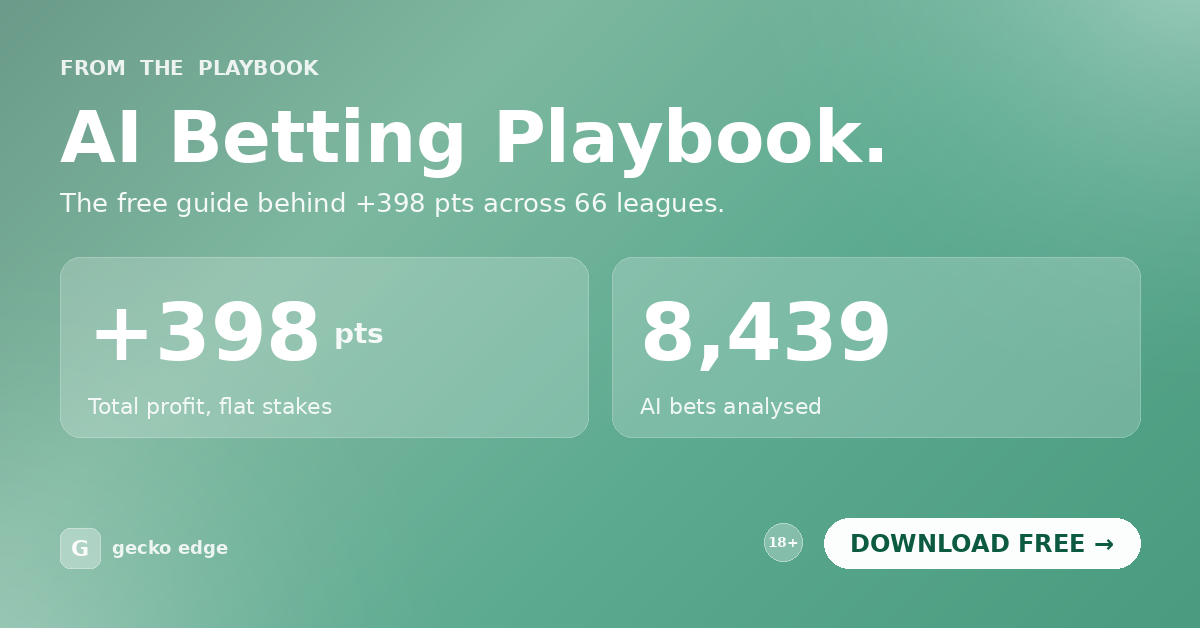
Gecko Edge has tracked 8,439 AI-generated bets and recorded +398pts of profit across 66 competitions. See how the model works →
The Flaw in Raw Data
Raw xG measures the quality of chances. It tells us that a shot from six yards out has a higher probability of scoring than a long-range effort. This is useful, but it lacks a pulse. It doesn’t account for the “Game State”: the current scoreline and time remaining: which is the single most important variable in football betting.
Imagine a team that is 2-0 up by the 30th minute. Naturally, they sit back. They defend deep and allow the opposition to have speculative shots. The trailing team might rack up a high xG simply through volume, while the winning team stops attacking. A standard xG model might suggest the trailing team was “unlucky,” but a professional looks at the context. The winning team didn’t need more goals; they needed to manage the game.
When the market sees a high xG for a losing team, the odds for their next match often shorten. The public thinks, “They’re due a win.” The sharp bettor, powered by Gecko Edge insights, knows that the high xG was a byproduct of the scoreline, not necessarily a reflection of superior play.

Spotting the Market Lag
The betting market is like a massive, slow-moving ship. It takes a lot of information to change its course. Bookmakers adjust their lines based on results and high-level statistics, but there is often a lag between a team’s tactical shift and the market’s reaction.
Professional traders look for “divergence.” This is when a team’s underlying performance metrics: specifically their contextual xG: start to move in a different direction than their actual results.
For example, a mid-table team might have lost three games in a row. To the average bettor, they are in a “slump.” However, if you look at their contextual xG, you might find they were dominant until a late red card in the first game, played the league leaders in the second, and were denied three “big chances” by world-class goalkeeping in the third.
The market will price them as underdogs for their fourth game. But the data shows they are actually playing at a top-six level. This is where the value lies. By the time they win a game 3-0 and the public catches on, the value is gone. You have to act while the data is quiet.
Using AI to Refine the Search
This is where technology changes the game. Manually tracking contextual variables for every team in every league is impossible for a human. It’s why we built Gecko Edge. Our AI models process thousands of data points: from player positioning to passing sequences: to identify which teams are genuinely improving and which are just benefiting from luck.
We look at “Dangerous Attacks” and “Field Tilt” alongside xG. If a team has a high xG but low Field Tilt (meaning they aren’t spending much time in the opposition’s final third), it suggests their xG is inflated by a few high-value outliers rather than sustained pressure.

The Secret of In-Play xG Shifts
The most profitable opportunities often happen live. During a match, the market reacts instantly to a goal. The odds swing violently. But the market is often slower to react to a shift in momentum that hasn’t resulted in a goal yet.
Professional traders monitor live contextual xG. If a team is trailing 1-0 but has generated 1.5 xG in the last fifteen minutes, the market might still be pricing them as significant underdogs to draw or win. The AI at Gecko Edge identifies these pressure cookers. When the data shows a team is knocking on the door, the “Next Goal” or “Draw No Bet” markets become highly lucrative.
This is the essence of “Smarter Betting Starts Here.” It’s about being ahead of the curve. You can learn more about our approach to these calculations in our guide on 7 mistakes you’re making with EV betting calculations.
Layering Granular Metrics
To truly find an edge, you have to go deeper than the team level. Pros layer player-level data on top of xG.
If a team’s primary creator is out injured, their historic xG is suddenly less relevant. However, if the replacement player has a high “Expected Assists” (xA) rate in limited minutes, the market might overstate the impact of the injury.
Contextual xG also considers the defensive side. A team might concede very few goals but allow a lot of high-quality chances. Eventually, their luck will run out. We call this “Defensive Regression.” Spotting a team that is about to start conceding more goals is a professional’s favourite way to play the “Over 2.5 Goals” market before the odds drop.

Tactical Awareness: The Invisible Variable
Football isn’t played on a spreadsheet. Managers make tactical tweaks that can invalidate months of data. A shift from a back four to a back five, or a move to a high-pressing system, changes the contextual value of every shot taken.
At Gecko Edge, our knowledge base helps bettors understand how these tactical shifts impact the numbers. When a pro sees a manager change or a system shift, they don’t look at the result; they look at how the xG profile of the team changes in the first 20 minutes of the match. If the “quality per shot” increases, the team has found a tactical loophole. The market usually takes three or four games to adjust its “power rankings” for that team. Those three games are your window of opportunity.
Ask, Analyse, Act
The professional mindset is a cycle.
- Ask: Is this price a true reflection of the team’s current ability?
- Analyse: Look at the contextual xG. Was their recent performance dictated by game state? Are they over-performing their underlying metrics?
- Act: If there is a discrepancy of more than 5% between your calculated probability and the bookmaker’s odds, you have a value bet.
It requires discipline. You will see teams with great xG lose. That is football. But over a hundred bets, the team with the superior contextual xG will make you a profit. The market eventually corrects itself; your job is to be there before it does.

Moving Forward with Gecko Edge
The world of betting is moving fast. The “easy” edges of ten years ago are gone. The bookmakers are using sophisticated models, and to compete, you need tools that are just as sharp.
We believe in transparency and education. Whether you are looking at our betting glossary to sharpen your terminology or using our AI to find your next value pick, the goal is the same: clarity.
Don’t bet on what you hope will happen. Bet on what the data tells you is inevitable. Context is everything.
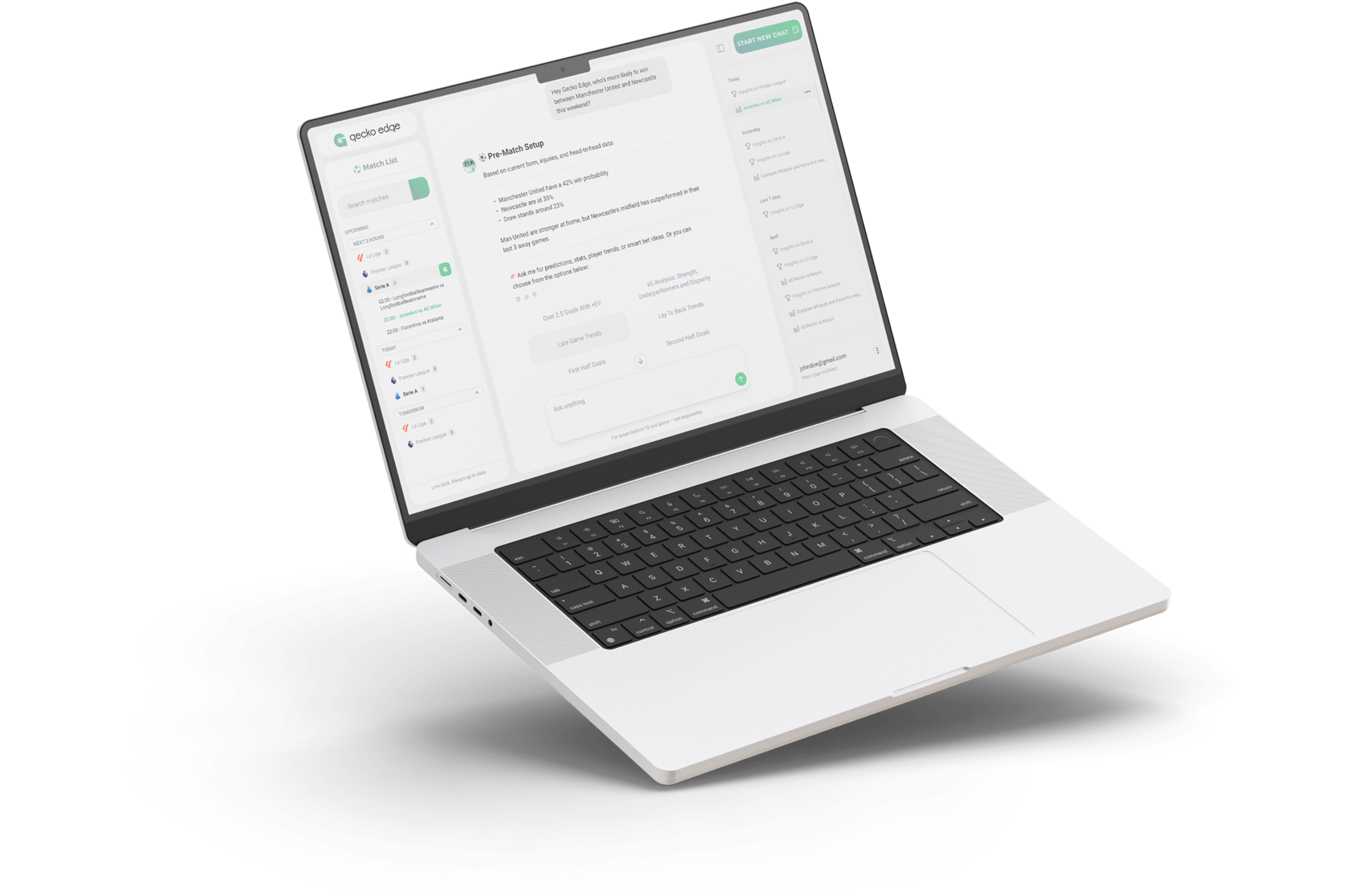
If you’re ready to see how AI can transform your approach to the market, explore how Gecko Edge is built for bettors and powered by AI.
The edge is there. You just have to know where to look.
1 comment