

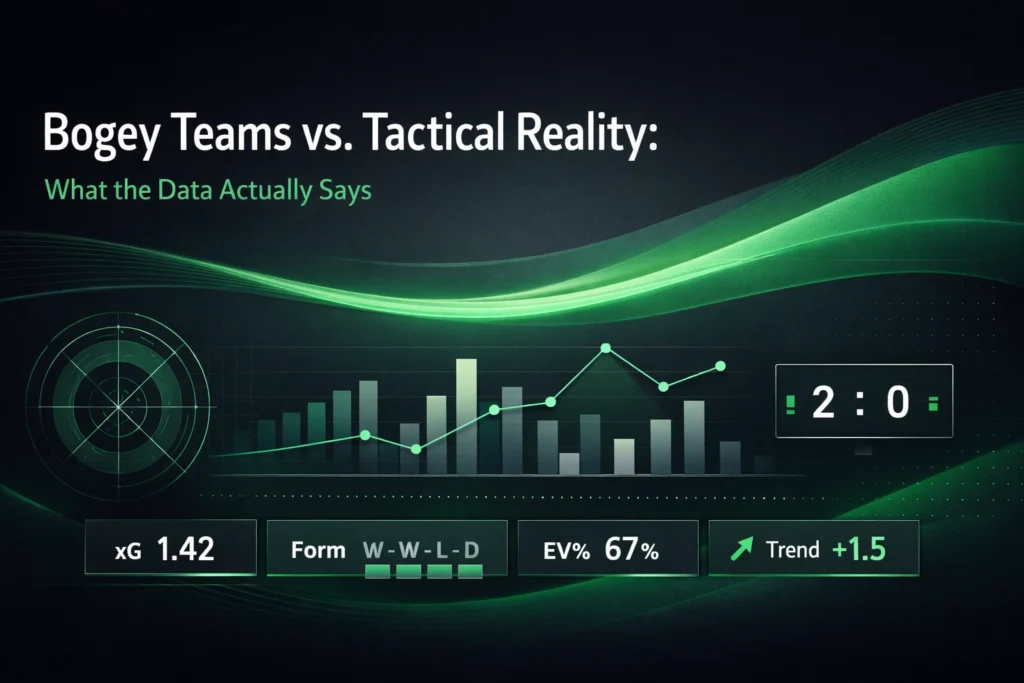
Bogey Teams; every seasoned bettor has heard the phrase. “They just can’t win at this stadium,” or “This side is their bogey team.” It’s a narrative that commentators love. It adds drama to a Tuesday night fixture in the rain. It suggests there is something mystical at play, a psychological hex that transcends managers, players and decades.
But if you are looking to refine your football betting strategy, you have to ask yourself: is there any actual substance to it?
At Gecko Edge, we prefer to look beneath the surface of the stories. We don’t believe in ghosts, and we certainly don’t believe in “hoodoos.” We believe in data, patterns, and tactical reality. When you strip away the emotion, what looks like a “bogey team” is usually just a recurring tactical mismatch that hasn’t been properly solved yet.
The Comfort of the Bogey Team Narrative
Human beings are wired to find patterns. It’s a survival mechanism. In the world of football, it’s much easier to say “Team A always loses to Team B” than it is to analyse the specific defensive transitions and pressing triggers that actually caused the loss.
The “bogey team” concept is a shortcut. It’s comfortable. It gives us a reason for an unexpected result without requiring a deep dive into the 90 minutes of play. For the casual fan, this is fine. For someone using best AI football predictions, it’s a trap.
When we talk about a bogey team, we are usually looking at a historical trend. We see that a certain club hasn’t won at a specific ground since 2012. On paper, that looks significant. But think about what has changed since 2012. The manager has changed five times. The entire squad has turned over twice. The ownership might be different. Even the grass on the pitch has likely been replaced multiple times.
What is the common thread? Usually, it’s just the badge on the shirt. And badges don’t play football.
Why History is a Liar
In data science, we talk about “signal” versus “noise.” Historical head-to-head records from five years ago are almost entirely noise. They tell you nothing about how the game will unfold this Saturday.
A team’s performance is a snapshot of their current tactical setup, fitness levels, and psychological state. When a bettor looks at a result from three seasons ago to justify a wager today, they are essentially ignoring all the variables that actually determine the outcome.
At Gecko Edge, we focus on the now. Our models prioritise recent performance metrics over ancient history. We look at expected goals (xG), ball progression, and defensive intensity in the current season. This is where the real value lies.
If a “bogey” relationship persists, it’s rarely because of a curse. It’s usually because of a clash in styles. If a possession-heavy team consistently struggles against a specific mid-table side, it’s likely because that mid-table side employs a very effective low block and rapid counter-attack that exploits the possession team’s high defensive line. That’s not a bogey; that’s a tactical vulnerability.
Styles Make Fights: The Tactical Truth
In boxing, they say styles make fights. The same is true in football. Certain tactical setups are naturally “kryptonite” to others.
Let’s look at why these patterns emerge:
- Pressing Triggers vs. Direct Play: A team that relies on winning the ball back high up the pitch will struggle against an opponent that simply bypasses the midfield with long balls. It doesn’t matter how well you press if the ball is already over your head.
- Width vs. Compactness: A team that likes to attack through the centre will find it incredibly frustrating to play against a side that packs the middle and forces them out wide, where they lack quality crossers.
- Set Piece Dominance: Sometimes a smaller team consistently beats a giant simply because they are significantly taller and more organised on corners. If the giant doesn’t fix their aerial weakness, the “bogey” continues.
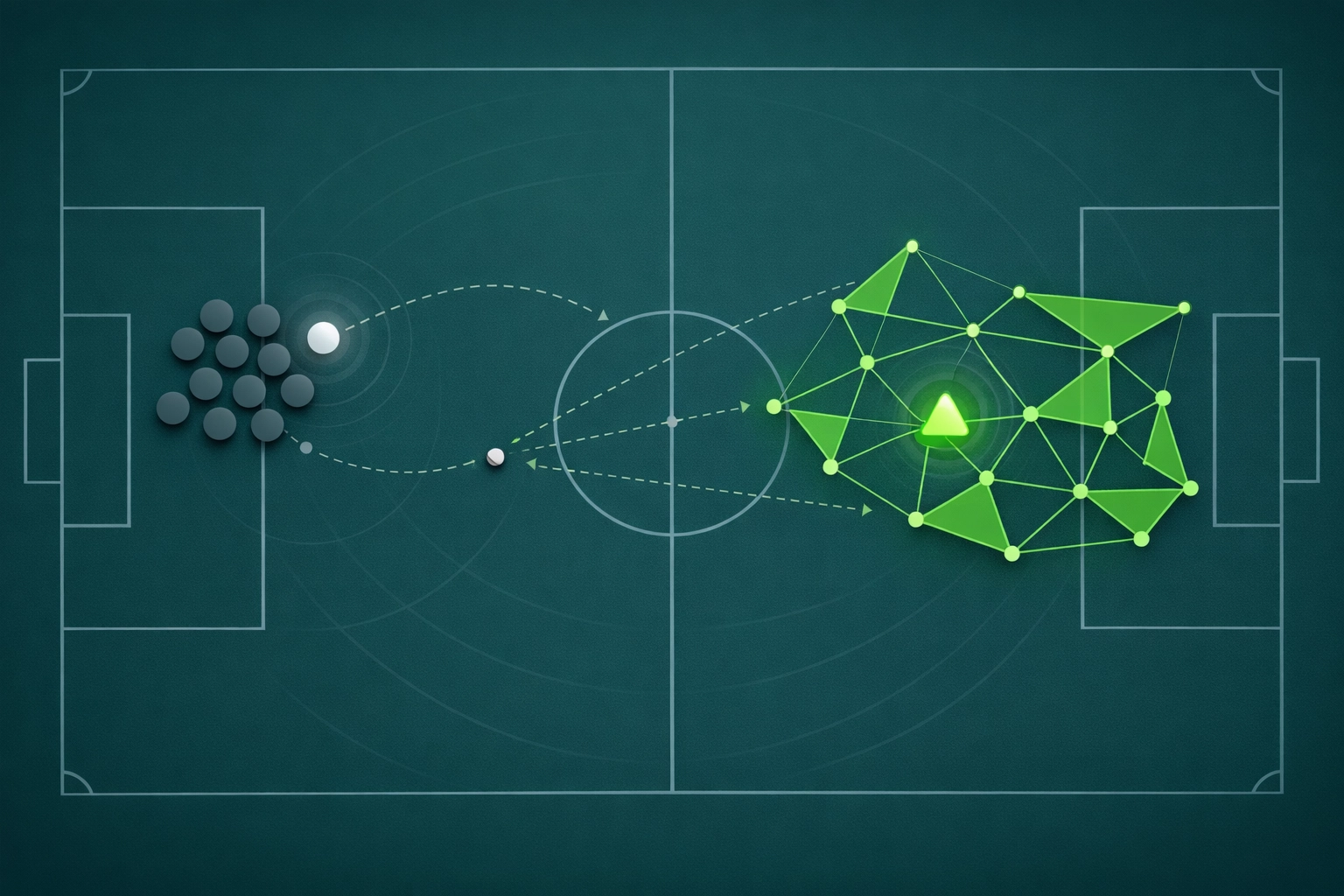
When you start viewing matches through this lens, the “bogey” disappears and is replaced by logic. You begin to see the game as a series of problems and solutions. This is how Gecko Edge approaches the market. We don’t care about the name of the stadium; we care about the spatial dynamics of the two teams on the pitch.
How **Gecko Edge** Filters the Noise
Our AI doesn’t have a memory for “memorable matches.” It doesn’t remember the last-minute winner from five years ago that the fans still sing about. It only knows what the data shows.
By using AI-driven analysis, we can strip away the emotional bias that clouds human judgment. We look at thousands of data points: from player positioning to passing accuracy under pressure: to build a probability model for the match.
When a human bettor sees a “bogey team” fixture, they might hesitate or bet against the stronger side out of habit. The Gecko Edge model might see that the “stronger” side has recently improved their transition defence, effectively neutralizing the tactical advantage the “bogey” team used to have.
This is where you find the edge. While the rest of the market is pricing in the “curse,” you are betting on the tactical reality.
Building a Better Betting Strategy
If you want to stop falling for the bogey team myth, you need to change your process. Ask, Analyse, Act.
- Ask: Why has this team struggled against this opponent in the past? Was it a fluke? Was it a specific player who has now left? Or was it a tactical mismatch?
- Analyse: Look at the current tactical setups. Does the underdog still have the tools to hurt the favourite? Does the favourite still have the same weaknesses? Use resources like the Gecko Edge knowledge base to understand these deeper metrics.
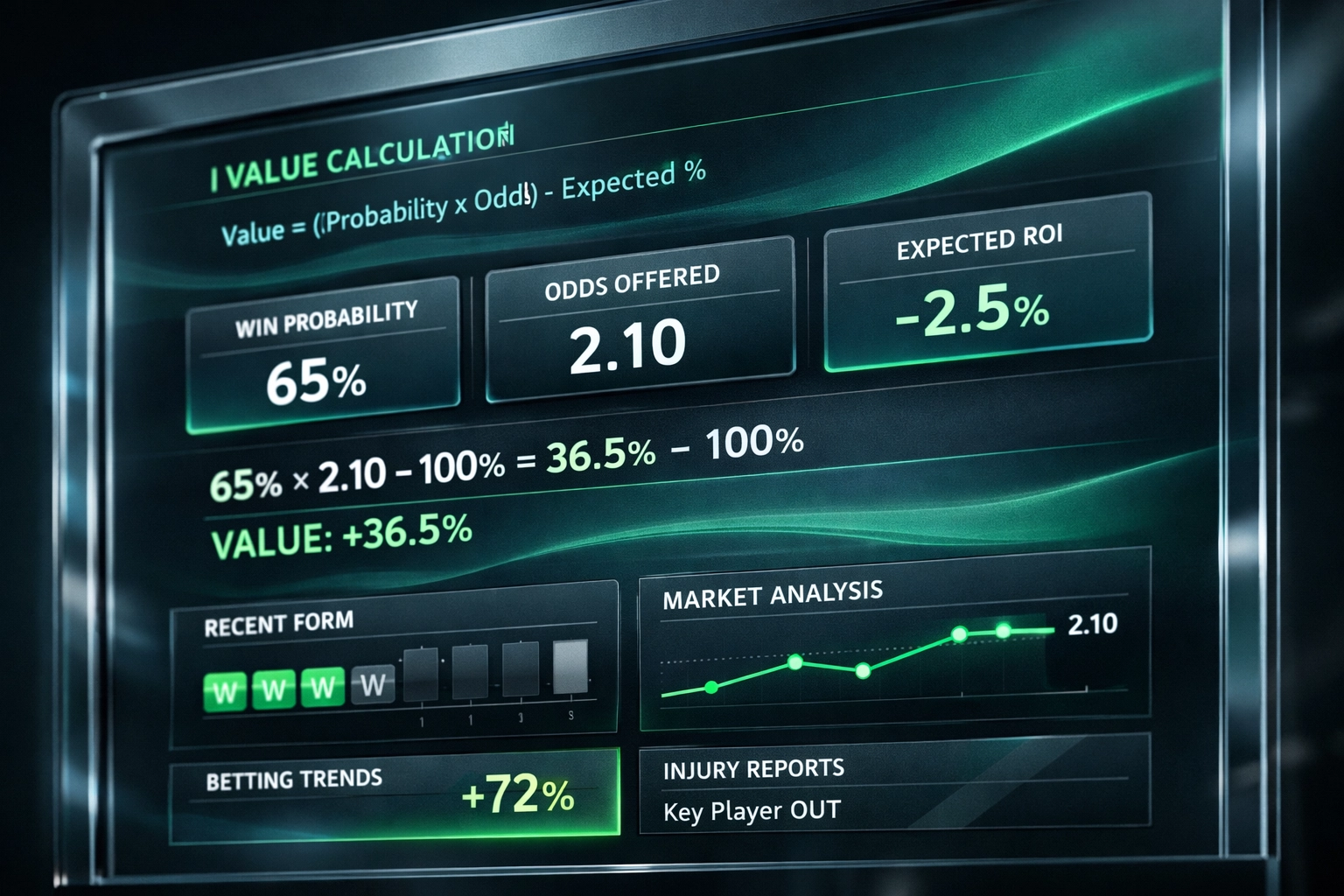
- Act: Place your bet based on the current probability, not the historical narrative. If the data says the favourite has an 80% chance of winning, but the odds are higher because of “bogey” fears, you’ve found value.
Remember, the goal is not to predict the future with 100% certainty: that’s impossible. The goal is to be right more often than the market and to find prices that don’t reflect reality.
Smarter Betting Starts Here
The transition from a “gut feeling” bettor to a data-driven one isn’t easy. It requires you to ignore the noise and trust the numbers. It means acknowledging that what happened in 2018 has almost zero impact on what will happen this weekend.
Football is a game of thin margins. Tactical innovations move fast. A team that was a “bogey” last year might have changed their defensive coach over the summer and completely solved their issues. If you are still betting based on last year’s narrative, you are already behind.
At Gecko Edge, we are built for bettors who want to stay ahead. We provide the clarity that comes from objective, high-level AI analysis. We don’t give you stories; we give you probabilities.
Next time you hear a commentator mention a “bogey team,” take it as a sign. It’s a sign that the market might be misinformed. It’s a sign that there is probably a logical, tactical explanation waiting to be uncovered. And most importantly, it’s a sign that you have an opportunity to be the smartest person in the room.
Check out our blog for more insights on how to refine your approach. The data is there. The edge is there. You just have to be willing to look past the myths.
Built For Bettors, Powered By AI.