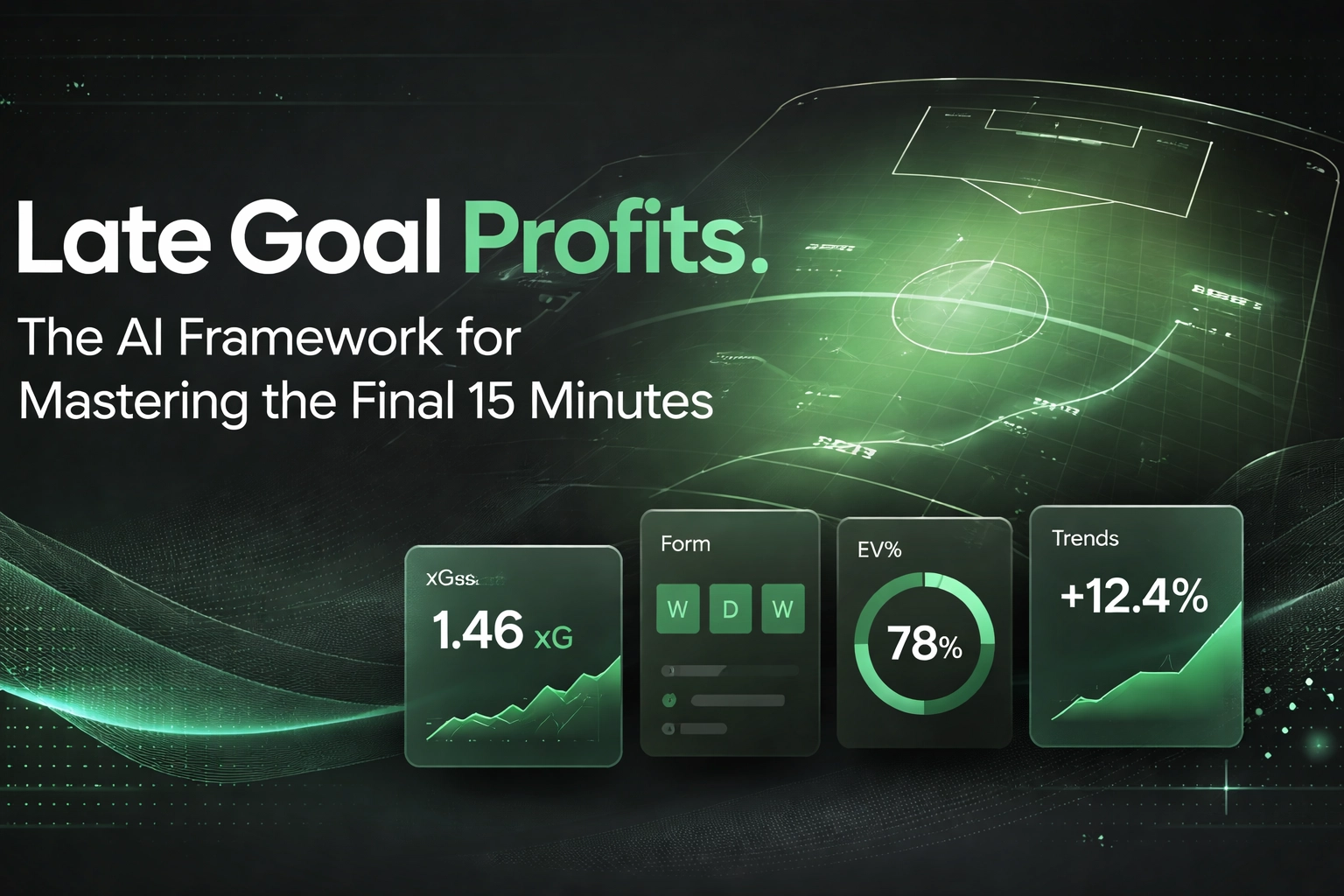
The 75th minute arrives. The scoreline reads 0-0. Most punters have already moved on. But for those who understand what’s actually happening on the pitch, this is where late goal profits and the real opportunities begin.
The final 15 minutes of a football match are chaos for casual bettors. But they’re gold for anyone with the right framework.
Let’s break down why late-game windows offer genuine edge: and how AI-powered analysis can help you spot value when others are panicking or checking out entirely.
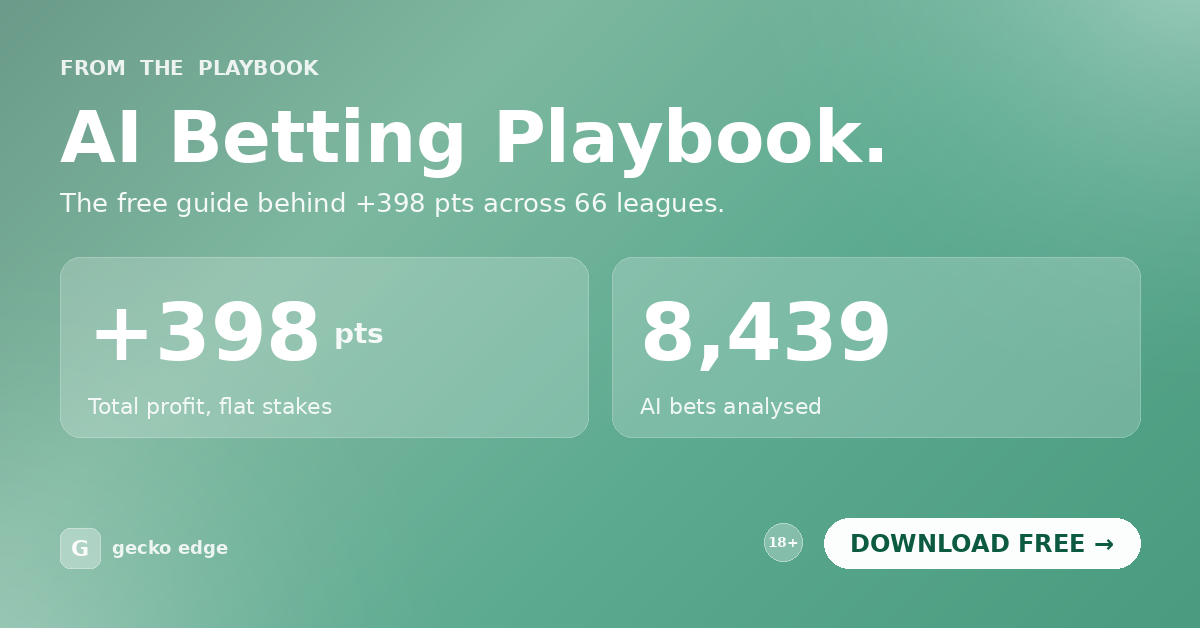
Gecko Edge has tracked 8,439 AI-generated bets and recorded +398pts of profit across 66 competitions. See how the model works →
Why the Final 15 Minutes Matter
Here’s a stat that might surprise you: roughly 30% of all goals in professional football are scored in the final 15 minutes of matches. That’s not a coincidence.
Fatigue sets in. Tactical discipline breaks down. Managers throw on attacking substitutes. Teams chasing a result push higher up the pitch, leaving space behind. Defensive structures that held firm for 75 minutes start showing cracks.

The market knows this, of course. But the market doesn’t always price it correctly: especially in live situations where the emotional narrative takes over.
A 0-0 draw at the 75th minute often gets priced as if no goals will come. The fear of a stalemate dominates. Meanwhile, the underlying data might tell a completely different story.
This is where xG football analysis becomes essential.
The Gap Between Narrative and Numbers
Watch any football match and you’ll hear the commentary team building a story. “They’ve been toothless in attack.” “This looks like heading for a bore draw.” “Neither side looks like scoring.”
Sometimes they’re right. Often, they’re not.
Expected Goals (xG) strips away the narrative and looks at what’s actually happening. A team might have created 1.8 xG worth of chances but simply hasn’t converted. The shots have been good quality. The finishing has been poor. Or the keeper’s had an outstanding game.
None of that changes the underlying probability that the next big chance might go in.
In-play betting strategies that ignore xG are essentially flying blind. You’re reacting to the scoreline rather than the game’s true state.
Here’s the thing: most bettors don’t have time to calculate xG on the fly. They’re watching with their eyes, not their spreadsheets. This creates a window where the odds don’t fully reflect reality.
Where Emotion Meets Opportunity
The final 15 minutes amplify every psychological bias in betting markets.
When a match sits at 0-0 late on, there’s a collective assumption that it’ll stay that way. The price for “no goal” shortens. The price for a late goal drifts.
But consider what’s actually happening:
- Fresh attacking players enter the game
- Defensive lines push higher, creating more space
- Teams become more desperate and take risks
- Set pieces become more frantic and less organised
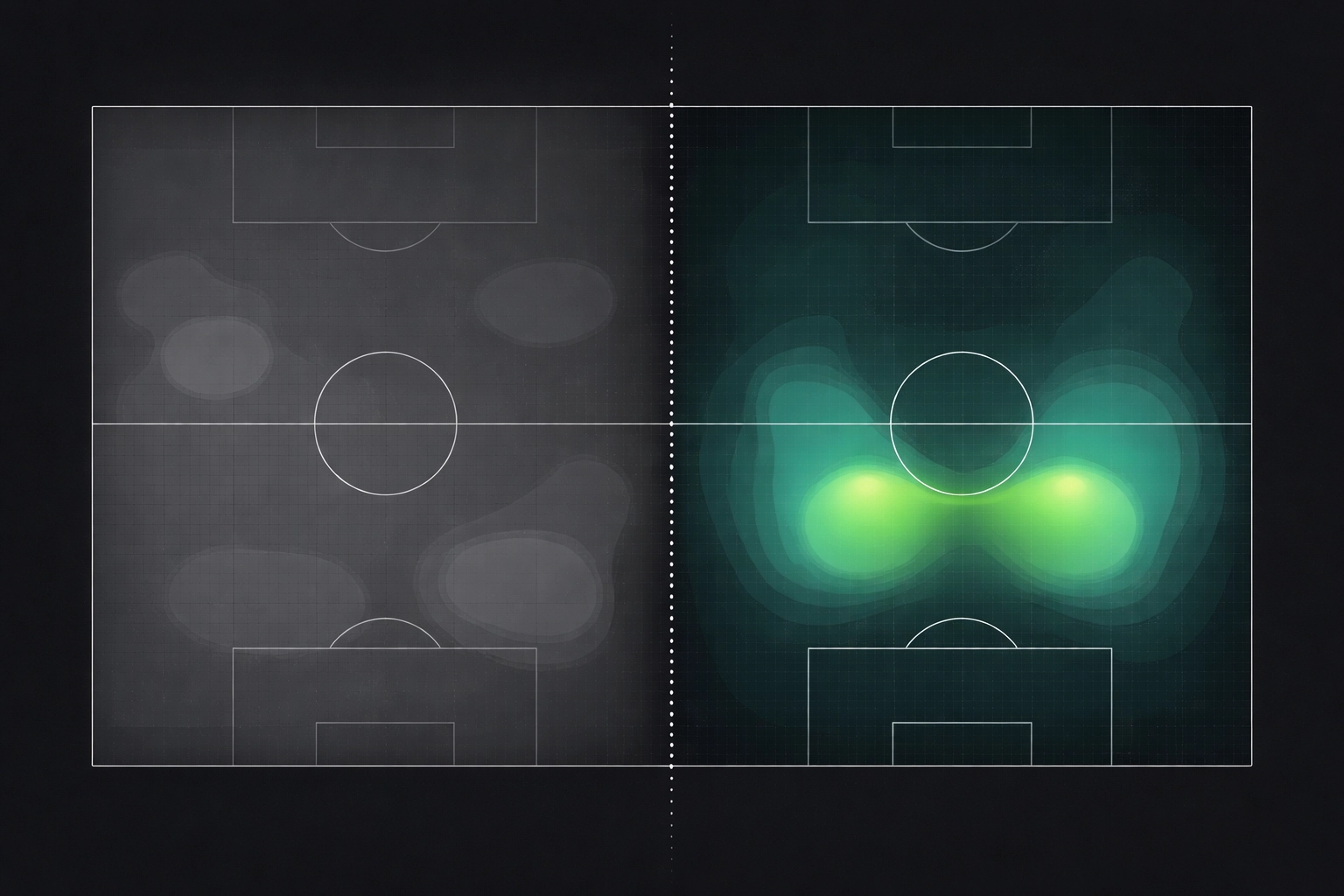
The emotional response is to expect more of the same. The analytical response is to recognise that conditions have changed.
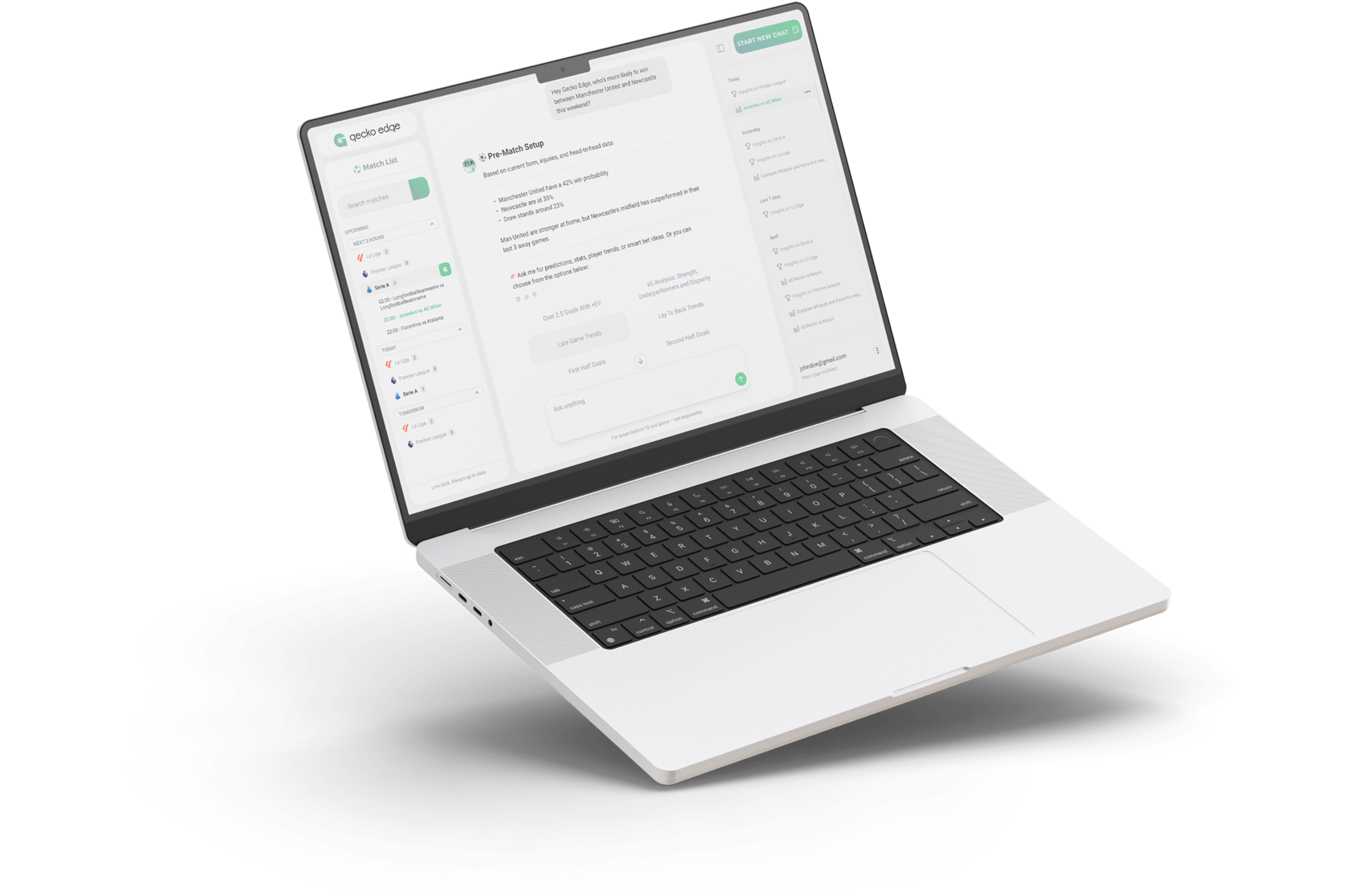
This is where Gecko Edge comes in. Rather than relying on gut feel or watching five screens at once, you can use AI in-play betting tools to process what’s actually unfolding in real time.
Building Your Late-Game Framework
Let’s get practical. Here’s a simple framework for approaching the final 15 minutes with discipline rather than guesswork.
Step 1: Assess the xG Picture
Before the 75th minute arrives, know where the game stands statistically. Has one team dominated xG despite the scoreline? Have there been near-misses, woodwork hits, or excellent saves masking what should have been goals?
A match showing 0-0 with combined xG of 2.5+ is very different from a 0-0 with combined xG of 0.6.
Step 2: Check the Substitution Patterns
Fresh legs matter. If a team trails and brings on two attacking players, that’s a signal. If a team is protecting a lead and makes defensive changes, that tells you something too.
Substitutions often happen between the 60th and 70th minute. By the 75th, you should have a clear picture of each manager’s intent.
Step 3: Watch for Tactical Shifts
Teams chasing games tend to commit more players forward. This creates a higher-variance situation: more likely to see a goal at either end.
Teams protecting leads drop deeper but also become more susceptible to set-piece pressure as they invite attacks.
Step 4: Compare to Market Pricing
This is where discipline matters. The question isn’t “will there be a goal?” It’s “does the current price reflect the true probability?”
If you’ve identified a match where xG suggests goals are likely, and the market is pricing late goals as unlikely, there’s potential value.

How AI Changes the Game
Here’s the honest truth: doing all of this manually across multiple matches is exhausting. By the time you’ve analysed one game properly, three others have moved on without you.
This is precisely why AI betting systems exist. Not to replace your judgment, but to handle the heavy lifting so you can focus on decisions.
Gecko Edge processes live match data continuously. It tracks xG accumulation, shot quality, momentum shifts, and market movements simultaneously across dozens of matches. When conditions align for late-goal value, the system flags it.
You still make the final call. The AI just ensures you’re not missing opportunities buried in a Saturday afternoon fixture list.
Think of it as having a research assistant who never blinks, never gets tired, and never lets emotional narrative cloud the numbers.
Football Betting Tips for the Final 15
A few principles to keep in mind:
Don’t chase losses. Late-game betting should be part of a strategy, not a desperate attempt to recover a bad day. If your analysis doesn’t support a bet, walk away.
Respect the variance. Even when the numbers favour late goals, they won’t always come. That’s the nature of probability. One match, one outcome. Think in samples, not single events.
Stay selective. Not every 0-0 at 75 minutes is a late-goal opportunity. Some matches genuinely are low-quality affairs heading for draws. The edge comes from distinguishing between these situations.
Use tools that help, not hype. There’s plenty of noise in the betting space. Look for resources grounded in data rather than promises. Expected goal stats and live intelligence beat gut feelings over time.
The Calm Approach Wins
The final 15 minutes reward patience and preparation. While others panic or check out, the methodical bettor is watching for the signals that matter.
It’s not about predicting the future. It’s about recognising when the present odds don’t match the present situation.
Gecko Edge was built for exactly this kind of analysis. Not to guarantee wins: nothing can do that: but to ensure you’re working with complete information when it counts.
Late goals happen. The question is whether you’ll be positioned to benefit when they do.
Smarter betting starts with better data. And in the final 15 minutes, better data makes all the difference.
Ready to see live intelligence in action? Explore how Gecko Edge can sharpen your in-play approach.