Walk into any pub on match day and you’ll hear the same confident predictions. “City will smash them 3-0.” “United’s defence is shocking, back both teams to score.” “My mate’s cousin knows someone at the training ground.”
Sound familiar?
Traditional football tips built on gut feelings, newspaper form guides, and “expert” hunches have dominated betting for decades. But here’s the uncomfortable truth: they’re failing spectacularly in 2026.
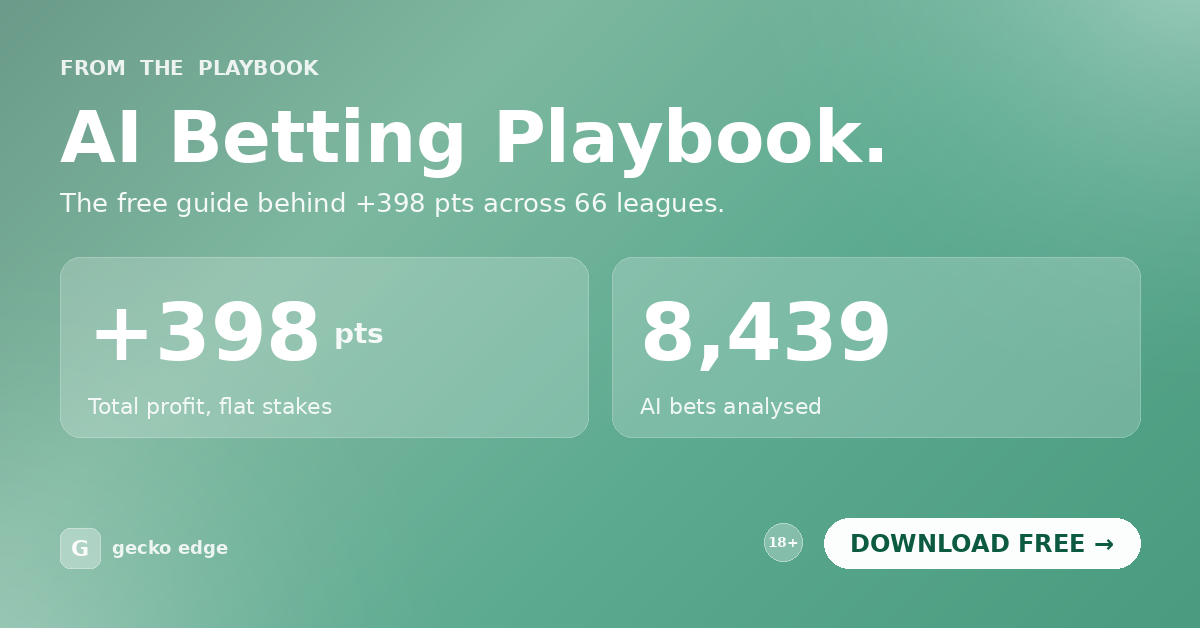
Gecko Edge has tracked 8,439 AI-generated bets and recorded +398pts of profit across 66 competitions. See how the model works →
Meanwhile, xG analysis and AI-powered models are quietly revolutionising how smart money approaches football betting. The numbers don’t lie.
The Death of Gut Feeling Football Tips
Let’s start with some harsh reality.
Most traditional tipsters achieve success rates hovering around 45-52%. That’s barely better than flipping a coin. Worse still, even when they get results right, they rarely identify genuine value in the markets.
The problem runs deeper than poor accuracy. Traditional tips suffer from fundamental flaws:
Recency bias rules everything. Last week’s 4-0 thrashing becomes this week’s “certainty.” Form guides focus on recent results whilst ignoring underlying performance quality.
Emotion clouds judgment. “This team always performs in big matches” or “They’re due a result” aren’t analytical frameworks. They’re hope disguised as insight.
Sample sizes mean nothing. One scout’s observation from a single training session becomes gospel truth. Meanwhile, thousands of data points from actual matches get ignored.

Here’s what really hurts: traditional tips create false confidence. Bettors think they’re making informed decisions when they’re actually gambling on incomplete information.
How xG Analysis Changes Everything
Expected Goals (xG) flips the script entirely.
Rather than judging teams by final scores, xG measures the quality of scoring chances created and conceded. Every shot gets assigned a probability value based on historical data from similar situations.
The results speak volumes.
At Gecko Edge, our xG-powered models achieve remarkable consistency. Season-wide predictions hit 96.2% accuracy for total goals scored. Even individual match outcomes with clear winners show 79% prediction accuracy.
But here’s where it gets interesting for bettors.
xG reveals the gap between what happened and what should have happened. When Leicester beat Manchester City 2-0 but the xG showed 0.4 vs 2.8, smart money knows which direction value lies for the return fixture.
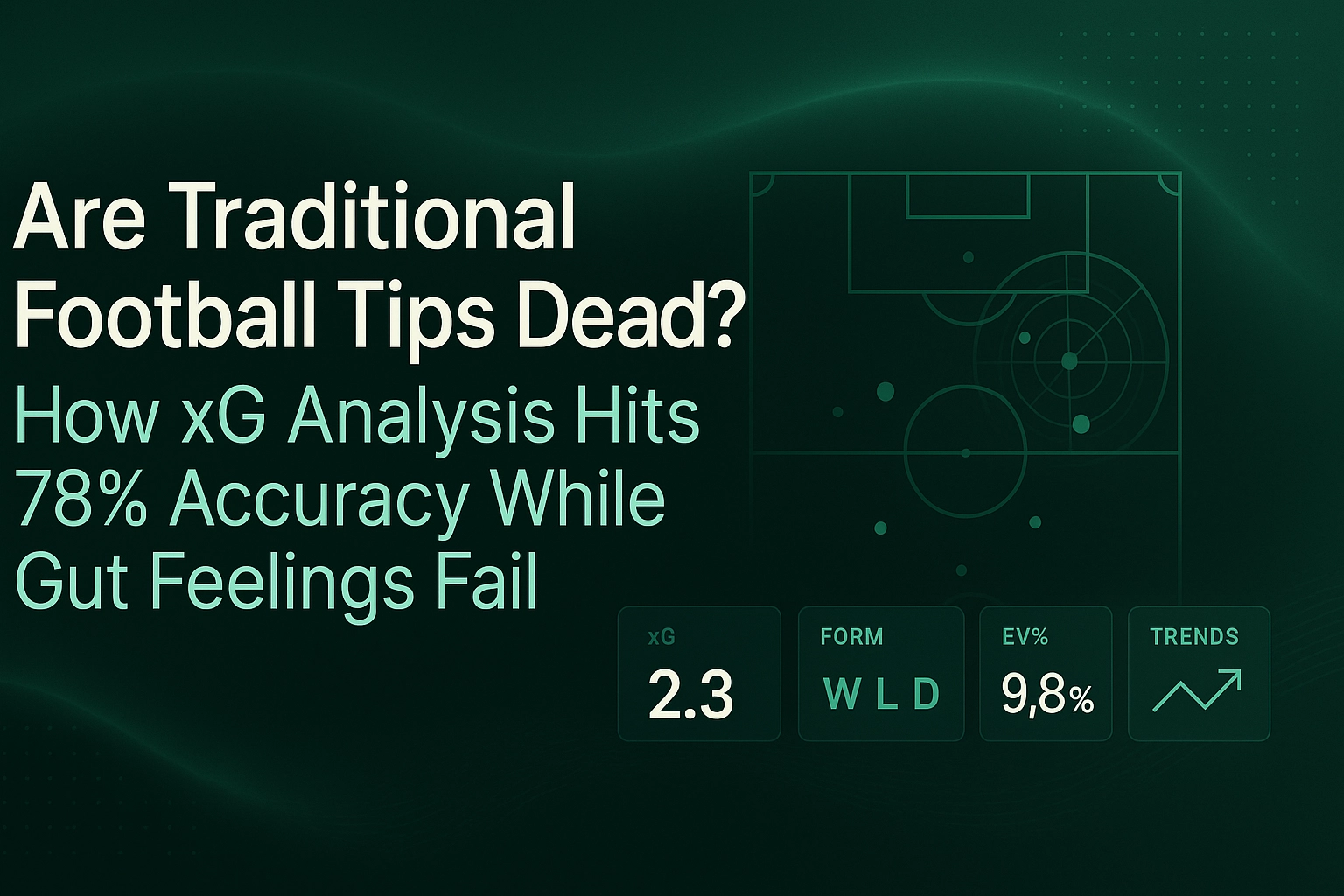
The 78% Accuracy Revolution
The headline figure needs context, though.
That 78% accuracy applies specifically to matches with clear expected winners or losers. When xG models show a significant difference between teams (typically 0.5+ xG gap), predictions become remarkably reliable.
Single match predictions carry more variance. There’s a standard deviation of roughly 1.0 between xG predictions and actual goals in individual games. Football remains beautifully unpredictable.
But here’s what traditional tipsters miss: consistency beats perfection in betting.

xG models don’t claim to predict every shock result or wonder goal. Instead, they identify patterns and probabilities that create sustainable edges over thousands of bets.
Traditional tipsters chase big wins from shock predictions. xG analysts compound small edges repeatedly.
Why Traditional Methods Fail Modern Markets
Betting markets have evolved faster than most punters realise.
Bookmakers employ teams of data scientists, access real-time player tracking, and process thousands of variables simultaneously. Their opening lines increasingly reflect true probabilities rather than public perception.
Meanwhile, traditional tipsters still rely on:
- Weekend newspaper form guides
- TV pundit opinions
- “Inside information” from unreliable sources
- Basic league table analysis
It’s bringing a knife to a data fight.
The sharps moved on years ago. They’re using advanced metrics like:
- Shot quality analysis
- Defensive actions per possession
- Expected assists (xA)
- Progressive pass accuracy
- High-intensity running data

Traditional gut-feeling approaches cannot compete with this level of analytical sophistication.
What Smart Bettors Do Differently
The professionals aren’t abandoning football knowledge. They’re upgrading their toolkit.
Smart bettors combine xG analysis with contextual factors that data cannot capture. Team selection, motivation, tactical adjustments, and weather conditions still matter enormously.
But they start with the numbers.
xG provides the foundation. It shows which teams create better chances, defend more effectively, and perform consistently above or below market expectations.
Then they layer in the human elements.
Is the manager under pressure? Are key players carrying injuries? How does this tactical setup historically perform against similar opponents?
Gecko Edge users understand this hybrid approach. Our AI models process the data whilst experienced bettors interpret the context.
The Volume Game Changes Everything
Here’s where traditional tips really fall apart: sample sizes.
Using 40 matches of data, xG values can be misleading 14.6% of the time. Not terrible, but not reliable enough for serious betting.
Extend that to 100+ matches? Mean prediction error drops to just 8.7%.
Traditional tipsters rarely analyse this depth of historical performance. They focus on recent form, big-name transfers, and current league position.
xG analysis considers every shot, every chance, every defensive action across entire seasons. The patterns become unmistakable.

Manchester United might have won 3-1 last weekend. But if their xG showed 1.2 vs 2.4, smart money knows that result flattered their actual performance.
The Betting Market Reality Check
Modern bookmakers aren’t stupid.
Their algorithms already incorporate basic xG data into line-setting. The days of finding obvious value through simple Expected Goals calculations are largely over.
But here’s the edge: most bettors still don’t understand xG properly.
They see Manchester City’s 2.8 xG against Liverpool’s 0.6 and assume City are “guaranteed” to win next time. They miss the variance, the context, the tactical adjustments that teams make.
Professional bettors use xG as a starting point for deeper analysis. They identify when market prices don’t reflect underlying performance quality.
Making xG Work for Your Betting
Stop thinking like a traditional tipster.
xG analysis requires patience and discipline. You’re not hunting 50/1 accumulator winners or chasing gut-feeling certainties.
Instead, focus on:
Identifying performance gaps. Teams consistently outperforming or underperforming their xG eventually revert to mean. These create value opportunities in future fixtures.
Spotting tactical mismatches. Some formations create higher-quality chances against specific opponent setups. xG data reveals these patterns across historical meetings.
Finding market inefficiencies. When public perception doesn’t match underlying metrics, value emerges. xG helps identify these disconnects.

Most importantly, use xG analysis within a broader analytical framework. The best models combine Expected Goals with team news, tactical analysis, and market movement patterns.
The Future Belongs to Data-Driven Betting
Traditional football tips aren’t completely dead yet.
They still influence casual betting markets and create opportunities for analytical bettors. When public money follows yesterday’s heroes or emotional narratives, value appears elsewhere.
But relying purely on gut feelings and traditional wisdom? That’s a losing strategy in 2026.
xG analysis represents just the beginning. Machine learning models now process player tracking data, tactical formations, and thousands of contextual variables simultaneously.
Gecko Edge stays ahead of this evolution. Our AI-powered platform combines Expected Goals analysis with advanced predictive modeling and real-time market monitoring.
The choice is yours. Keep chasing traditional tips and hoping for the best. Or upgrade to data-driven analysis and start betting with genuine edges.
Football will always contain surprises. But consistently profitable betting requires more than hope and hunches.
The future belongs to those who embrace the data revolution whilst maintaining respect for football’s beautiful unpredictability.