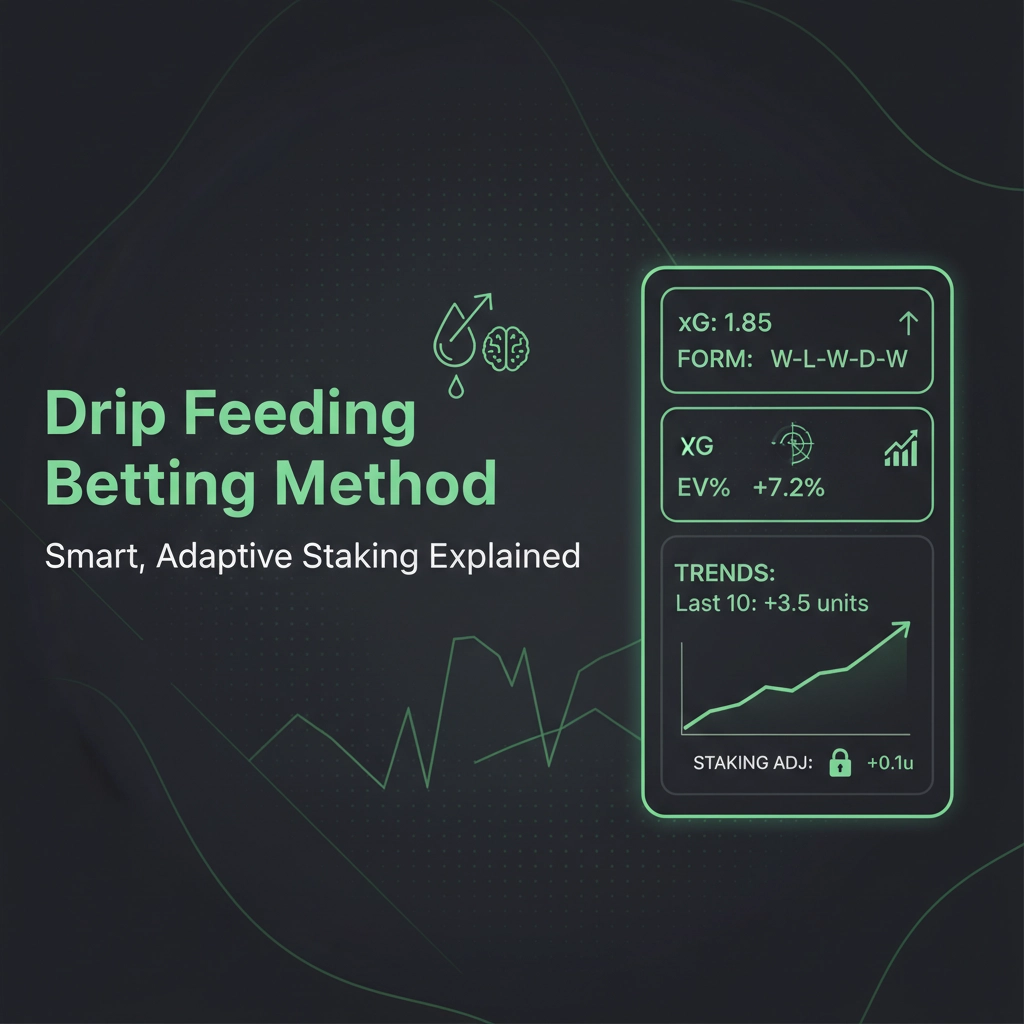
Picture this: Liverpool are 1-0 down at half-time against Brighton. The odds have shifted dramatically. Most punters either lumped on Liverpool before kick-off or they’re sitting this one out completely.
But there’s a third way. A smarter way.
Instead of betting your entire stake in one go, you drip feed smaller amounts throughout the match. You react to what’s actually happening, not what you hoped would happen.
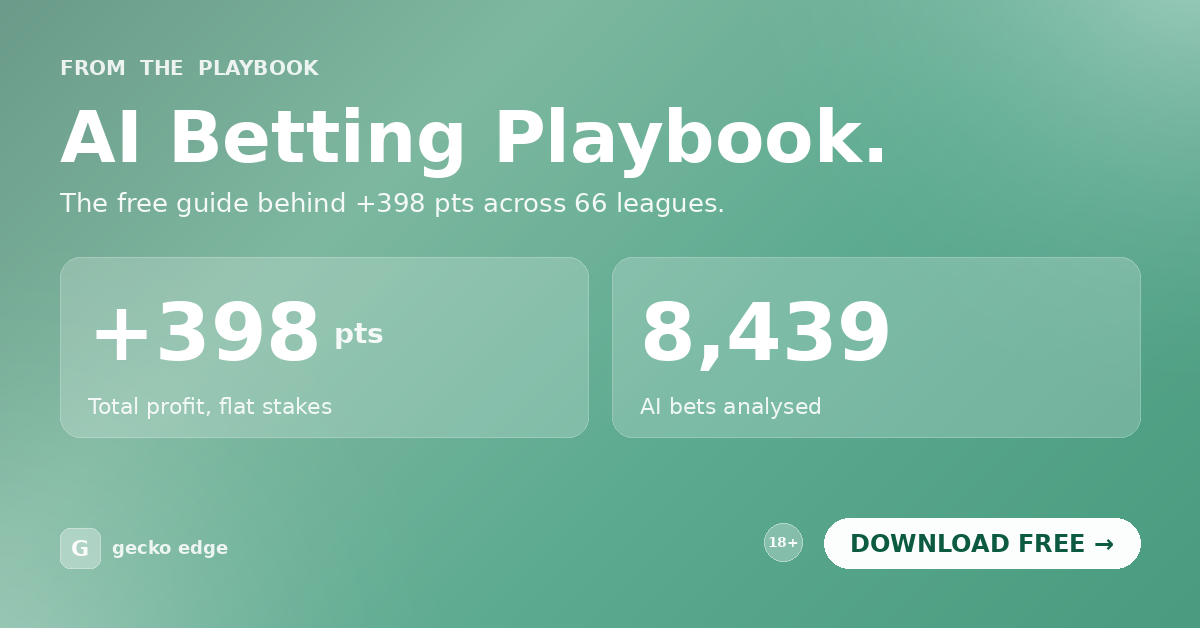
Gecko Edge has tracked 8,439 AI-generated bets and recorded +398pts of profit across 66 competitions. See how the model works →
Welcome to drip feeding – the betting method that turns reactive thinking into systematic profit.
What Is Drip Feeding in Betting?
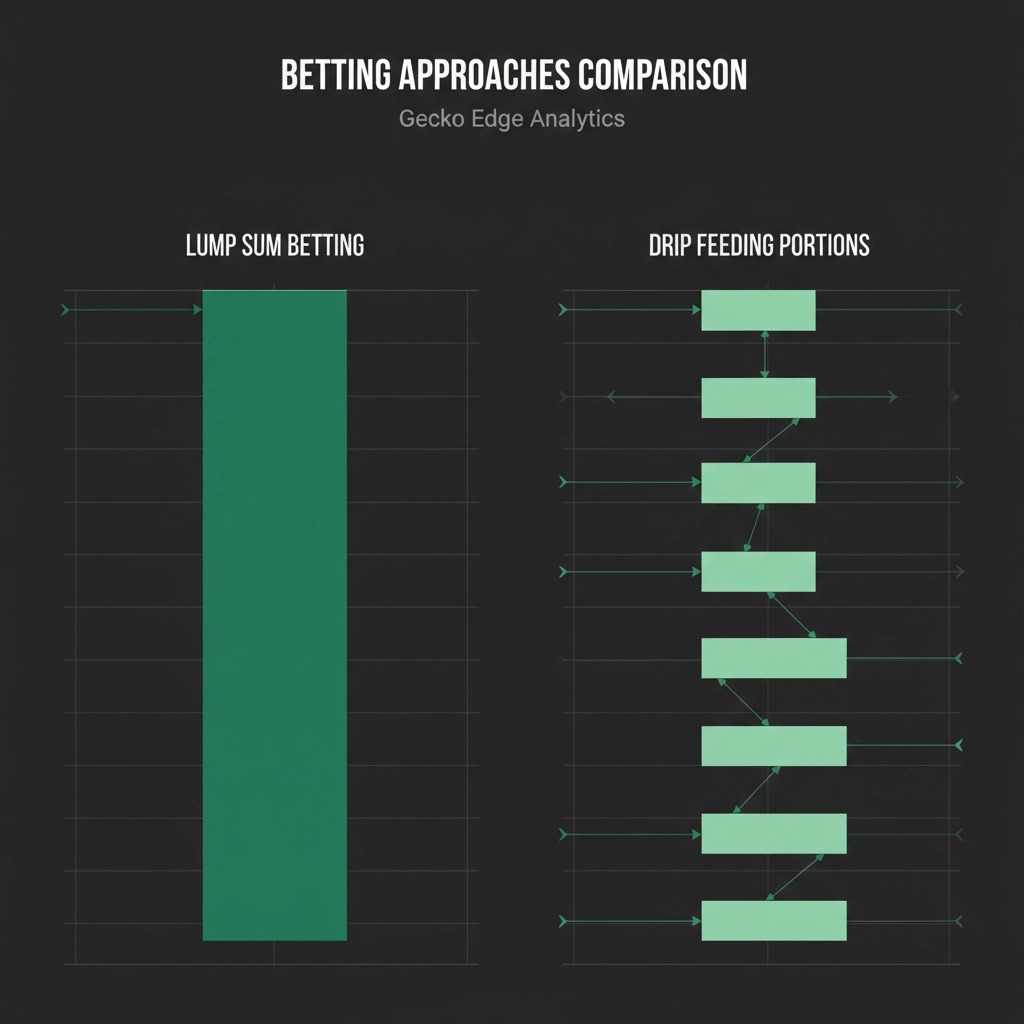
Drip feeding is exactly what it sounds like. Rather than placing one large bet, you split your intended stake into smaller portions and place them at different points during a match.
Think of it as the betting equivalent of pound-cost averaging in investing. Instead of buying all your shares at once, you spread your purchases over time to average out price fluctuations.
In football betting, this means placing perhaps 4-5 smaller bets as the match develops, rather than one big punt before kick-off.
The key difference? You’re not just spreading risk across time – you’re gathering intelligence as you go.
Drip Feeding vs Lump Sum: The Fundamental Difference
Let’s say you fancy Manchester City to score over 2.5 goals against Bournemouth. You’ve got £100 to stake.
Lump Sum Approach: You place £100 on Over 2.5 Goals at 1.70 before kick-off. That’s it. You’re committed. Whatever happens, happens.
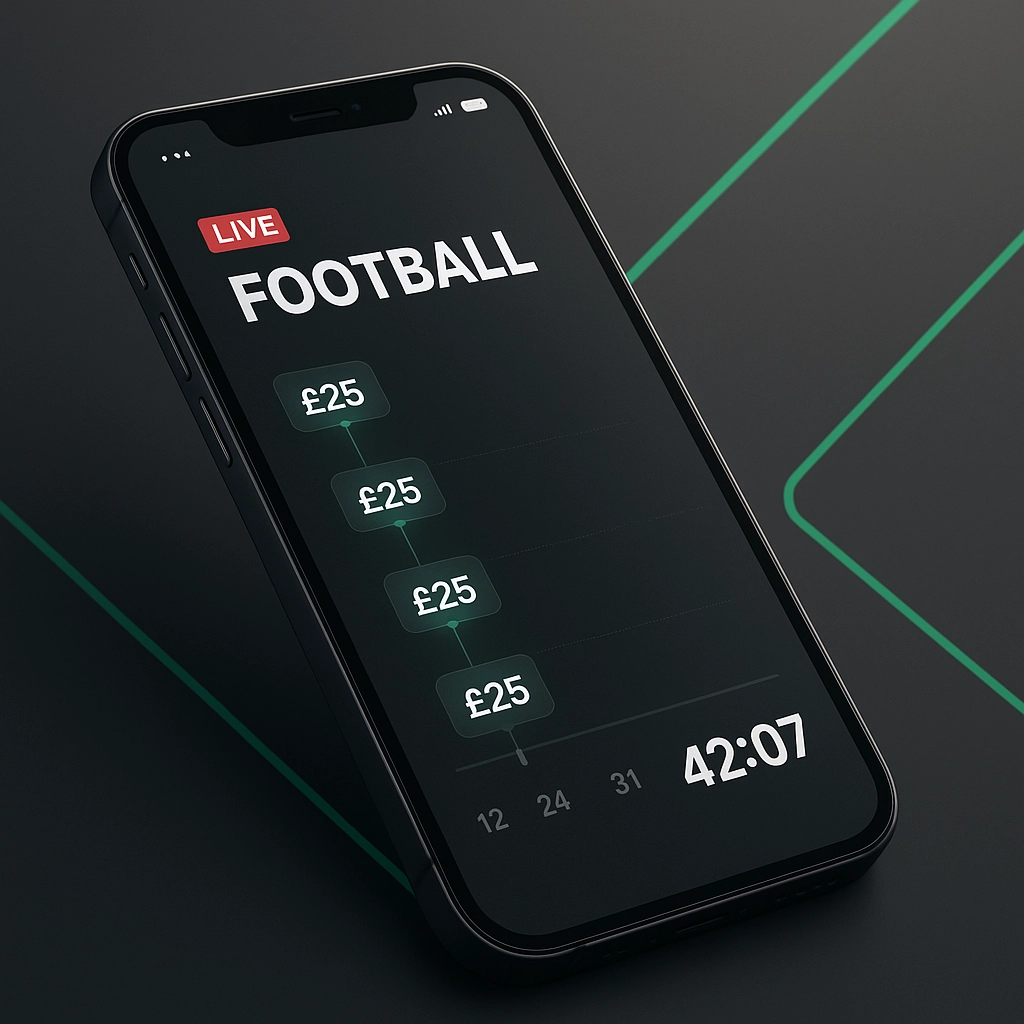
Drip Feeding Approach: You place £25 before kick-off, £25 after 15 minutes, £25 at half-time, and hold £25 back for the second half.
Why does this matter?
Because football matches tell stories. And those stories change the probabilities in real-time.
City might start sluggishly. The pitch might be waterlogged. Haaland might pick up an early knock. With drip feeding, you can adapt. You might skip the 15-minute bet entirely. Or you might double down if City are 2-0 up at half-time and the odds on another goal have improved.
How Drip Feeding Actually Works: A Step-by-Step Framework
Here’s how to structure a drip feeding approach:
Step 1: Plan Your Positions
Decide your total intended stake and split it into 3-5 portions. Not equal portions – weight them based on when you expect the most valuable information.
Step 2: Set Your Trigger Points
- Pre-match: 20-30% of stake (based on research and form)
- 15-20 minutes: 15-20% (early game flow assessment)
- Half-time: 25-30% (tactics and momentum clear)
- 60+ minutes: 20-25% (final push, desperation factor)
Step 3: Define Your Decision Criteria
Before you start, write down what will make you increase, decrease, or skip each portion:
- Team news changes
- Early goals (for or against your selection)
- Tactical shifts
- Weather/pitch conditions
- Market movement
Step 4: Execute with Discipline
This isn’t about gut feelings. Stick to your criteria. If your trigger points aren’t met, don’t bet that portion. The money stays in your bank.
Real Football Example: The Arsenal Comeback
Let’s walk through a real scenario. Arsenal vs West Ham, you fancy Arsenal to win, but West Ham have been defensively solid lately.
Your Plan: £80 total stake, Arsenal to win at various prices
Pre-match (£20): Arsenal 1.75 to win. You take it – solid research supports this price.
15 minutes in: Arsenal 1-0 up, now 1.40 to win. You skip your £20 portion – no value left.
Half-time: Still 1-0 Arsenal, but they’ve had 12 shots to West Ham’s 2. Arsenal now 1.50 to win. The game feels safer than the price suggests. You place your £25 portion.
65 minutes: West Ham equalise. Arsenal back out to 2.20 to win, but they’re throwing everything forward. You place your final £20 on Arsenal at these improved odds.
Result: Arsenal win 2-1 in the 88th minute.
Your returns: Pre-match £20 at 1.75 = £35. Half-time £25 at 1.50 = £37.50. Late bet £20 at 2.20 = £44.
Total return: £116.50 from £65 staked. Compare this to £80 at 1.75 pre-match = £140. But here’s the key – you saved £15 by skipping the 15-minute bet when value disappeared.
The Risk Management Advantage
Drip feeding isn’t just about maximising profits. It’s about controlling losses.
Scenario Planning: If Arsenal had gone 1-0 down instead, you’d have likely skipped your half-time bet entirely. You’d be down £20, not £80.
Market Reaction: Sometimes the market overreacts to early events. A red card in the 10th minute might create value that wasn’t there pre-match.
Information Edge: You’re operating with more data than pre-match punters. You’ve seen the team selections, the pitch conditions, the early tactical setup.
Think of it as buying insurance against your own overconfidence. How many times have you watched your pre-match selection look hopeless after 20 minutes? With drip feeding, you can cut your losses early or pivot completely.
Common Drip Feeding Mistakes
Mistake 1: Chasing Losses
Don’t increase your later portions to “get even” from early losses. Stick to your plan.
Mistake 2: FOMO Betting
If your criteria aren’t met, don’t bet that portion. Watching money “doing nothing” feels uncomfortable, but discipline pays.
Mistake 3: Over-Complicating
Don’t try to drip feed 10 different bets. Pick 1-2 main positions and execute them well.
Mistake 4: Ignoring Market Movement
If odds move against you significantly, that’s information. Don’t blindly place your next portion.

When Drip Feeding Works Best
High-Scoring Leagues: Premier League, Bundesliga – where game states change quickly
Live Broadcasts: When you can watch and react to what’s happening
Markets with In-Play Liquidity: Goals, corners, cards – markets that stay active throughout
Matches You Know Well: Teams whose patterns you understand
Volatile Games: Derby matches, must-win situations, teams with nothing to lose
How Gecko Edge Enhances Drip Feeding
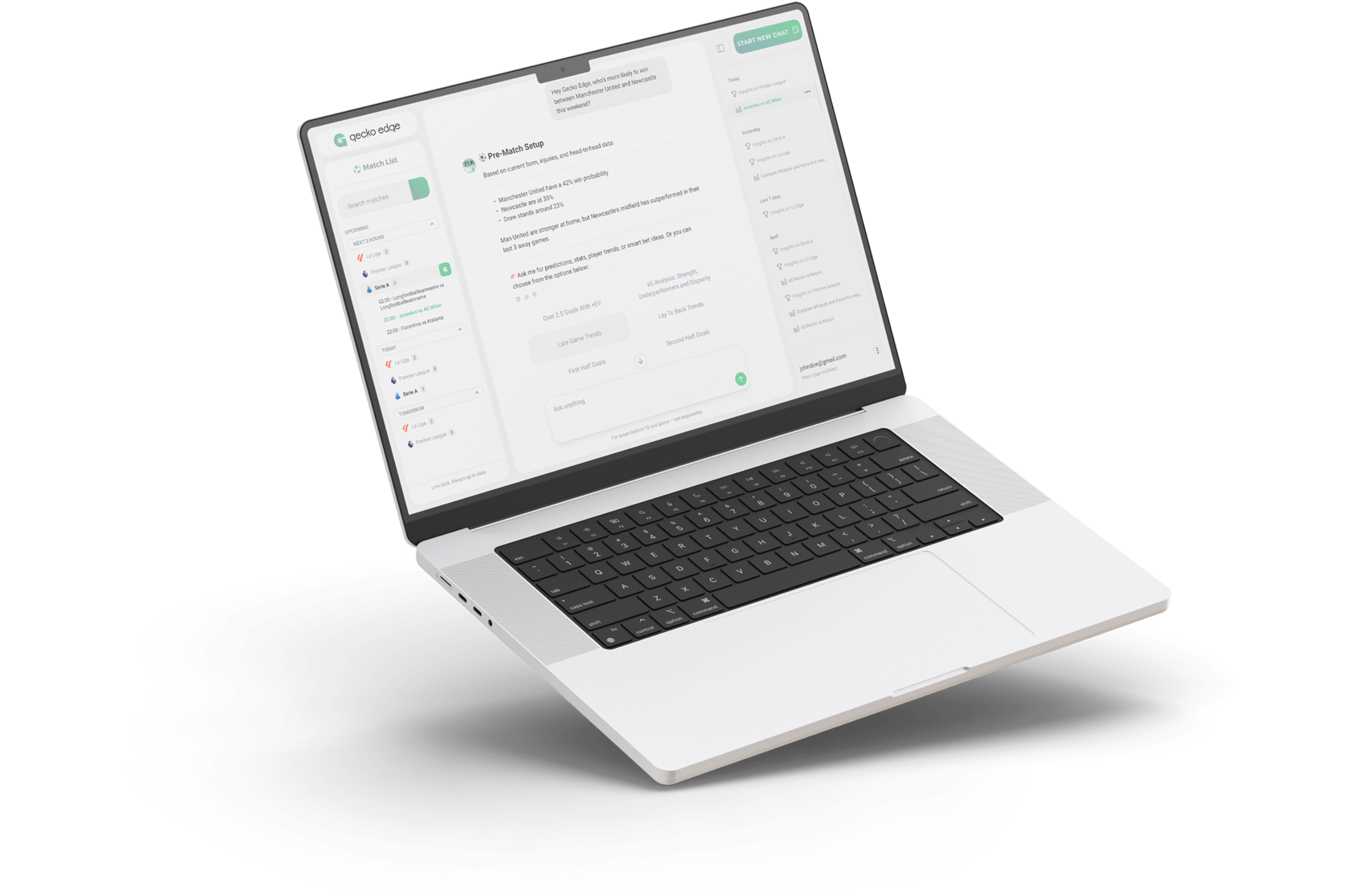
Smart drip feeding needs smart tools. Gecko Edge gives you the real-time data to make informed decisions at each stage:
Live xG Tracking: See if that “lucky” early goal was actually against the run of play. Adjust your next portion accordingly.
Market Movement Alerts: Get notified when odds hit your target levels for each portion.
Team News Integration: Last-minute lineup changes can completely alter your drip feeding plan.
Performance Analytics: Track which portions of your drip feeding strategy perform best over time.
The platform helps you stay disciplined by removing emotion from the decision-making process. No more gut-feeling bets when the data says otherwise.
Building Your Own Drip Feeding System
Start simple. Pick one market you understand well – perhaps Over 2.5 Goals in Premier League matches.
Plan three portions: 30% pre-match, 40% at half-time, 30% after 60 minutes.
Set clear criteria for each portion:
- Pre-match: Only if both teams average over 2.5 goals in last 5 games
- Half-time: Only if match has under 1.5 goals but over 8 shots combined
- 60+ minutes: Only if still under 2.5 goals but high-tempo play continuing
Track everything. After 20 bets, you’ll see patterns. Which portions perform best? When do you make mistakes? What external factors matter most?
Remember: drip feeding isn’t about being clever. It’s about being systematic. It’s about turning the chaos of live football into measured, data-driven decisions.
The beautiful game is unpredictable. Your betting strategy doesn’t have to be.
Start small, stay disciplined, and let the information guide your stake distribution. That’s how smart money moves – not all at once, but bit by bit, with purpose and precision.
For more strategic staking approaches, check out our comprehensive guide in the knowledge base betting glossary.
1 comment