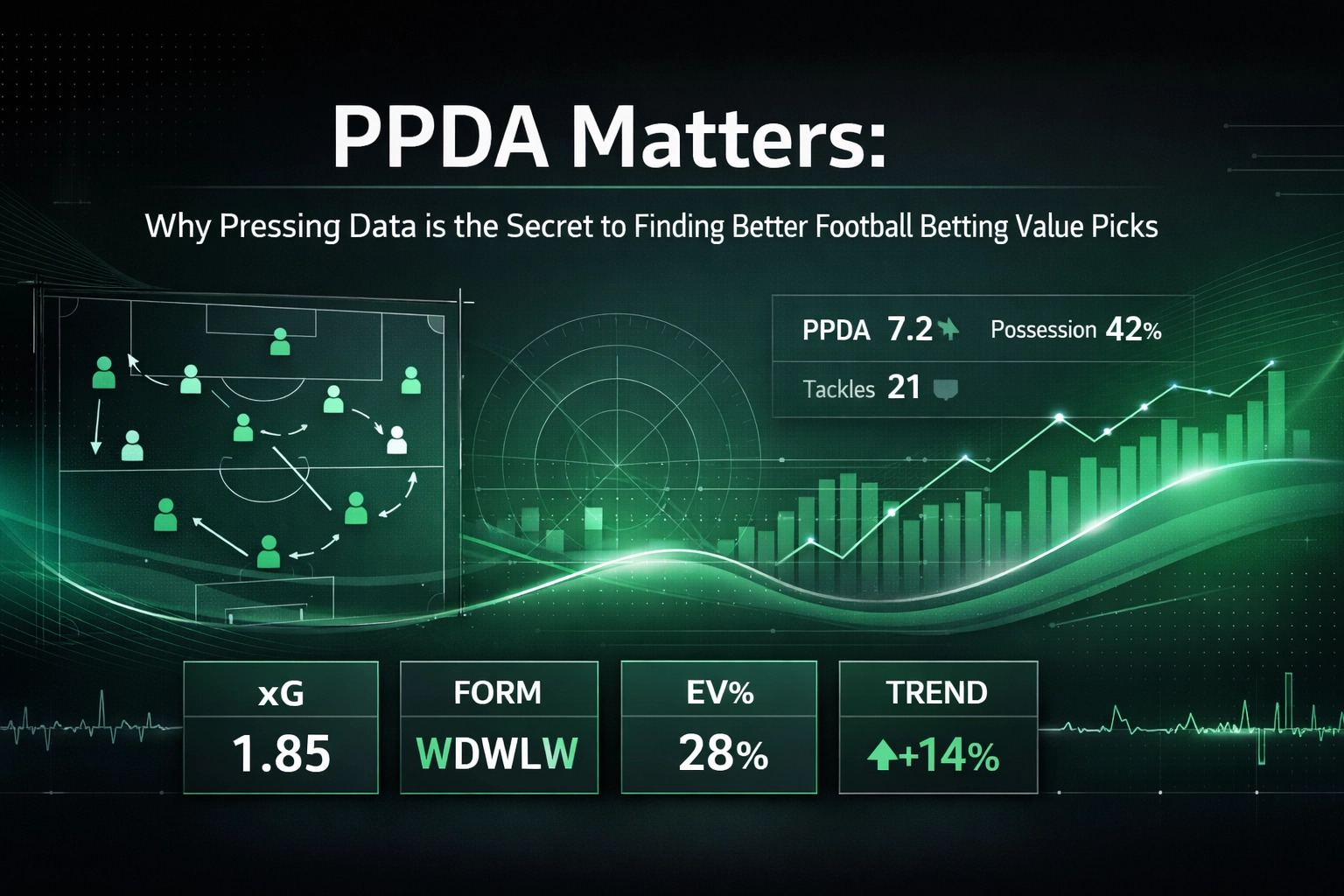
PPDA, If you have spent any time in the world of professional betting, you know the scoreboard is often the biggest liar in the stadium. A team can win 1-0 while being outclassed for ninety minutes. Conversely, a team can lose 2-0 while completely dominating the rhythm and flow of the game.
Most recreational bettors chase results. They look at the “Form” column, see three greens in a row, and put their money down. But as we know at Gecko Edge, the secret to long-term profitability isn’t in predicting what happened yesterday; it’s in understanding the mechanics of how a team is playing today.
One of the most misunderstood and undervalued metrics in this regard is PPDA: Passes Per Defensive Action. If you want to find value before the rest of the market catches on, you need to understand the press.
Gecko Edge has tracked 8,439 AI-generated bets and recorded +398pts of profit across 66 competitions. See how the model works →
What is PPDA and Why Should You Care?
PPDA is a metric used to quantify pressing intensity. In simple terms, it measures how many passes a team allows the opposition to make in their own half before attempting a defensive action (a tackle, an interception, a challenge, or a foul).
A low PPDA number (e.g., 8.0) means the team is “hungry.” They are flying at the opposition, trying to win the ball back almost immediately. A high PPDA number (e.g., 16.0) suggests a “passive” approach, where a team is happy to sit back, keep their shape, and let the opposition pass the ball around in non-threatening areas.
For a bettor, this isn’t just a tactical curiosity. It is a window into a team’s physical condition and their tactical intent.

The Hidden Link Between Pressure and Value
The betting market is incredibly efficient at pricing goals and shots. If a striker is on a hot streak, the odds reflect it. If a team has a solid clean-sheet record, the Under 2.5 goals market is squeezed tight.
However, the market is often slow to react to stylistic shifts. This is where Gecko Edge finds its edge.
When a team’s PPDA starts to drop significantly over a three-to-four-match sample, it indicates a change in intensity. They are playing higher up the pitch. They are forcing turnovers in dangerous areas. Even if the results haven’t turned into wins yet, the underlying process is screaming that a positive regression is coming.
The “Fatigue” Factor
Conversely, PPDA is a brilliant early warning system for a team that is about to fall off a cliff. High-pressing football is exhausting. When a team that usually operates at a low PPDA suddenly sees that number creep up over several weeks, it’s a sign of leg-weariness.
The market might still price them based on their “big team” reputation, but the data tells us they no longer have the energy to sustain their style. That is a prime opportunity to bet against them, specifically in the second half of matches or on the Asian Handicap.
How Gecko Edge Uses PPDA to Find an Edge
At Gecko Edge, we don’t just look at a single PPDA number in isolation. That would be too simple. We use AI to contextulise that data against league averages, opposition styles, and historical performance.
Our models look for “Disruption Value.” This happens when a high-pressing team (low PPDA) meets a team that struggles to play out from the back. The traditional Expected Value models might see two mid-table teams, but our AI sees a tactical mismatch where one team is likely to be smothered.
Integrating PPDA with xG
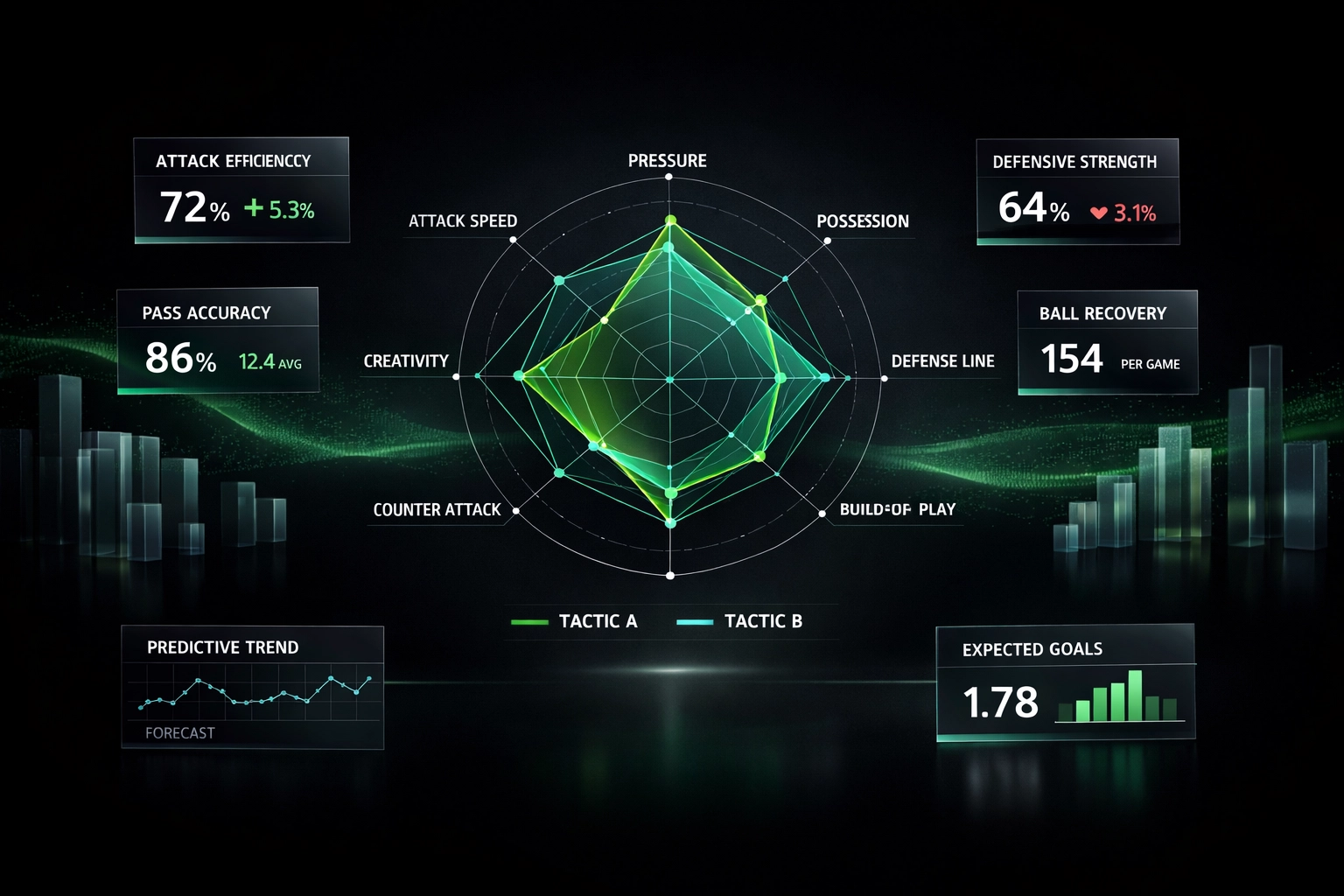
The real magic happens when you combine pressing data with xG stats. If a team has a low PPDA and a high xG, they are essentially a pressure cooker. They are winning the ball high up the pitch and turning those turnovers into high-quality chances.
If the market is still pricing them as outsiders because they haven’t won their last two games, our AI betting systems flag it as a value pick. It’s about identifying the “unlucky” high-pressers before the luck turns.
Practical Tips for the Serious Bettor
If you want to start using pressing data in your own analysis, here is how to approach it with a level head:
- Look for Trends, Not Outliers: A single game with a low PPDA might just mean the opposition was terrible on the ball. Look for a sustained drop over 3-5 games to identify a genuine tactical shift.
- Contextualise the Opposition: A team might have a high PPDA because they were playing Manchester City and spent 90 minutes chasing shadows. Don’t punish them for that. Compare their PPDA against teams of a similar level.
- Watch the In-Play Markets: PPDA is a massive asset for in-play trading. If a favorite starts a match with a much higher PPDA than usual, they might be “coasting” or tired. This is often the best time to look for an upset or a lay bet.
- League Specifics: Some leagues are naturally more “honest” and physical. The German Bundesliga tends to have lower average PPDA than the Italian Serie A. Always calibrate your expectations based on the league’s DNA.
Why the Market Often Ignores the Press
You might wonder: “If this data is so useful, why isn’t everyone using it?”
The truth is, most bettors: and even some smaller bookmakers: find defensive metrics “boring.” It’s much more exciting to talk about a winger’s pace or a striker’s finishing. Pressing is about collective work-rate, distance covered, and tactical discipline. It’s the “grime” of football.
But for us, the grime is where the gold is. The AI in-play betting tools we build are designed to see these invisible forces. While the crowd is watching the ball, Gecko Edge is watching the space around it.

Smarter Betting Starts Here
Betting is a game of information asymmetry. To win, you don’t need to know everything; you just need to know something the market has undervalued.
PPDA is one of those “hidden in plain sight” metrics. It tells you who is in control of the game’s tempo. It tells you who is tired. And most importantly, it tells you who is about to start winning: long before they actually do.
At Gecko Edge, we believe in providing the tools that bridge the gap between “guessing” and “analysing.” Whether you are looking for AI betting tips or trying to build your own strategy, keeping an eye on the press is non-negotiable.
If you are ready to stop chasing results and start backing the process, it’s time to take a deeper look at the data.
Ask, Analyse, Act.
- Ask: Is this team winning because they are good, or because they are lucky?
- Analyse: Check the PPDA. Are they sustaining pressure, or are they being bypassed easily?
- Act: Use that insight to find value where others see only noise.
The engine of a team is rarely found in the highlights reel. It’s found in the hard yards of the defensive transition. Understand that, and you are already ahead of 95% of the market.
For more insights into how advanced metrics can transform your approach, explore our AI betting education section. Smarter betting doesn’t have to be complicated; it just has to be disciplined.

2 comments