



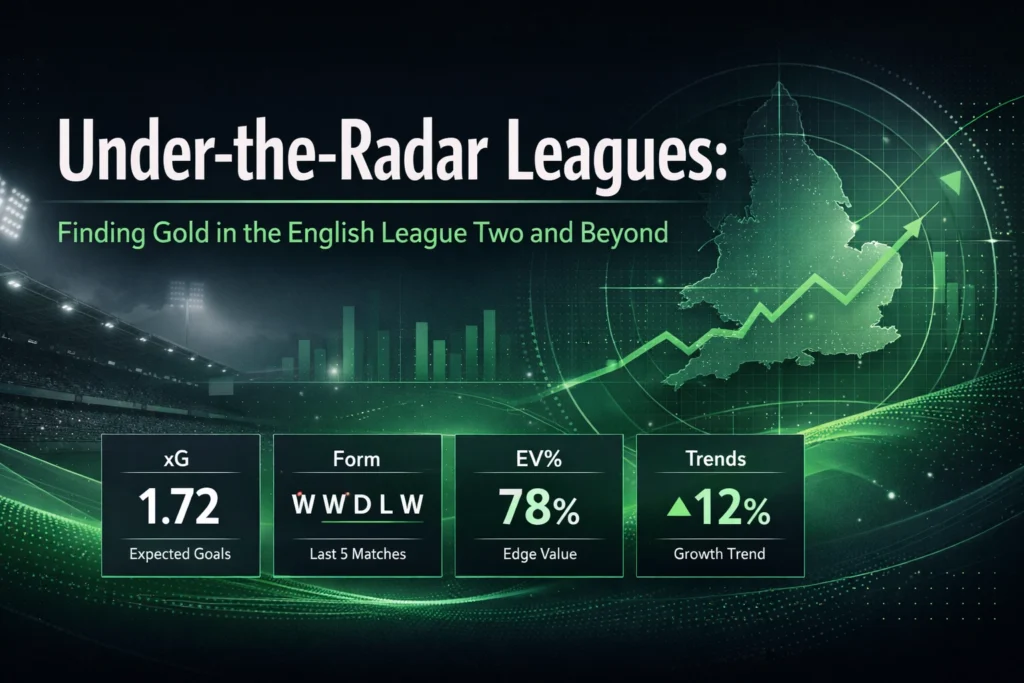
English League Two has real opportunities. Everyone wants to bet the Premier League. Sky Sports highlights. Match of the Day analysis. Twitter threads dissecting Pep’s latest tactical tweak.
But here’s the thing: when everyone’s looking at the same data, using the same models, betting the same markets: edge disappears fast. The bookies know exactly what you’re thinking before you’ve even opened the betting slip.
Lower leagues? Completely different story. English League Two, English National League, even parts of English League One: these are where the real opportunities sit. Not because the football’s better. Because the analysis is worse.
Why Lower Leagues Are Gold Mines for Sharp Bettors
The inefficiency in these markets is structural. Bookies build their models the same way for every league: historical results, basic stats, maybe some team news scraped from local reporters. That approach works fine when you’ve got thousands of data points and mainstream media covering every angle.
English League Two doesn’t get that treatment. You’ve got part-time analysts, limited broadcast coverage, and betting volumes that don’t justify the same algorithmic investment bookies pour into top-flight matches.
What does that mean for you? Mispriced lines. Overlooked patterns. Value sitting there for anyone who can actually analyse these matches properly.
Traditional models miss context. They don’t catch that Harrogate’s wing-back has suddenly started taking corners. They don’t flag that Tranmere’s striker just recovered from injury but the odds haven’t adjusted yet. They certainly don’t process that Accrington’s home form against bottom-half teams is 40% better than their overall numbers suggest.
Gecko Edge processes all of it: not just for English League Two, but across hundreds of divisions globally. Lower leagues included. Because that’s where sharp bettors actually make money.

The Data Gap Bookies Can’t Fill
Here’s a question: when was the last time you saw xG analysis for a Salford vs Doncaster match?
You haven’t. Because mainstream platforms don’t bother.
But the absence of public analysis doesn’t mean the data doesn’t exist. It just means fewer people are using it. And that creates opportunity.
Take goalkeeper performance. In the Premier League, everyone knows Alisson’s save percentage, his expected goals prevented, his distribution stats. The market adjusts instantly when he’s injured.
In League One? Teddy Sharman-Lowe recorded 88 saves during Doncaster’s promotion campaign last season: second-highest among all EFL promoted goalkeepers. Rock-solid underlying numbers. Yet he started the following season with 0.9% ownership in fantasy leagues and betting markets that hadn’t adjusted for his consistency.
That disconnect is everywhere in lower divisions. Players with proven quality, strong metrics, favourable fixtures: all flying under the radar because traditional scouting methods can’t scale down to these leagues efficiently.
Where AI Changes Everything
Manual analysis doesn’t work at this level. You’d need to watch every match, track every player, log every chance. Even full-time analysts can’t cover that ground properly.
AI can. And it’s not even close.
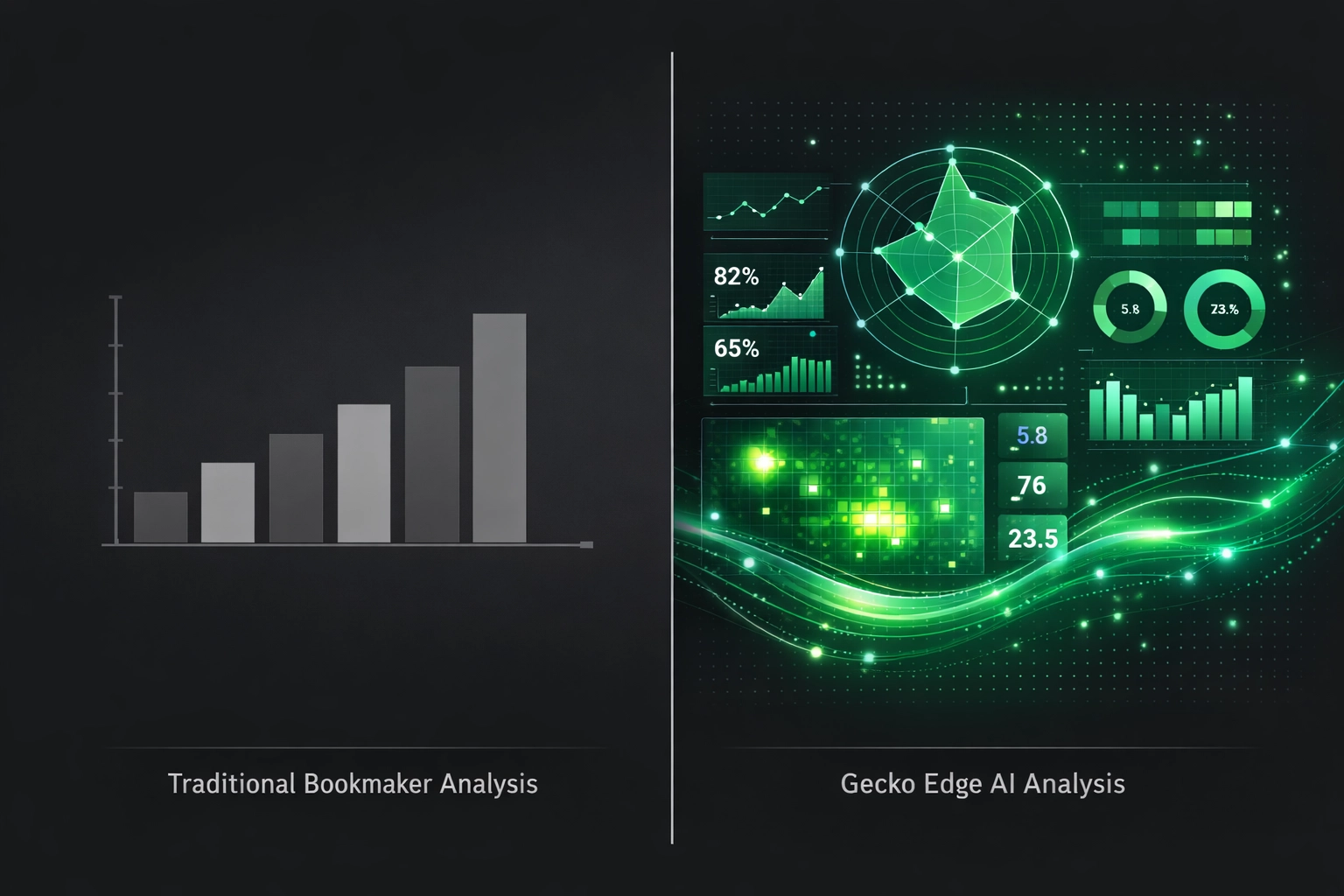
Modern machine learning models process shot locations, defensive actions, progressive passes, set-piece tendencies: hundreds of variables per match. Then they compare that data across entire leagues, identifying patterns human eyes simply can’t catch.
Example: attacking full-backs in English League Two. Macauley Southam-Hales scored three goals in 17 appearances last season as a wing-back at Stockport. When he moved to Bristol Rovers, traditional odds barely shifted. But an AI model looking at his attacking output, his new team’s system, and their opening fixtures? That flags value immediately.
Same with creative midfielders. Jorge Grant produced 15 goals and 16 assists across 68 League One matches at Lincoln City. Elite numbers. Yet when he joined Salford from Hearts, he held 0% ownership because most bettors didn’t dig into his underlying metrics.
Gecko Edge doesn’t miss these patterns. Real-time data processing across every league means you’re getting alerts on value before the market catches up: not days later when the odds have already corrected.
The Team Context Factor
Individual quality matters. But context is everything.
A striker with decent metrics playing for a struggling side won’t deliver. That same striker joining an ambitious team with strong creative midfielders and favourable fixtures ahead? Completely different story.
Lasse Nordås joined Luton Town from Norwegian football for €3 million: 13 goals in 56 Eliteserien matches. Solid, not spectacular. But Luton’s opening fixture was newly promoted AFC Wimbledon, who’d just lost key defensive players.
Perfect storm. Low ownership (0.1%), favourable matchup, ambitious club with better service than he’d received previously. AI models spot that combination instantly by cross-referencing team quality, fixture difficulty, and individual output.
You can’t do that manually. Not across dozens of leagues and hundreds of players. But predictive algorithms? That’s literally what they’re built for.
Market Inefficiency Isn’t Random
The reason bookies struggle with lower leagues is volume. They can’t justify pouring resources into matches that attract a fraction of the betting interest compared to top-flight football.
So they lean on basic models. Historical results. League position. Maybe adjust for obvious team news. That’s it.
Which means they’re slow to react when:
- A player’s role changes mid-season
- Tactical systems shift after a new manager arrives
- Fixture congestion affects specific teams differently
- Underlying metrics diverge from surface-level results
Traditional odds rely on lagging indicators. By the time the market catches up, the value’s gone.
AI-driven models use leading indicators: performance data that predicts future results before they happen. That gap between what the AI sees and what bookies price? That’s your edge.
Gecko Edge tracks those divergences across every league, flagging opportunities the moment they appear. No waiting for public stats sites to catch up. No hoping you spotted something bookies missed.
Coverage Matters More Than You Think
Most betting platforms cover the obvious leagues. English Premier League, English Championship, maybe English League One if you’re lucky.
But English League Two? National League? Regional divisions across Europe? Good luck finding meaningful analysis.
That’s a problem if you’re trying to build a sustainable betting strategy. You need consistent coverage across multiple markets to find regular value: not just occasional punts when you happen to catch a match on TV.
This is where scale becomes crucial. Gecko Edge doesn’t just cover English lower divisions. It processes data from hundreds of leagues globally, applying the same level of analytical rigour whether you’re looking at English League Two or the Norwegian Eliteserien.
Because value doesn’t care about prestige. It shows up wherever markets are inefficient. And lower leagues? They’re about as inefficient as it gets.
The Practical Edge
None of this matters if you can’t actually use it.
You need alerts that flag specific value picks. Models that adjust in real-time as lineups drop and odds shift. Coverage deep enough that you’re not limited to Saturday afternoons betting the same five Premier League matches as everyone else.
Lower leagues give you more opportunities. Midweek fixtures. Weekend slates with 50+ matches instead of 10. Markets where bookies haven’t fine-tuned every single line.
But only if you’ve got the tools to analyse them properly.
That’s the whole point of AI-driven betting platforms. Not to replace your judgement: to extend your reach. To process data at a scale that lets you identify value across dozens of leagues without spending 80 hours a week watching football.
Traditional approaches can’t compete. Manual analysis is too slow. Basic models are too rigid. And mainstream platforms don’t go deep enough into lower divisions to matter.
Sharp bettors know this already. They’re not chasing Premier League accumulators. They’re finding edges in League Two, grinding out consistent returns in markets most punters ignore.
The football might be scrappier. The crowds smaller. The highlights less polished.
But the value? That’s where it actually lives.