



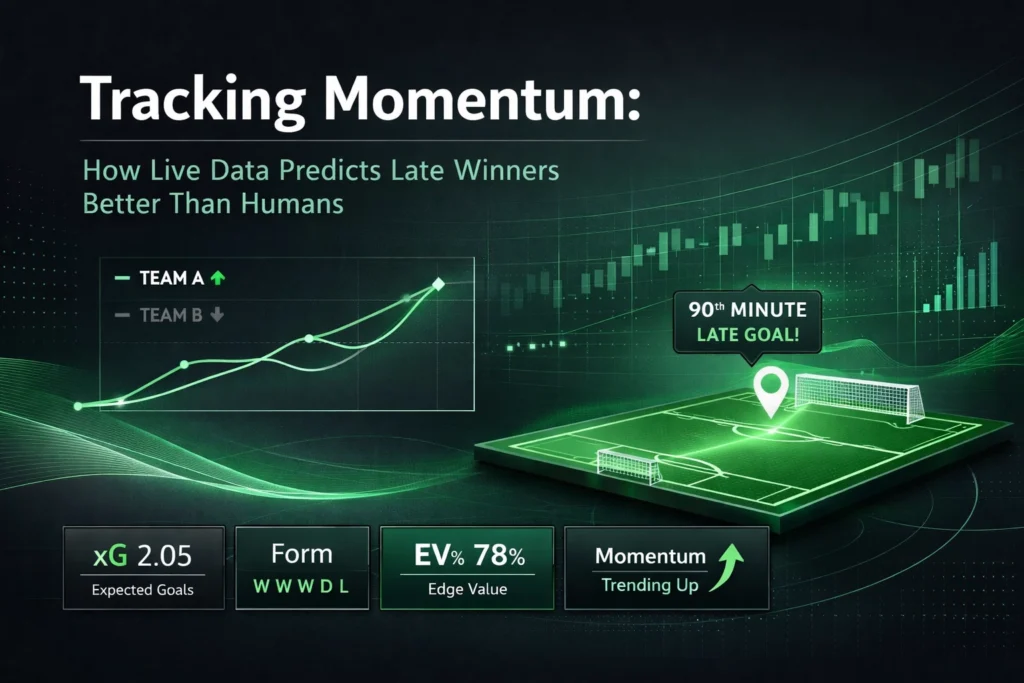
Live Data; you’ve watched it happen a hundred times. A team trailing 1-0 suddenly clicks into gear around the 70th minute. More corners, more shots, more pressure in the final third. You can feel something building. But by the time you’ve decided to back a late equaliser, the odds have already shifted.
That’s the momentum problem. Your eyes see it happening, but they see it too slowly.
What Momentum Actually Means in a Betting Context
When we talk about momentum in football, we’re not being poetic. We’re describing measurable shifts in match pressure that create genuine betting value.
Momentum shows up in specific ways: increased possession in the attacking third, shot volume rising, corners mounting, successful passes into dangerous zones. It’s the aggregate of small tactical shifts that compound into something bigger.
The challenge is that momentum isn’t binary. A team can dominate possession but struggle to create genuine chances. Another might fire off low-quality shots that look impressive in the stats but represent desperation more than threat.
This is where human analysis starts to crack. We process information linearly. We see a shot, then another shot, then notice the pattern. By the time we’ve identified the trend and weighed its quality, the market has already moved.
The Human Blindspot
Here’s what happens when you’re watching a match live. You notice a striker gets into a good position. Then you see the defence looking stretched. A few minutes later, another chance. Your brain starts piecing it together.
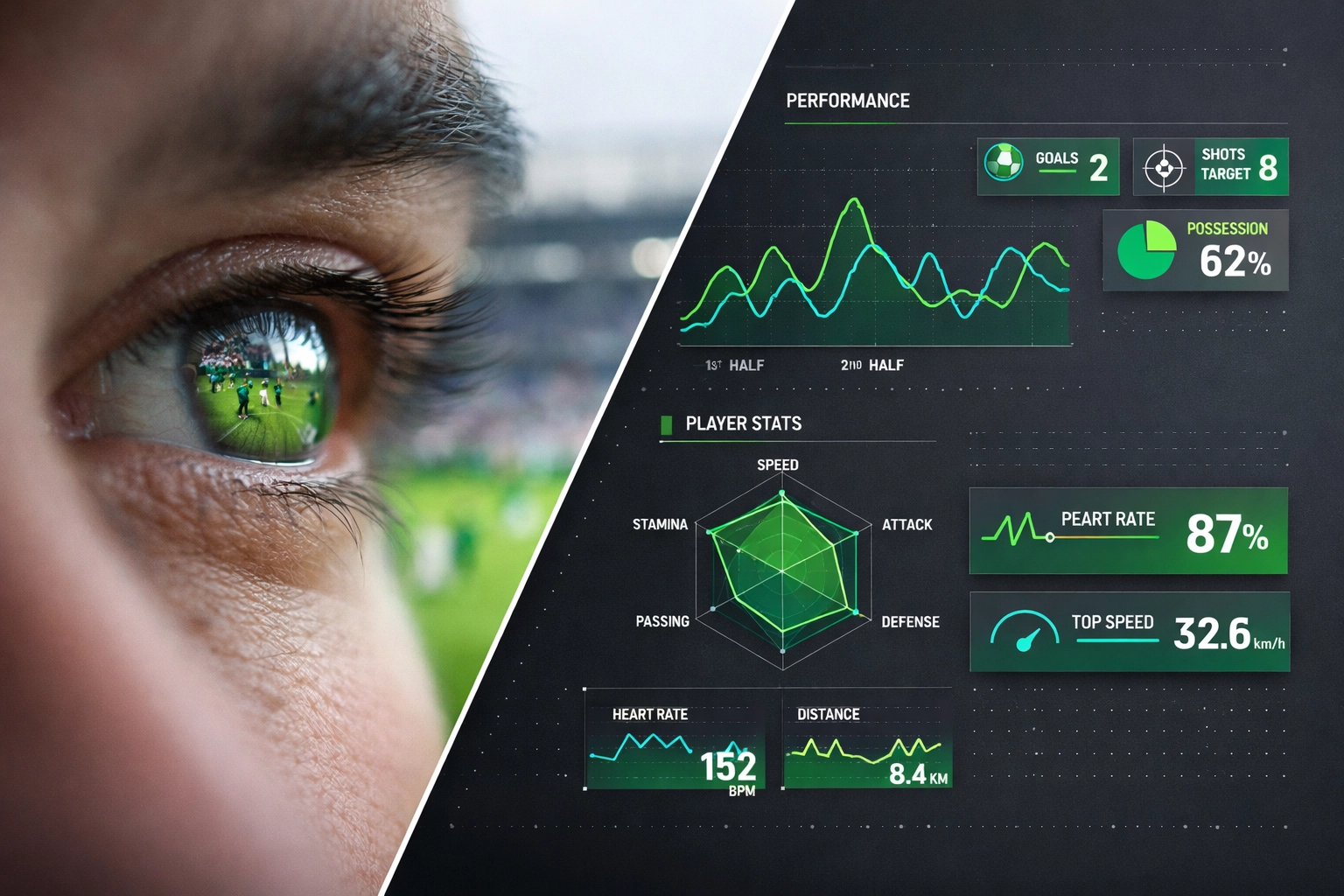
But you’re missing dozens of data points in that same window. You didn’t clock that the opposition’s defensive midfielder has dropped his position five yards deeper. You didn’t notice that the pressing intensity from the trailing team has increased by 18% in the last ten minutes. You didn’t see that passing accuracy in the final third has shifted from 62% to 74%.
Human observers process sequentially. One event, then the next, then the pattern emerges. AI systems don’t work that way. They’re capturing everything simultaneously, mapping relationships between variables you’re not even tracking consciously.
Research shows transformer-based models now hit 75-85% accuracy predicting match outcomes, whilst traditional statistical approaches plateau around 50-60%. The gap isn’t intelligence. It’s bandwidth.
What AI Sees That You Don’t
Live data analysis doesn’t just track what’s happening. It tracks how things are changing relative to each other.
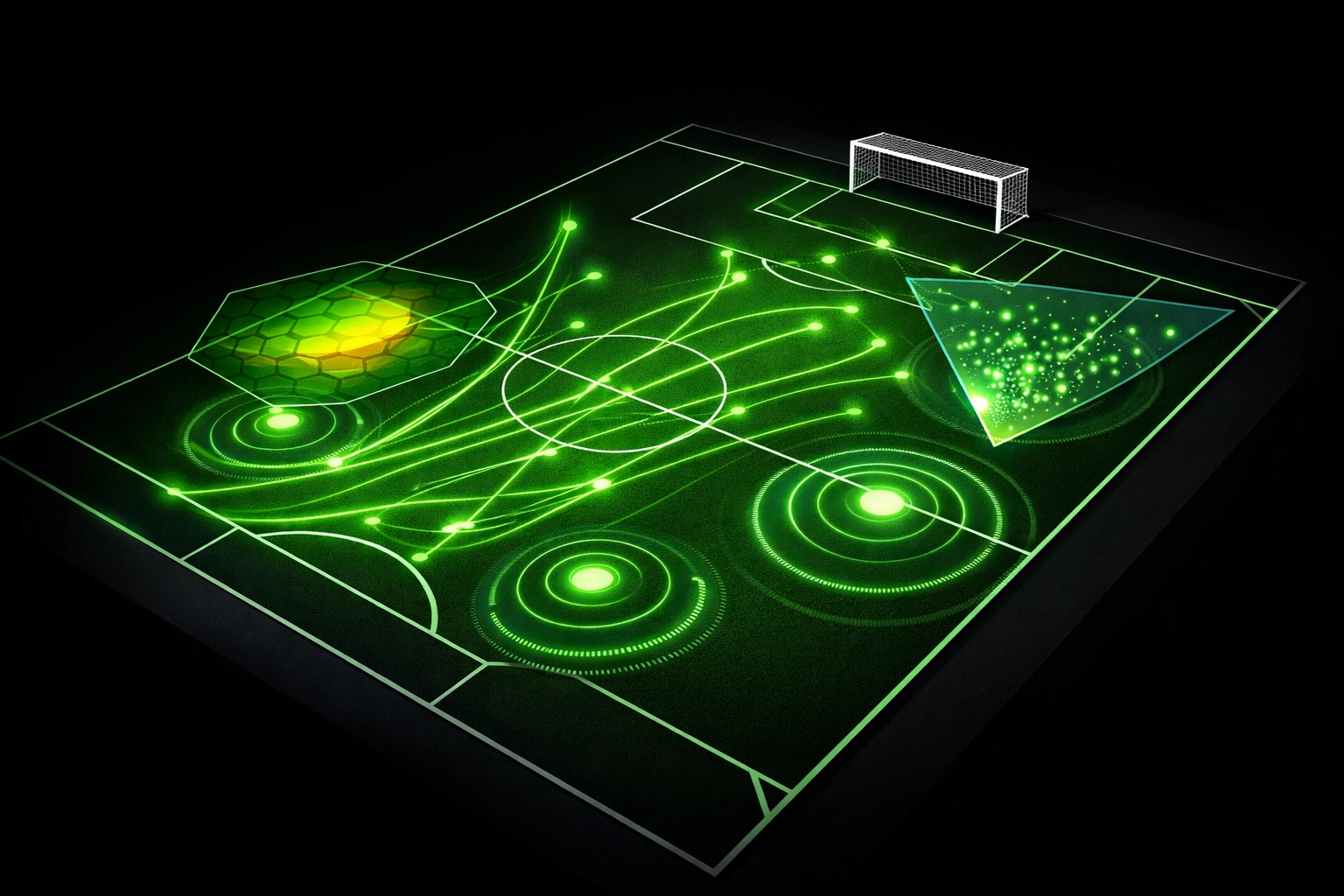
When a team starts pushing for a late winner, AI systems measure fatigue patterns across the opposition defensive line. They track how passing networks shift under pressure. They calculate how set-piece positioning changes when defenders get tired. They note how goalkeeper distribution slows when a team protects a lead.
None of this is visible in the traditional stats most bettors watch. Expected goals gives you a snapshot. Shot counts tell you volume. But neither captures momentum as it’s building.
Gecko Edge processes these layered patterns in real-time, identifying when pressure is translating into genuine threat versus when it’s just noise. The system doesn’t just count shots: it evaluates whether the defensive structure is actually breaking down.
The Late-Game Edge
The final twenty minutes of a football match are where betting value lives and dies. Game states are fluid. Teams chase results. Managers make substitutions that alter tactical setups. One goal changes everything.
This is exactly when human analysis struggles most. There’s too much happening too quickly. You’re trying to weigh whether increased pressure is genuine or whether a team is simply throwing bodies forward without structure.
Live betting markets move within seconds of momentum shifts. If you’re waiting to “see how the next five minutes play out,” you’ve already lost the edge. The odds will have adjusted before you place the bet.
Gecko Edge tracks these transitions as they happen, not after you’ve spotted them. When defensive positioning starts degrading, when pressing intensity crosses a threshold that historically correlates with conceding, when fatigue metrics suggest a breakdown is imminent: the system flags it immediately.
That doesn’t guarantee winners. Football is still football. But it identifies value before the market corrects. And over time, that edge compounds.
Speed Isn’t Everything: But It’s Not Nothing
There’s a difference between reacting quickly and reacting correctly. Speed without accuracy is just expensive guesswork.
The real advantage of live data isn’t that it’s fast. It’s that it’s fast and comprehensive. Bettors using advanced real-time analytics report 5-10% higher returns per bet by catching moments when live performance diverges from market expectations.
That might not sound dramatic, but do the maths. Over a season, over hundreds of bets, that gap becomes significant.
The Multi-Dimensional Problem
When you watch a late-game surge, you might notice a striker getting into dangerous positions. That’s one dimension.
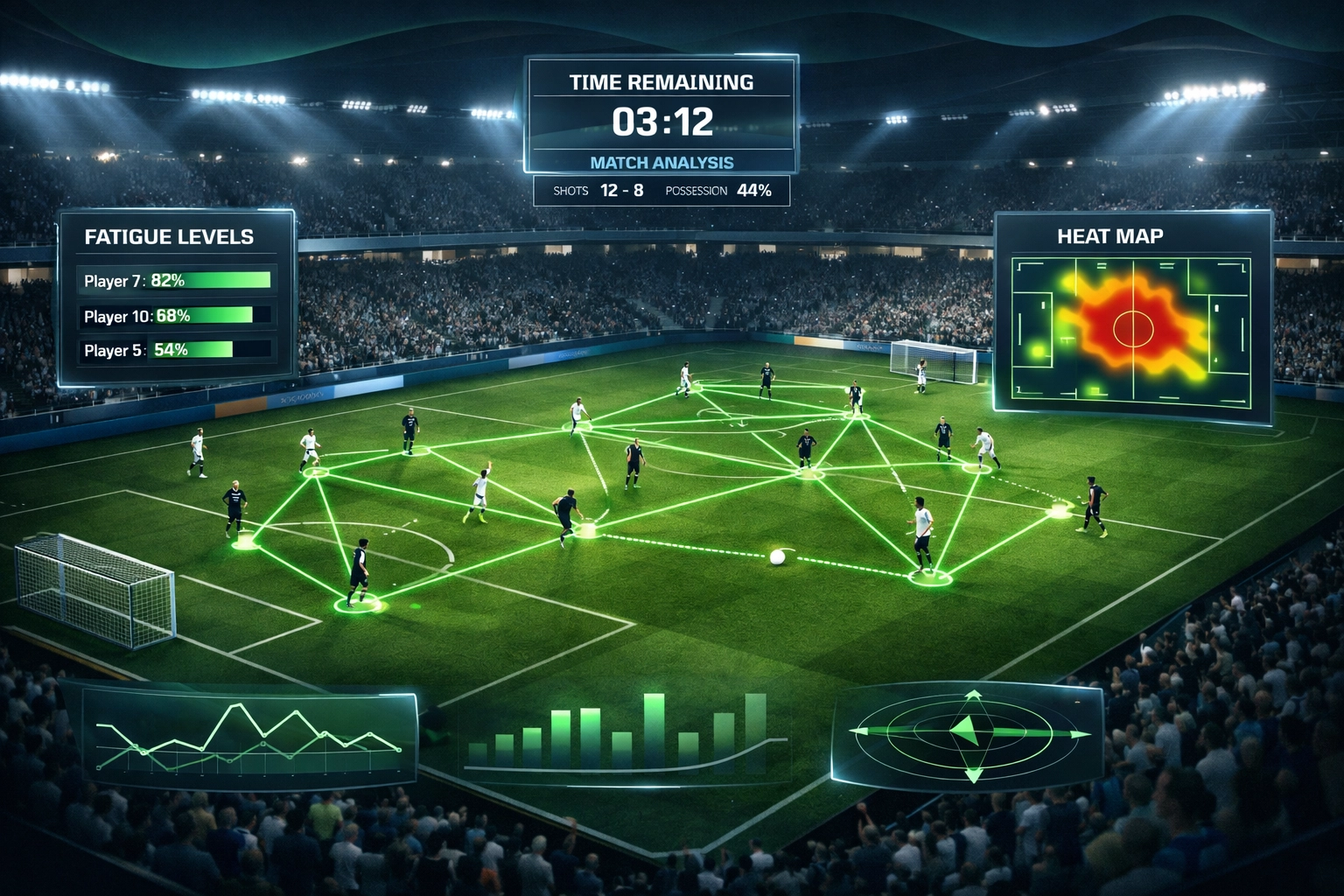
An AI system simultaneously evaluates: defensive line height, midfield compactness, transition speed, positional rotations, player fatigue indicators, pass completion rates in the final third, pressing triggers, and a dozen other variables.
It’s not that you’re incapable of noticing these things. It’s that you can’t process them all at once whilst also deciding whether to place a bet.
Professional sports analytics have proven that even a 1-5% accuracy improvement compounds into measurable advantage over time. That’s the margin we’re playing in. Not magic predictions. Small edges, consistently applied.
Context Still Matters
AI doesn’t replace watching football. It enhances it. You still need to understand team motivation, managerial tendencies, match importance. Machines don’t grasp context the way humans do.
But when it comes to identifying momentum shifts as they happen: when the data says something is building before your eyes fully register it: that’s where live analysis delivers value.
Gecko Edge combines both. Real-time data precision with contextual awareness. It doesn’t tell you what to think. It shows you what’s happening faster and more accurately than manual analysis allows.
The best approach isn’t choosing between human intuition and AI precision. It’s using them together. Let the system handle the data processing. You handle the strategic decisions.
The Bottom Line
Late winners aren’t random. They emerge from measurable patterns: pressure that builds, defences that crack, momentum that compounds.
The question isn’t whether you can spot these patterns. It’s whether you can spot them fast enough to act on the value before the market adjusts.
That’s not a limitation of your judgement. It’s a limitation of human processing speed. We’re not built to track dozens of variables simultaneously whilst maintaining the analytical clarity needed to make sharp betting decisions.
That’s why live data matters. Not because it removes uncertainty: football always carries uncertainty. But because it shows you what’s happening as it happens, not five minutes after you’ve worked it out yourself.
If you’re serious about in-play betting, you’re not competing against other bettors. You’re competing against information speed. The sharpest money moves fastest because it sees patterns forming before everyone else.
Gecko Edge was built for exactly that. Real-time intelligence that spots value when it emerges, not after it’s gone.
Built for bettors. Powered by AI. Faster than your eyes alone.