



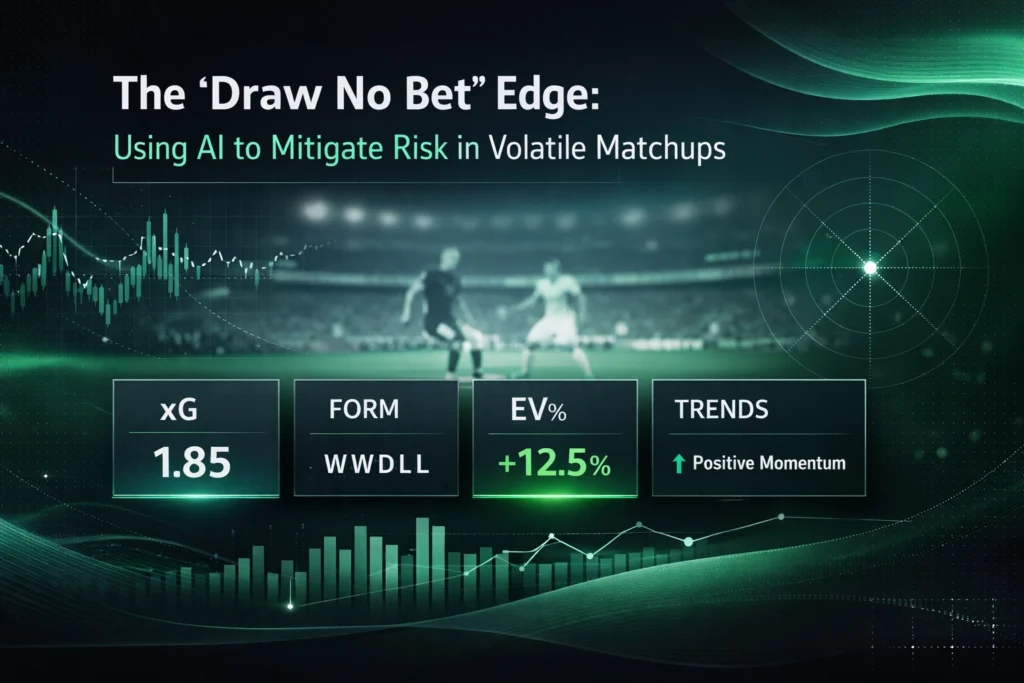
Draw No Bet; you know that feeling when you’re staring at a match between two mid-table sides and thinking: “I reckon Brighton beats Palace here, but honestly… it could go either way”?
That’s exactly where Draw No Bet lives. And most bettors ignore it because the odds look rubbish compared to a straight win. But here’s the thing: when you’re playing the long game, protecting your downside matters just as much as chasing upside.
Let’s talk about how AI can help you find the sweet spot in Draw No Bet markets, especially in those volatile matchups where confidence is low but conviction is real.
What Is Draw No Bet?
Draw No Bet is dead simple. You back a team to win. If they win, you win. If they draw, you get your stake back. If they lose, you lose.
It’s a two-way market that removes the draw from the equation. Think of it as insurance for tight games where a stalemate feels likely but you still fancy one side to edge it.
The trade-off? Lower odds. Because the bookmaker knows they’re taking on less risk by refunding draws, they price accordingly. A team priced at 2.50 to win might be 1.80 in the Draw No Bet market.
But that’s not always a bad deal. Sometimes, the right bet isn’t the biggest payout: it’s the one that lets you survive variance.

Why DNB Works in Tight, Cagey Games
DNB shines in matchups where both sides are defensively solid, evenly matched, or going through a phase of grinding out results.
Picture this: Wolves vs Nottingham Forest. Two teams averaging under a goal per game. Neither desperate for a win. Both managers pragmatic. The draw is trading around 3.20. Wolves are slight favourites at home.
You think Wolves should win. Their xG numbers are better over the last six games. But Forest are stubborn. You can see this finishing 0-0 or 1-0 either way.
In a straight win market, you’re exposed to that draw. In DNB, you’re protected. You’re essentially saying: “I think Wolves are the better side here, but I’m not confident enough to risk my stake on a scrappy 1-1.”
That’s smart risk management. And it’s where most casual bettors get it wrong: they either avoid the bet entirely or take the win odds and pray.
The Problem Most Bettors Face with DNB
The big issue with Draw No Bet is knowing when it’s actually value.
Just because a game looks tight doesn’t mean DNB is the play. Sometimes the odds drop so much that you’re better off taking the risk on a straight win. Other times, the draw probability is so high that even the DNB odds are inflated.
Most bettors eyeball it. They look at league position, recent form, maybe check the head-to-head record. But that’s surface-level stuff.
What you really need is a model that can tell you:
- What’s the true probability of a draw in this fixture?
- What’s the probability of a loss for the team I fancy?
- Does the DNB price offer value after accounting for both?
That’s where Gecko Edge comes in. Our AI doesn’t just look at historical results. It pulls in real-time data: team news, xG trends, defensive solidity metrics, match context: and builds a probability distribution across all three outcomes.
Then it tells you whether the DNB price is worth taking or if you’re better off elsewhere.
How AI Identifies Value in DNB Markets
Here’s how Gecko Edge approaches it.
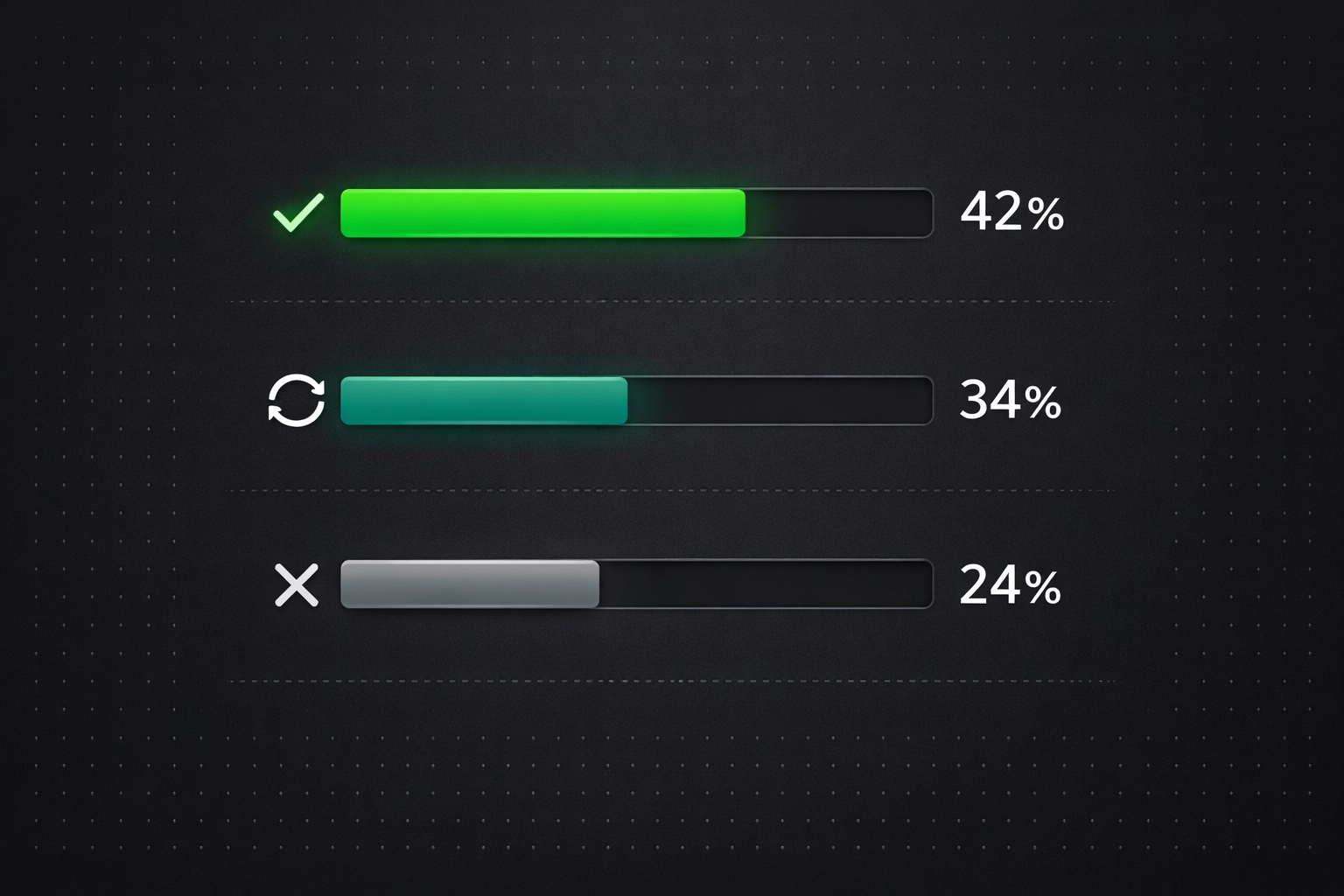
First, the model calculates the likelihood of each result: home win, draw, away win. Let’s say it gives you something like this for Wolves vs Forest:
- Wolves win: 42%
- Draw: 34%
- Forest win: 24%
Now, in the DNB market, you’re effectively combining the win probability with the “push” scenario (the draw). So your real DNB probability for Wolves is 42% win + 34% refund.
That means 76% of the time, you’re not losing money. And 42% of the time, you’re winning.
Compare that to the bookmaker’s DNB odds. If Wolves DNB is priced at 1.75, the implied probability is about 57%. But the model says your true “non-losing” probability is 76%, with a 42% chance of profit.
That’s a clear edge. The bookmaker has mispriced the draw frequency.
Gecko Edge flags these opportunities in real time, especially in games where:
- Draw probability is high (30% or more)
- One team is slightly favoured but not dominant
- The straight win odds don’t justify the risk
It’s the difference between guessing and knowing. And over a season, that difference compounds.
When to Use DNB vs Straight Wins
This isn’t an either/or situation. Both markets have their place.
Use DNB when:
- The draw probability is 30% or higher
- You fancy a team but lack strong conviction
- The straight win odds don’t compensate for the draw risk
- You’re in a flat spell and want to protect your bankroll
Use straight wins when:
- The model gives a clear favourite with low draw likelihood
- The odds gap between win and DNB is too wide to justify the insurance
- You’re staking small and can afford the variance
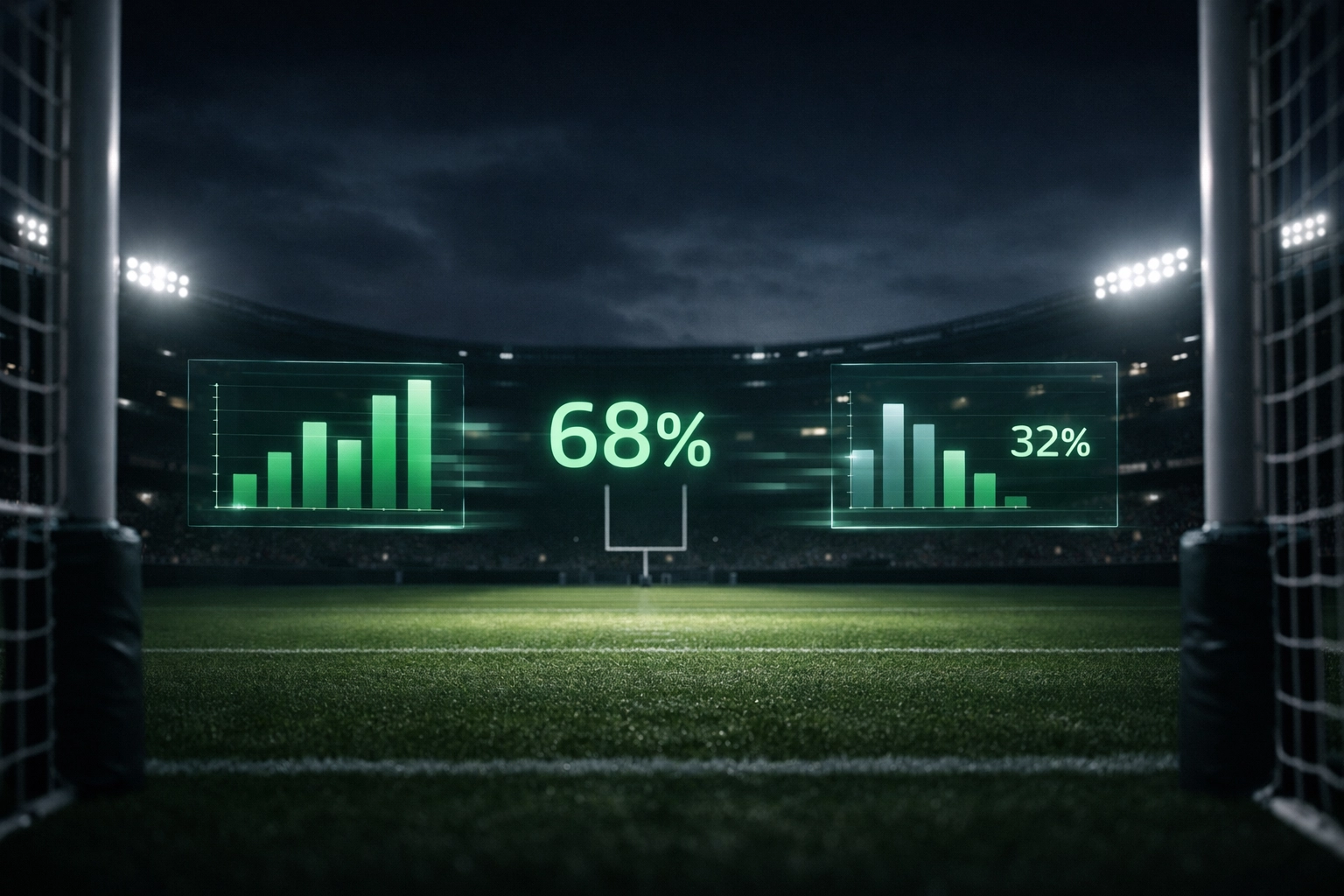
For example, if you’re backing Manchester City at home to Luton and the model shows a 68% win probability with only a 15% draw chance, you don’t need DNB. The straight win at 1.40 is fine. The draw just isn’t likely enough to matter.
But if it’s Everton vs Fulham and the model shows 38% win, 32% draw, 30% loss? That’s a DNB situation all day.
Gecko Edge makes this decision automatic. You’re not second-guessing yourself or leaving value on the table.
Real Scenarios Where Draw No Bet Makes Sense
Let’s talk practical examples.
Scenario 1: Underdog with Defensive Solidity
You’re looking at a newly promoted side away to a mid-table team. The underdog has kept three clean sheets in five games. They’re organised, hard to break down, but lack firepower.
The home side are favourites, but they’ve drawn four of their last six. The model shows a 36% win probability for the home side, 35% draw, 29% away win.
DNB on the home side might offer value here if the odds are decent. You’re protected by that chunky draw probability while still getting paid if the home side nicks it late.
Scenario 2: Derby Match
Local derbies are notoriously cagey. Form goes out the window. Both sides are cautious.
The model might show a 40% draw probability in a Sheffield Wednesday vs Sheffield United clash. Even if you fancy one side, the DNB market becomes more attractive than the straight win because you’re not fighting that elevated draw risk.
Scenario 3: End-of-Season Volatility
Late-season games where both teams are safe from relegation and clear of Europe. Motivation drops. Rotations increase. Draw probability spikes.
If you still fancy one side based on squad quality or home form, DNB lets you play it without sweating a lifeless 1-1.
These are the situations where most bettors either avoid the market entirely or take bad value on a straight win. Gecko Edge helps you spot the middle ground: the edge that others miss.
The Long-Term Draw No Bet Play
Here’s what separates smart bettors from the rest: they understand that surviving variance is half the battle.
You don’t need to win every bet. You need to avoid catastrophic losses and compound small edges over time.
DNB fits perfectly into that philosophy. You’re reducing your exposure to the draw: the result that kills more accumulators and single bets than anything else: while still getting paid when your pick comes through.
And with AI doing the heavy lifting, you’re not guessing when to use it. You’re not relying on gut feel or outdated stats. You’re making decisions based on real-time probabilities and value calculations.
That’s what Gecko Edge is built for. Not hype. Not luck. Just smarter, sharper betting that compounds over time.
If you’re serious about managing risk in volatile matchups and finding edges others ignore, DNB should be in your toolkit. And with the right AI behind you, it becomes one of the most consistent plays in the game.