Tilt; you’ve been there. We all have.
Your accumulator falls apart in the 89th minute. A goalkeeper howler. A VAR decision that makes no sense. And suddenly, you’re scrolling through tonight’s fixtures, looking for something: anything: to win back what you just lost.
That’s tilt. And it’s the silent killer of betting bankrolls everywhere.
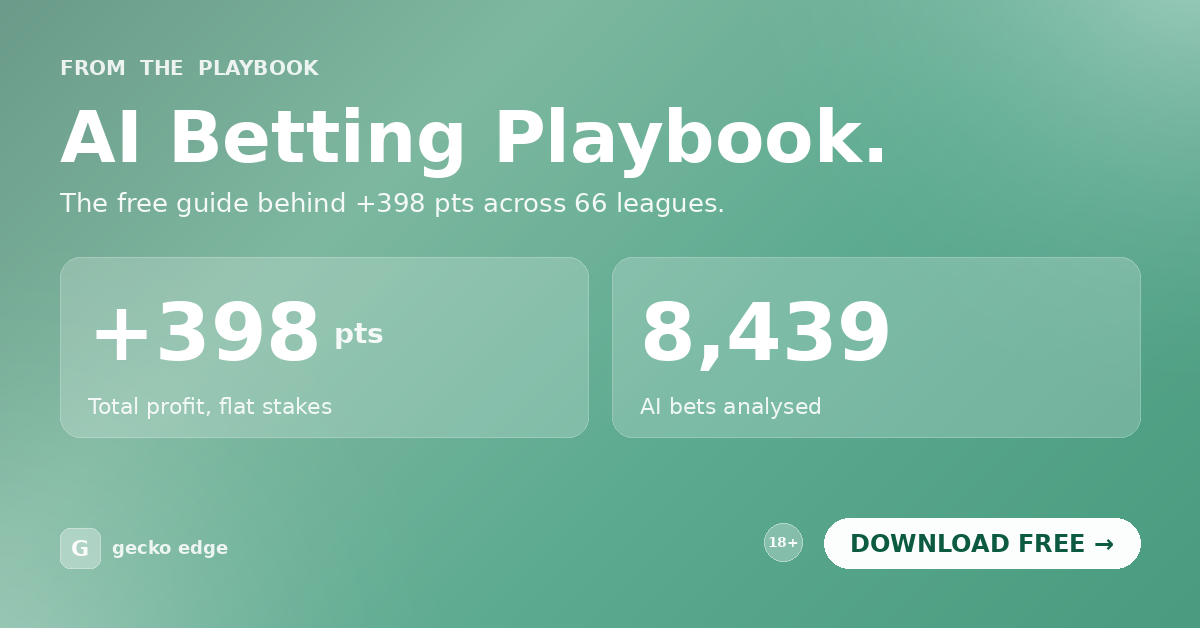
Gecko Edge has tracked 8,439 AI-generated bets and recorded +398pts of profit across 66 competitions. See how the model works →
The problem isn’t that you don’t understand football. You probably know more than most. The problem is that your brain is wired to betray you at the worst possible moments. Fear, frustration, overconfidence: they hijack your decision-making when the stakes feel highest.
But here’s the thing: AI doesn’t feel frustrated. It doesn’t chase losses. It doesn’t fall in love with a team or get swayed by what the pundits said on Sky Sports.
And that’s exactly why it might be the objective partner you need.
The Psychological Traps We All Fall Into
Let’s be honest about what we’re dealing with here. Football betting is emotionally charged by design. The drama, the narratives, the near-misses: they’re what make the sport compelling. But they’re also what make betting on it so dangerous.
Here are the traps that catch even experienced bettors:
FOMO (Fear of Missing Out): Everyone’s backing the favourite. The odds are drifting. You haven’t done your research, but you jump in anyway because you don’t want to miss the train.
Chasing losses: You’re down for the day. Logic says stop. But your gut screams that one more bet will fix everything. It rarely does.
Confirmation bias: You’ve already decided Spurs will win. So you ignore the xG data showing they’ve overperformed all season. You see what you want to see.
The gambler’s fallacy: Manchester City haven’t lost at home in months. They’re “due” a defeat, right? That’s not how probability works.
Overconfidence after a win: Three winners in a row. You’re basically a genius now. Time to increase the stakes. This is usually when things go wrong.
These aren’t character flaws. They’re human nature. Your brain evolved to react quickly to threats and rewards: not to calculate expected value on Asian handicaps.

Why Your Brain Is Built to Bet Badly
Here’s an uncomfortable truth: the same instincts that kept your ancestors alive are terrible for football betting strategy.
When you’re on a losing streak, your brain perceives it as a threat. The stress response kicks in. Cortisol floods your system. Rational thinking takes a back seat to fight-or-flight impulses.
And what does fight-or-flight look like in betting terms? Chasing. Doubling down. Taking reckless risks to escape the discomfort of loss.
Meanwhile, after a few wins, dopamine tells you that you’re onto something special. You start believing you’ve cracked the code. You take bigger positions. You ignore the data that contradicts your newfound confidence.
The bookmakers know this. They’re counting on it. Their margins are built around the assumption that most punters will eventually hand back their winnings through emotional decisions.
So how do you fight biology?
You bring in something that doesn’t have biology.
How Predictive Football Models Remove the Emotion
This is where AI changes the game.
A well-designed predictive football model doesn’t care about narratives. It doesn’t know that Liverpool have just signed a marquee player and the hype is through the roof. It doesn’t get nervous when odds shift suddenly.
It just processes data. Millions of data points. Historical performance, expected goals, team form, referee tendencies, weather conditions, lineup changes: all analysed in seconds.
The result? Odds priced on actual probabilities, not gut feelings or media sentiment.
When you’re betting with AI-driven insights, you’re not asking “Who do I think will win?” You’re asking “Where are the bookmakers mispricing risk?”
That’s a fundamentally different question. And it’s one that emotions can’t answer reliably.
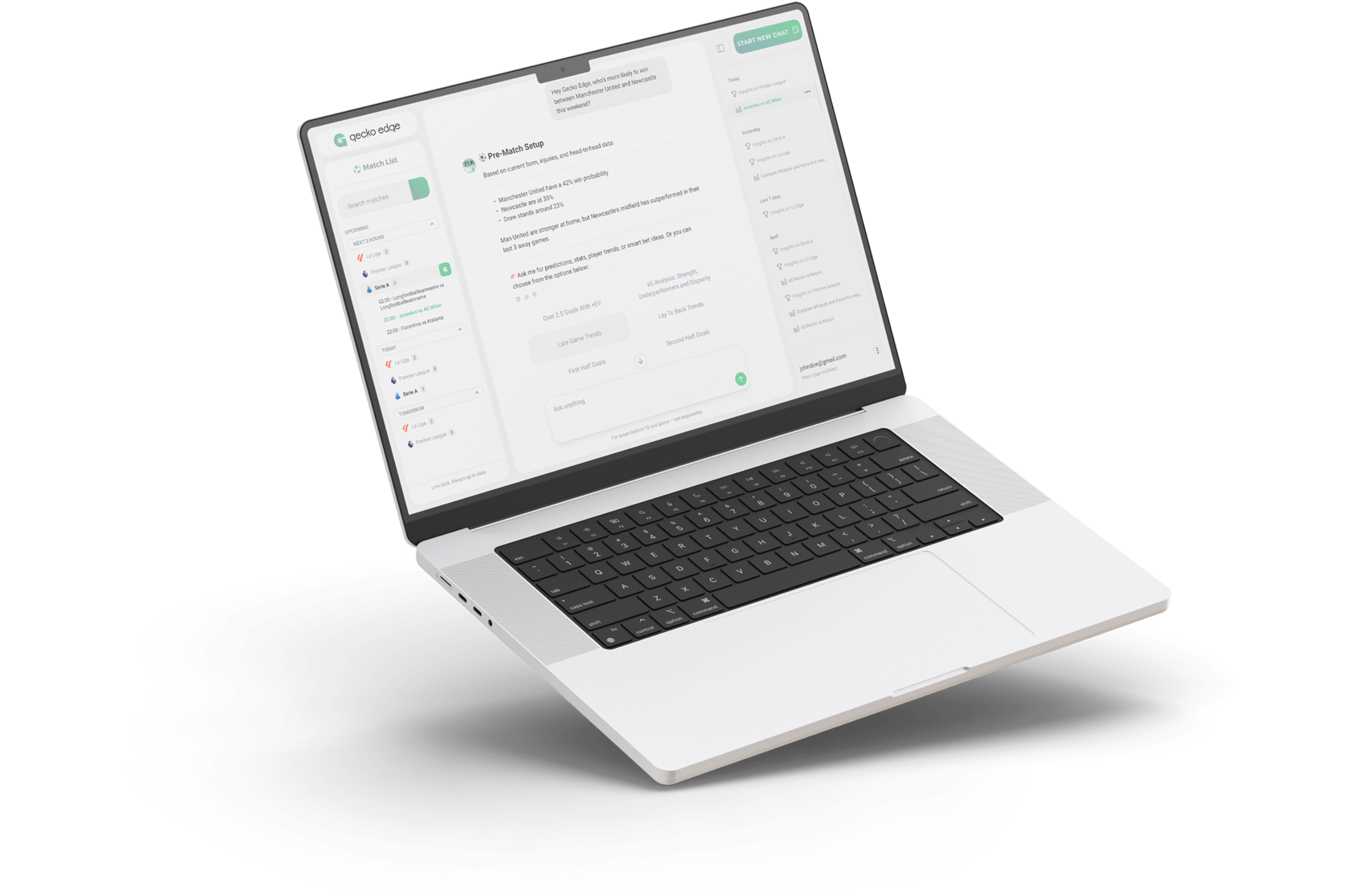
Gecko Edge was built around this principle. It acts as an objective partner: highlighting value opportunities based on data, not hunches. When you’re tempted to back a popular team just because everyone else is, the model shows you whether the odds actually represent value.
Sometimes they do. Often they don’t.

The Objective Partner You Didn’t Know You Needed
Think of AI as a calm friend who’s seen it all before.
You’re about to place a bet because you’re frustrated. The AI doesn’t lecture you. It just shows you the numbers. The expected value is negative. The probability of success doesn’t justify the odds.
No judgement. Just clarity.
This is what makes Gecko Edge different from traditional betting tips. It’s not telling you what to bet. It’s helping you understand whether a bet makes mathematical sense.
The decision remains yours. But now it’s an informed decision, not a reactive one.
For bettors serious about improving their football betting strategy, this shift from emotion to analysis is transformative. You stop asking “What do I feel?” and start asking “What does the data show?”
If you’re curious about building a more systematic approach, our guide on how to build your own AI-powered betting system is a good starting point.
AI Has Limits Too: And That’s Okay
Let’s not oversell this.
AI is brilliant at processing information and calculating probabilities. But probability isn’t destiny. A model might determine a team wins 65% of the time: that still means they lose 35% of the time.
Injuries happen. Referees make bizarre decisions. Deflections change everything.
No algorithm can control randomness. And sophisticated analytics can create a dangerous illusion of certainty if you’re not careful.
The psychological trap doesn’t disappear entirely: it just evolves. Instead of betting on gut feeling, you might start overleveraging because “the AI said it was 70% likely.” That’s still poor bankroll management.
Gecko Edge sharpens your tools. But you still need discipline. You still need to manage your stakes sensibly. The AI removes emotion from analysis: it can’t remove it from execution.
That part’s on you.
Practical Betting Tips for Staying Off Tilt
AI helps enormously, but here are some complementary habits that protect your bankroll:
Set session limits before you start. Decide in advance how much you’re willing to risk today. When you hit that number, stop. No exceptions.
Never bet immediately after a loss. Take a break. Walk away from the screen. The fixtures will still be there in an hour.
Review your bets weekly, not daily. Short-term variance is noise. Judge your decisions over weeks and months, not individual results.
Trust the process, not the outcome. A good bet can lose. A bad bet can win. Focus on whether your reasoning was sound, not whether you got lucky.
Use AI as a filter, not a guarantee. Let predictive football models highlight where value might exist. Then apply your own judgement about context the algorithm might miss.
For more on avoiding common mistakes, especially in live markets, have a look at 7 in-play betting mistakes and how AI fixes them.
Smarter Betting Starts Here
Tilt isn’t a weakness. It’s human. The question is whether you’re going to let it run your betting decisions, or whether you’re going to build systems that account for it.
AI won’t make you immune to emotion. But it gives you something to anchor to when emotions run high. A calm, data-driven perspective that doesn’t care about your last bet or your favourite team.
Gecko Edge exists because we believe bettors deserve better tools than gut instinct and tipster guesswork. Not hype. Not promises. Just clear, objective analysis built to help you make smarter decisions.
The market is full of noise. Punditry, social media hot takes, odds drifting for no clear reason.
Cut through it.
Let the data breathe. And bet with clarity, not desperation.
1 comment