



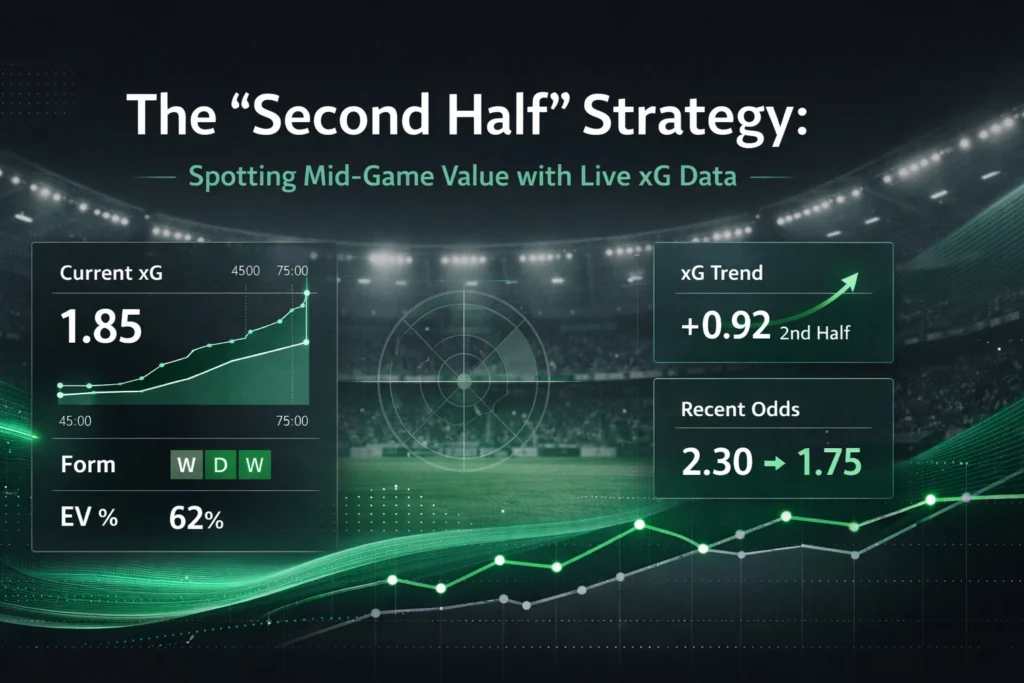
Most bettors treat half-time like a loo break. Rather than paying attention to live xG data, it’s fifteen minutes to grab a drink, check their phones, maybe glance at the scoreline again; half-time is where the real opportunities show up.
The second half isn’t just another 45 minutes. It’s a fresh game with new information. And when you combine that information with expected goals metrics from the first half, you can spot value that bookmakers are still catching up to.
Let me show you how.
Why Half-Time Is the Best Time to Reassess
The scoreline at half-time doesn’t always tell the truth.
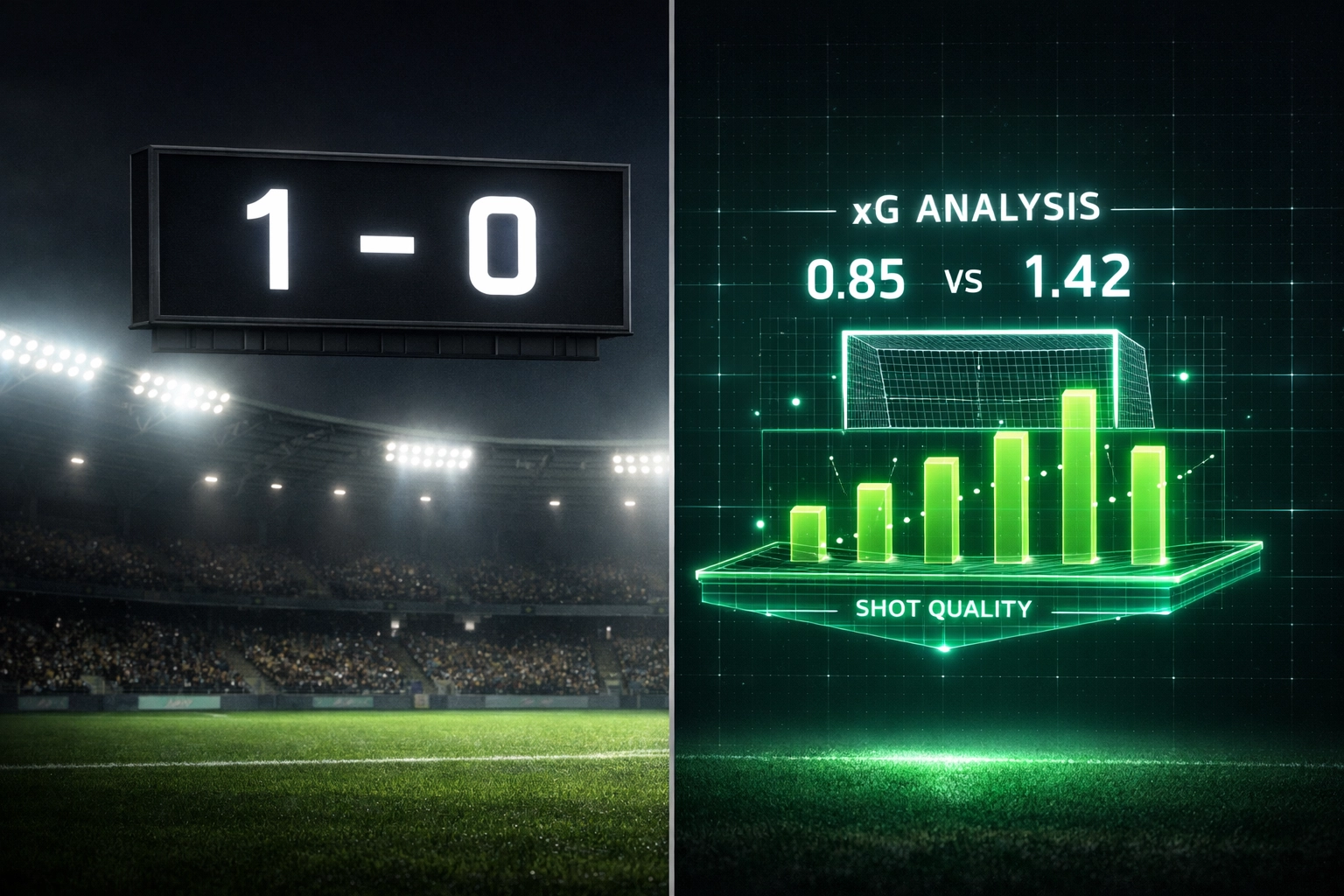
A team might be 1-0 down but have created three times the quality chances. Another might be winning 1-0 despite barely threatening. The goals tell you what happened. The live xG data tells you what should have happened.
That gap matters.
When a team is underperforming their xG in the first half, they’re often still a threat in the second. When they’re overperforming, regression tends to catch up. Half-time gives you a moment to step back, review the data, and ask: is this scoreline deserved?
If it’s not, there’s usually value to be found.
Gecko Edge pulls live xG data as the match unfolds, showing you exactly which team is creating better chances and how sustainable the current result really is.
How Live xG Reveals the Real Story
Let’s say you’re watching a match at half-time. Team A is winning 1-0. You check the xG: Team A 0.4, Team B 1.8.
That tells you Team B has been the better side. By a fair margin. They’ve created high-quality chances. They just haven’t converted yet.
Now the bookies adjust the odds based on the scoreline, not the underlying performance. Team B’s odds to win have drifted. Their Over 2.5 goals line looks inflated. There’s your opportunity.
This is where second half betting gets interesting. You’re not betting blind. You’ve got 45 minutes of data showing you which team is more likely to score, even if the current result doesn’t reflect it yet.
xG doesn’t predict everything. But it shows you who’s been creating danger. And in football, sustained danger usually leads to goals.
Teams That Ramp Up Late
Some teams are slow starters. They feel out the first half, then shift gears after the break.
Liverpool under Klopp were famous for it. They’d control the first half without urgency, then explode in the final 30 minutes. Their xG would tick along steadily in the first 45, then spike dramatically between the 60th and 80th minute.
Real Madrid in Champions League knockout matches? Same pattern. They stay patient, absorb pressure, then turn it on late. If you’re watching their xG build steadily in the first half without converting, the second half often delivers.
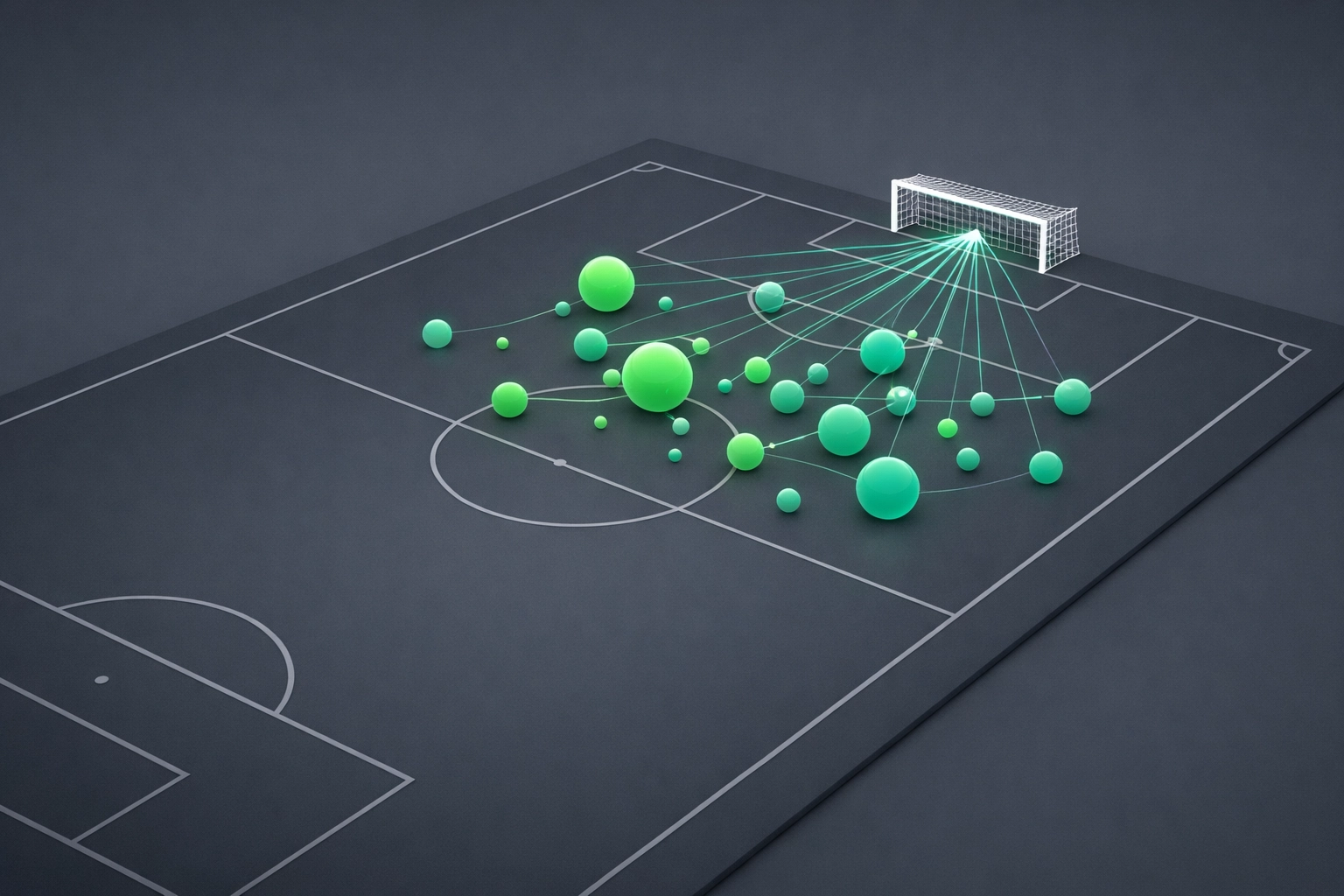
Bundesliga sides like Borussia Dortmund and Bayern Munich also tend to dominate possession early, build xG gradually, then capitalise after the break when opposition legs tire.
When you spot these patterns with live data, you can back them at better odds during or just after half-time. The market hasn’t fully priced in their tendency to finish strong.
Gecko Edge tracks these team-specific patterns over time, so you’re not guessing. You’re seeing how a side typically performs across different match phases.
Spotting Value in the Early Second Half
The first ten minutes of the second half are gold.
Teams come out with adjustments. A manager might push his full-backs higher. A striker who was isolated in the first half suddenly gets service. The xG starts shifting before the odds do.
If you’re watching live xG, you can see these changes happen in real time. A team that created 0.6 xG in the entire first half might generate 0.4 in the opening eight minutes of the second. That’s your signal.
The bookies will adjust eventually. But there’s usually a window where the odds haven’t caught up to the new reality. That’s when you move.
Let’s say a team was 0-0 at half-time but underperforming their 1.2 xG. You back them to score next at decent odds. Ten minutes into the second half, they’re peppering the goal, the xG is climbing, and the odds are shortening. You’re already positioned.
This isn’t luck. It’s reading the data and acting before the market corrects.
When the Second Half Flips the Script
Some matches genuinely change at half-time.
A team makes a tactical switch. A key player gets subbed off injured. The intensity drops. Suddenly, the team that dominated the first half goes quiet.
Live xG data helps you spot this early. If the xG flow reverses in the opening minutes of the second half, you know something’s shifted. The team that was on top is no longer controlling the chances.
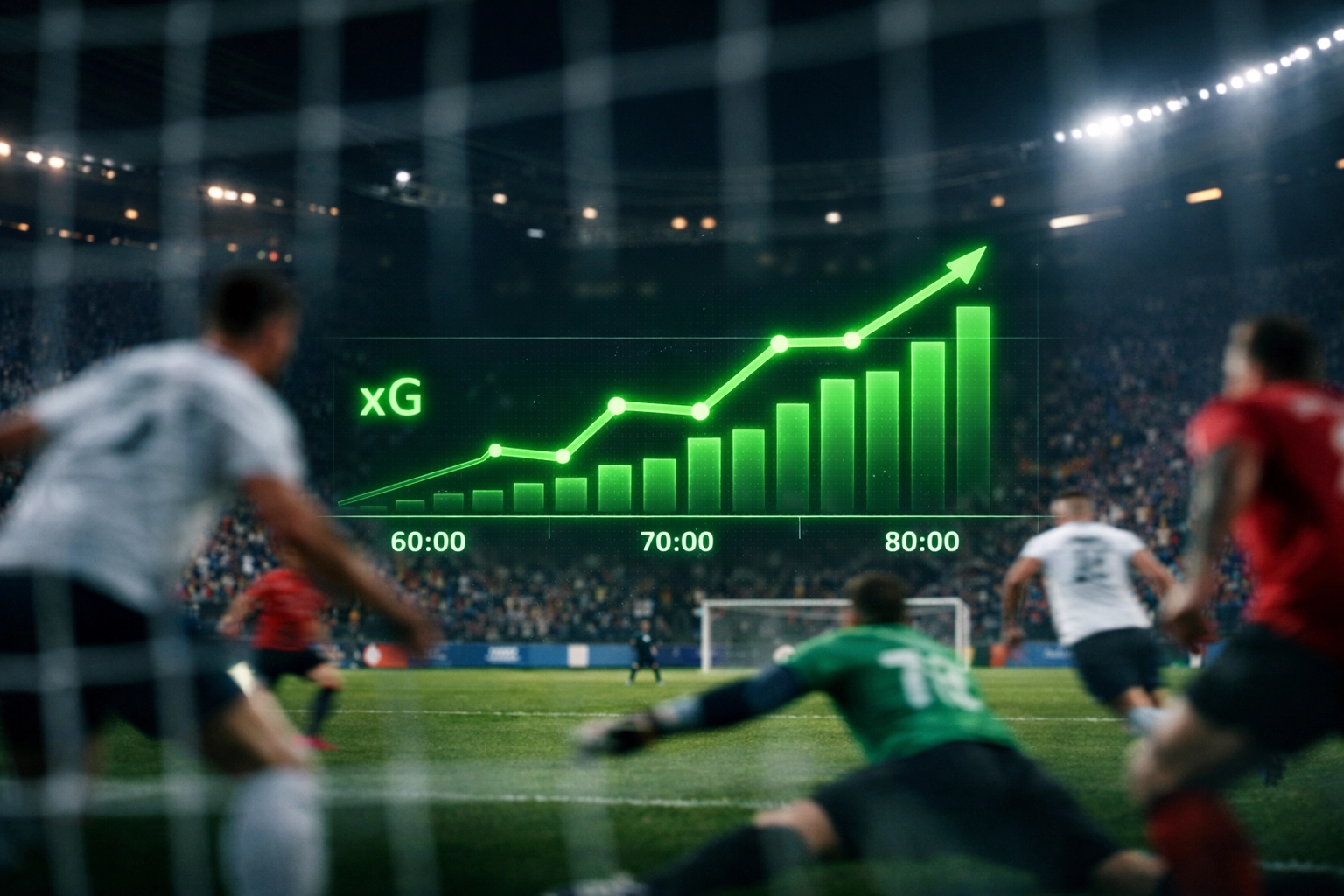
Maybe the opposition brought on a quicker winger. Maybe the defending team dropped deeper and started hitting on the counter. Whatever the reason, the xG tells you it’s happening before the scoreline does.
That’s when you can flip your position. Back the team that’s now creating the chances, even if they were second-best in the first half. The odds often lag behind the tactical shift by five or ten minutes. That’s your edge.
Gecko Edge gives you this intelligence live, tracking xG shifts as they happen and highlighting when momentum changes hands.
Why In-Play Intelligence Matters
Second half betting isn’t about reacting to goals. It’s about anticipating them.
Most punters wait for something to happen, then scramble to back it. But by then, the odds have already moved. The value’s gone.
The smart play is using live xG data to see what’s about to happen. Which team is creating the better chances. Which side is tiring. Who’s shifting momentum.
That requires real-time data. Not just the scoreline. Not just possession stats. Actual shot quality metrics that show you where the goals are most likely to come from.
Gecko Edge was built for exactly this. Live xG data tracking, predictive modelling that adjusts as the match unfolds, and team-specific insights that show you how sides typically perform in the second half.
You’re not guessing. You’re making decisions based on what’s actually happening on the pitch.
Practical Application of Live xG Data
Here’s how to use this in practice.
At half-time, check the xG from the first half. Compare it to the scoreline. If there’s a significant gap, you’ve got a potential opportunity.
Ask yourself: is the losing team creating quality chances? If yes, consider backing them in the second half. Is the winning team overperforming their xG? If yes, the value might be on the opposition or the draw.
Watch the first ten minutes of the second half closely. If the xG flow continues in the same direction, your read was right. If it reverses, adjust.
Don’t overthink it. The data tells you which team is more dangerous. Trust that over 45 minutes, quality chances usually convert.
And remember, this isn’t about every match. It’s about spotting the specific situations where the first half xG reveals something the odds haven’t fully priced in yet. That’s where the value sits.
Half-time isn’t a break. It’s your moment to reassess, analyse, and act. While everyone else is still thinking about the scoreline, you’re already ahead.