



You’ve seen it a hundred times. The much talked about New Manager Bounce….a club sacks their manager mid-season. New bloke comes in. Everyone’s buzzing. First match? They win. Second match? Another three points. Suddenly the pundits are talking about “fresh ideas” and “new energy” like the previous manager was managing the team via fax machine.
Then, six weeks later, they’re back to losing 2-0 at home to sides they should be beating.
So what’s actually going on here? Is the new manager bounce a real thing you can bet on, or just narrative-driven nonsense that bookies use to shift odds?
Let’s cut through it.
The Numbers Don’t Lie (But They Do Mislead)
Here’s the thing: the bounce is real. At least statistically.
Analysis of 168 Premier League managers found they averaged 7.26 points across their first six matches in charge. That’s roughly two wins and a draw, not bad for someone who’s barely had time to learn everyone’s names. Separate research on 26 managerial changes showed that 77% of new managers averaged more points per match in their first five games than their predecessor. Nine of them literally doubled the previous points average.
That sounds compelling until you ask the obvious question: why?

The issue is this: managers get sacked when things are going badly. Really badly. We’re talking 1 point per match on average, well below the league average of 1.3. So when a new manager comes in and gets, say, 1.4 points per match, it looks like a miracle. But it’s not. It’s just regression to the mean.
Think of it like this. If you flip a coin ten times and get eight tails, you might think the coin is dodgy. But if you flip it another ten times, you’ll probably get closer to 50/50. That’s not because you changed coins. It’s because that’s how probability works.
Same with football. A team doesn’t suddenly become terrible overnight. They’re usually just having a bad run. The new manager gets credit for “fixing” things when really the team was always going to improve, regardless of who was in the dugout.
When the Bounce Actually Matters
Now, before you dismiss this entirely, there are patterns worth noting.
The bounce is strongest when managerial changes happen in October, yielding an additional 8.16 points compared to other periods. Why? Probably because clubs panic early in the season when they’re underperforming, but the underlying squad quality is still decent. By February, if you’re sacking your manager, the problems usually run deeper than tactics.
The effect typically lasts about five games. After that, the team’s true level reasserts itself. Only 30% of new managers actually help their side finish the season higher than when they arrived. That’s a pretty damning stat if you’re betting long-term based on managerial change alone.

But here’s where it gets interesting for bettors: 74% of managers achieve some form of bounce. That’s a high enough percentage that markets should price it in aggressively. Yet they don’t always. Why? Because casual punters overreact to narrative, and bookies know it.
A mid-table Championship side sacks their manager after four straight losses. New bloke comes in with a big reputation. The market shortens their odds dramatically for the next match, even if they’re playing away at a side three places above them. That’s not value. That’s hype pricing.
How to Actually Bet This Properly
If you want to bet the new manager bounce, you need to separate signal from noise.
First, look at the underlying numbers before the sacking. Was the previous manager genuinely underperforming relative to the squad’s quality, or was the team just having bad luck? Check xG data. If they’ve been creating chances but not finishing them, that’s variance: not tactics. A new manager won’t fix that in week one.
Second, consider the fixture list. A new manager getting an easy home match against a struggling side will obviously look better than one facing a top-four team away. The bounce exists, but context matters. You can’t just blindly back every new appointment and expect profit.
Third, timing is everything. The data shows the bounce is strongest in the first five games. After that, it fades. If you’re betting on match six or seven, you’re essentially betting on the manager’s actual ability: not the temporary psychological lift.
Where Data Cuts Through the Narrative
This is where Gecko Edge becomes useful.
The new manager bounce isn’t about tactics or motivation speeches. It’s about probabilities, regression, and market inefficiency. Our AI doesn’t care about press conferences or what pundits are saying on talkSPORT. It looks at historical data, fixture difficulty, underlying performance metrics, and real-time form.
When a club announces a new manager, Gecko Edge immediately compares their historical performance in similar situations. It factors in squad quality, injury lists, opponent strength, and whether the bounce is statistically likely: or if the market is just overreacting to narrative.
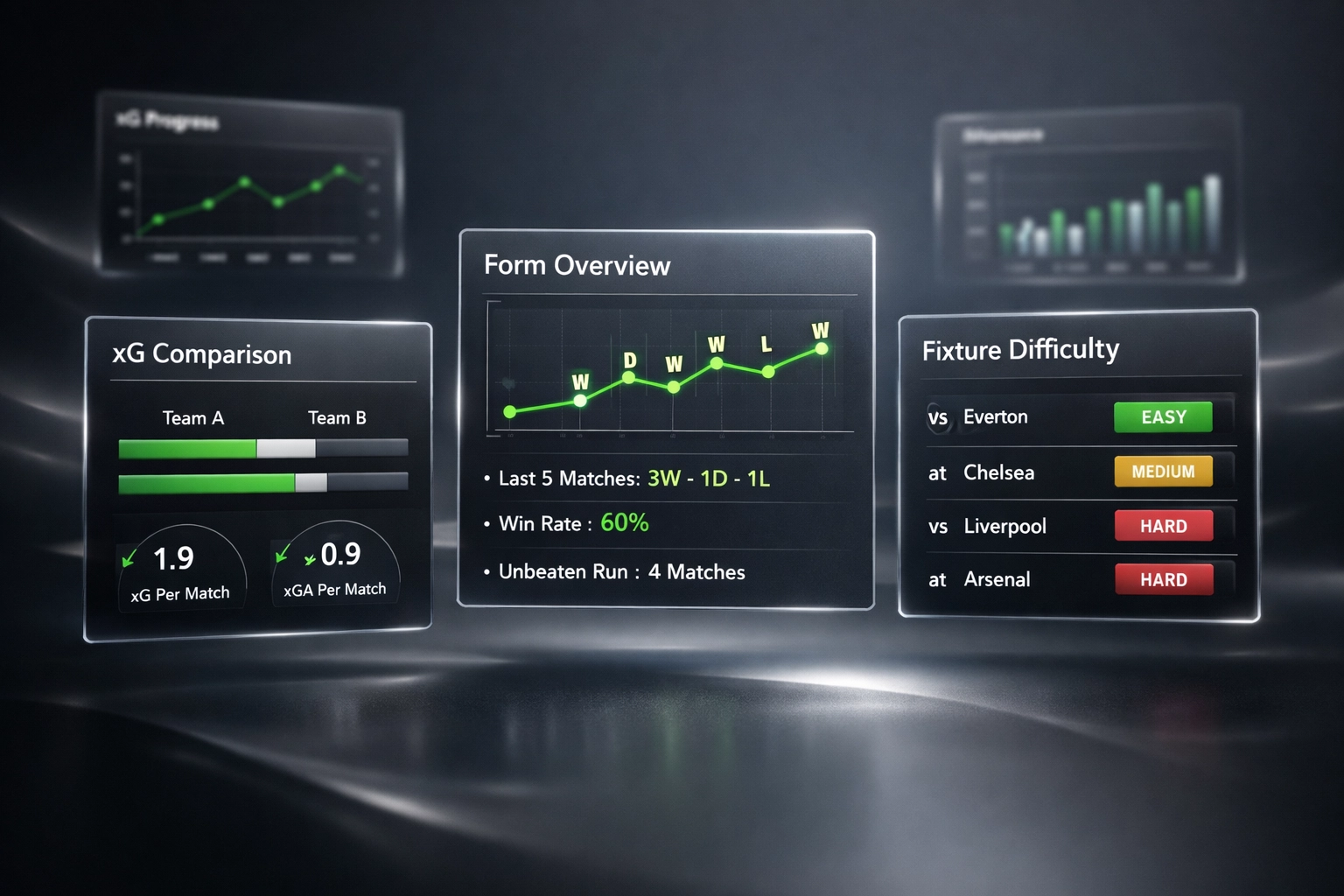
For example, if a League Two side appoints a new manager after three straight defeats, but their xG suggests they’ve been unlucky, the model will flag that. The bounce might be smaller than expected because the team was already performing at a reasonable level: they just weren’t getting results. Conversely, if a Championship side has been genuinely awful and gets an experienced manager with a strong track record in similar situations, the model might identify value before the market catches up.
You don’t need to be a statistician to use this. You just need to stop betting on stories and start betting on probabilities. The new manager bounce exists, but only in specific contexts. Data helps you find those contexts without spending hours doing manual research.
The Bottom Line
The new manager bounce is real, but it’s not what people think it is.
It’s not about charisma or fresh ideas. It’s about regression to the mean, short-term psychological shifts, and market inefficiency. Most of the time, teams improve because they were always going to improve: not because the new manager is a genius.
But that doesn’t mean you can’t profit from it. The key is separating the genuine opportunities from the narrative-driven hype. Look at the underlying data. Consider the fixtures. Understand that the effect is temporary.
And if you want to cut through the noise faster, let Gecko Edge do the heavy lifting. Real-time data, predictive modelling, and historical context: all in one place. No hype. Just probabilities.
Because in betting, probabilities beat stories every single time.