



Double Chance; you’ve watched it happen a dozen times. Your team dominates for 89 minutes, you’re sitting on a tidy 2.80 winner, then bang: injury time equaliser. Stake gone. Frustration through the roof.
That’s where Double Chance comes in. It’s not the sexiest market, but sometimes covering two outcomes is smarter than chasing the single result. The trick is knowing when the premium you pay for that insurance actually makes mathematical sense.
Let’s break down when playing it safe beats swinging for the fences.
What Is Double Chance?
Double Chance lets you cover two of the three possible match outcomes in a single bet. Simple as that.
Here’s how it breaks down:
1X – Home win or draw
X2 – Away win or draw
12 – Home win or away win (no draw)
You’re essentially combining two traditional 1X2 bets into one. If either outcome lands, you win. The odds reflect this coverage: you’re getting shorter prices because you’ve doubled your chances of cashing.
In pure probability terms, you’re covering roughly 66% of possible outcomes instead of 33%. That matters when the game state is uncertain or when avoiding one specific result (usually the draw) is your priority.

The Insurance Premium You’re Paying
Nothing comes free in betting markets. That safety net costs you.
Let’s say Brighton are 4.20 to win away at Newcastle. The 1X2 market might look like this:
- Newcastle win: 1.85
- Draw: 3.60
- Brighton win: 4.20
Now check the Double Chance:
- Newcastle or Draw (1X): 1.22
- Brighton or Draw (X2): 1.90
- Newcastle or Brighton (12): 1.53
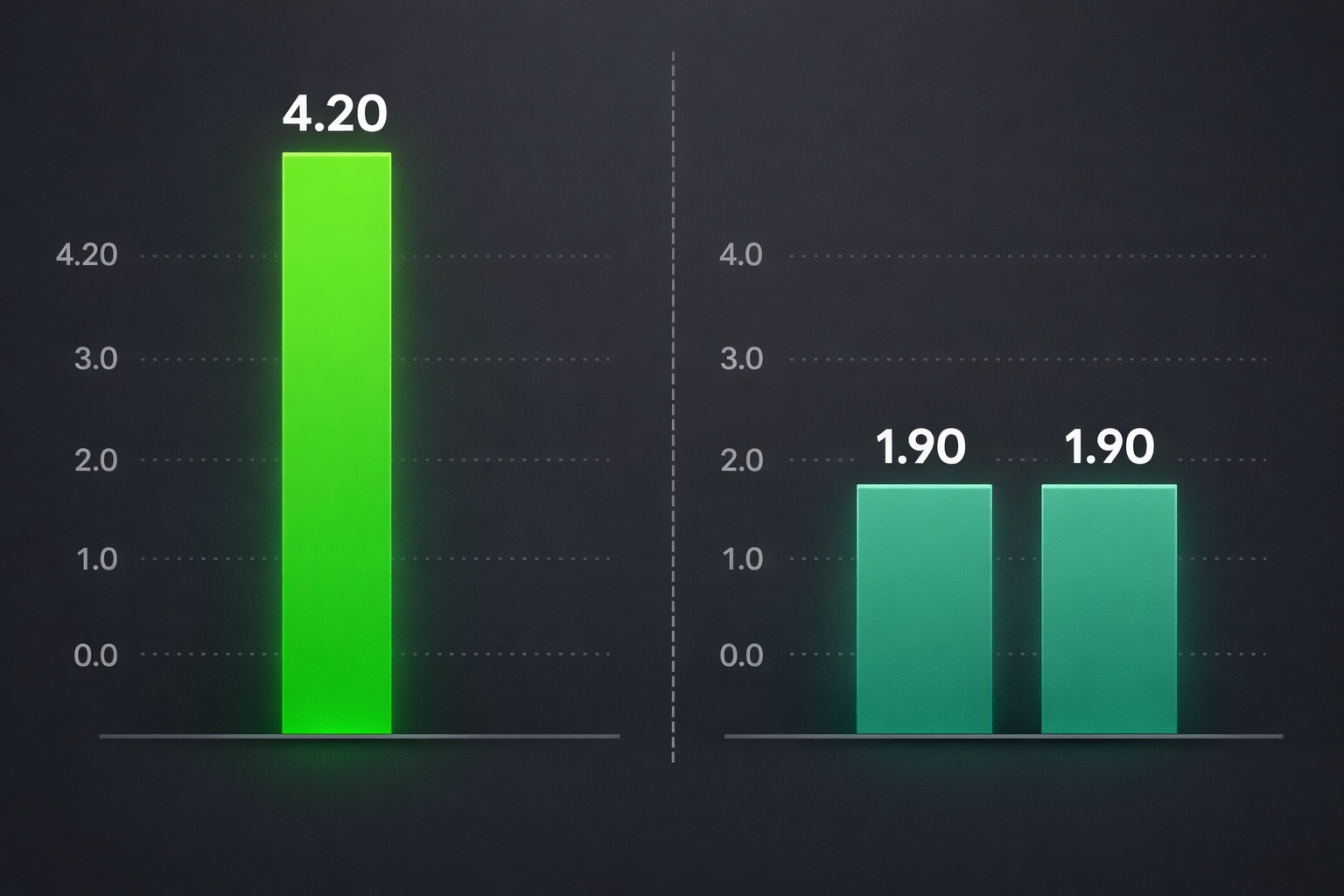
The X2 (Brighton or draw) sits at 1.90: less than half the odds of Brighton winning outright. You’ve bought protection against the loss, but you’ve surrendered a chunk of potential profit.
The question becomes: is that reduced payout worth the increased strike rate?
Sometimes yes. Often no. It depends entirely on the match dynamics and whether the premium is justified by genuine uncertainty.
When Coverage Beats the Direct Pick
Double Chance isn’t for every match. Use it strategically, not reflexively.
Strong underdogs with defensive discipline
When a lower-league side visits a Premier League club in the cup, they’re parking the bus. They’re not there to trade blows: they want the draw and the replay. That’s when X2 makes sense. You’re backing the underdog’s game plan (don’t lose) rather than a miracle win.
Favourites with squad problems
City are missing De Bruyne, Haaland’s doubtful, and they’re playing a tricky away fixture. The win is still likely, but suddenly the draw isn’t absurd. That’s when 1X (home or draw) protects you if the weakened favourite slips up.
Tightly matched sides in high-stakes games
Derby matches, relegation scraps, title deciders: these often produce cagey draws. If you fancy one side but recognise the other won’t roll over, Double Chance reduces the sting of a nervy 1-1.
In-form underdogs you don’t fully trust
Brentford are flying, they’ve won four straight, and they’re 5.50 to beat Spurs away. You like the value, but you’re not convinced they’ll seal all three points. The X2 at around 2.30 gives you exposure to the upset while covering the likely draw scenario.
The Scenarios Where Double Chance Wins
Let’s get concrete. Here’s when the maths actually supports paying the premium.
Avoiding the stoppage-time heartbreak
Your team leads 2-1 at 90 minutes. You’ve got a straight win bet at 3.00 odds. Then the corner comes, the header goes in, it’s 2-2. If you’d taken 1X (win or draw) at 1.35, you’d still cash. Lower return, sure: but you’re protected against the draw curse.
Covering form disparities
A mid-table side on a six-match unbeaten run visits a top-six club in poor form. The underdog might not win, but they won’t get battered either. X2 covers both the surprise result and the respectable draw, which aligns with the actual probabilities better than forcing a straight away win pick.
12 for must-win situations
Late-season relegation battles or title run-ins often produce one thing: no draws. Both teams need the win, and neither settles for a point. The 12 option (either side wins) removes the draw from the equation entirely. If you’re confident the match won’t end level but can’t pick the winner, this is your play.
How Gecko Edge Calculates True Value
Here’s where most punters get it wrong. They see Double Chance as “safer” and pile in without checking if the odds justify the coverage.
Gecko Edge runs the numbers differently. Our AI doesn’t just look at basic probability: it calculates expected value across all three Double Chance markets in real time, comparing the premium you’re paying against the genuine likelihood of each outcome.
The platform pulls in:
- Current form and squad availability
- Historical head-to-head context
- Tactical setups and game state predictions
- Market movement and where the sharp money is going
Then it tells you if that 1.90 for X2 is actually good value or if you’re overpaying for insurance you don’t need. Sometimes the straight win at 4.20 has better EV, even with the lower probability. Other times, the Double Chance is genuinely underpriced relative to the situation.
You’re not guessing. You’re working with calculated edges.
And because Gecko Edge updates in real time, you can track how these markets shift as team news drops or conditions change. If the Double Chance value appears before kick-off, you’ll know.

When to Skip the Double Chance
Double Chance isn’t always the answer. Sometimes you’re just watering down a good bet for no reason.
When the favourite is overwhelming
If City are home to a Championship side in the cup and priced at 1.15 to win, the 1X might be 1.05. You’ve paid a premium to cover a draw that has maybe a 5% chance of happening. That’s not smart coverage: that’s just killing your value.
When you have a strong directional edge
If your analysis says Brighton should be 3.00 but they’re priced at 4.20, take the straight win. Don’t dilute a genuine value bet by adding the draw just because it feels safer. You’re reducing both your edge and your payout.
When the draw is already overpriced
Markets sometimes compress Double Chance odds too much, especially on popular fixtures. If the premium you’re paying doesn’t align with the actual probability of each outcome, you’re better off with singles or even passing entirely.
The best Double Chance bets come when there’s genuine uncertainty and the odds reflect a fair price for covering two outcomes. Everything else is just expensive insurance.
The Bottom Line
Double Chance is a tool, not a strategy. Use it when match uncertainty is high, when avoiding one specific result makes sense, or when you’re backing an underdog’s game plan rather than an outright win.
But don’t use it as a crutch. Paying for coverage only makes sense when the premium is justified by real probabilities: not when you’re just hedging because you’re nervous.
That’s where Gecko Edge helps. We calculate the EV for you, show you when the insurance is worth it, and highlight when you’re better off taking the single outcome at bigger odds.
Smarter betting isn’t about playing it safe. It’s about knowing when safety actually has value.