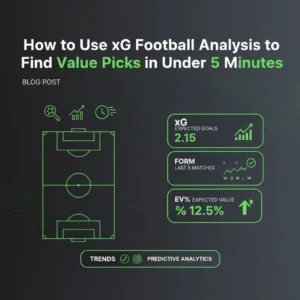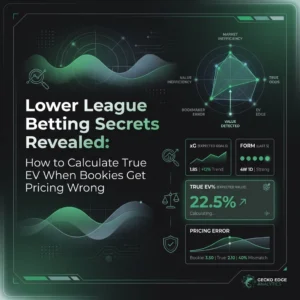


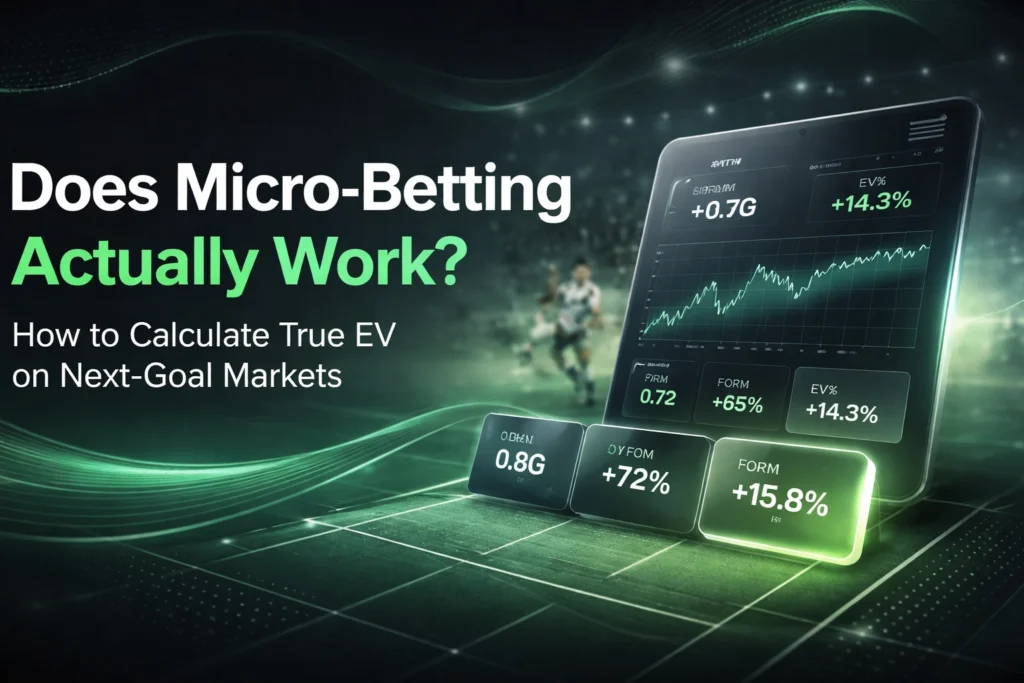
Micro-betting is everywhere now. Next goal. Next corner. Next throw-in. The markets refresh every few seconds, and bookmakers want you clicking constantly.
But here’s the real question: can you actually make money from these markets? Or are they just digital slot machines dressed up as football betting?
Let’s break it down. No hype. Just the maths.
What Is Micro-Betting?
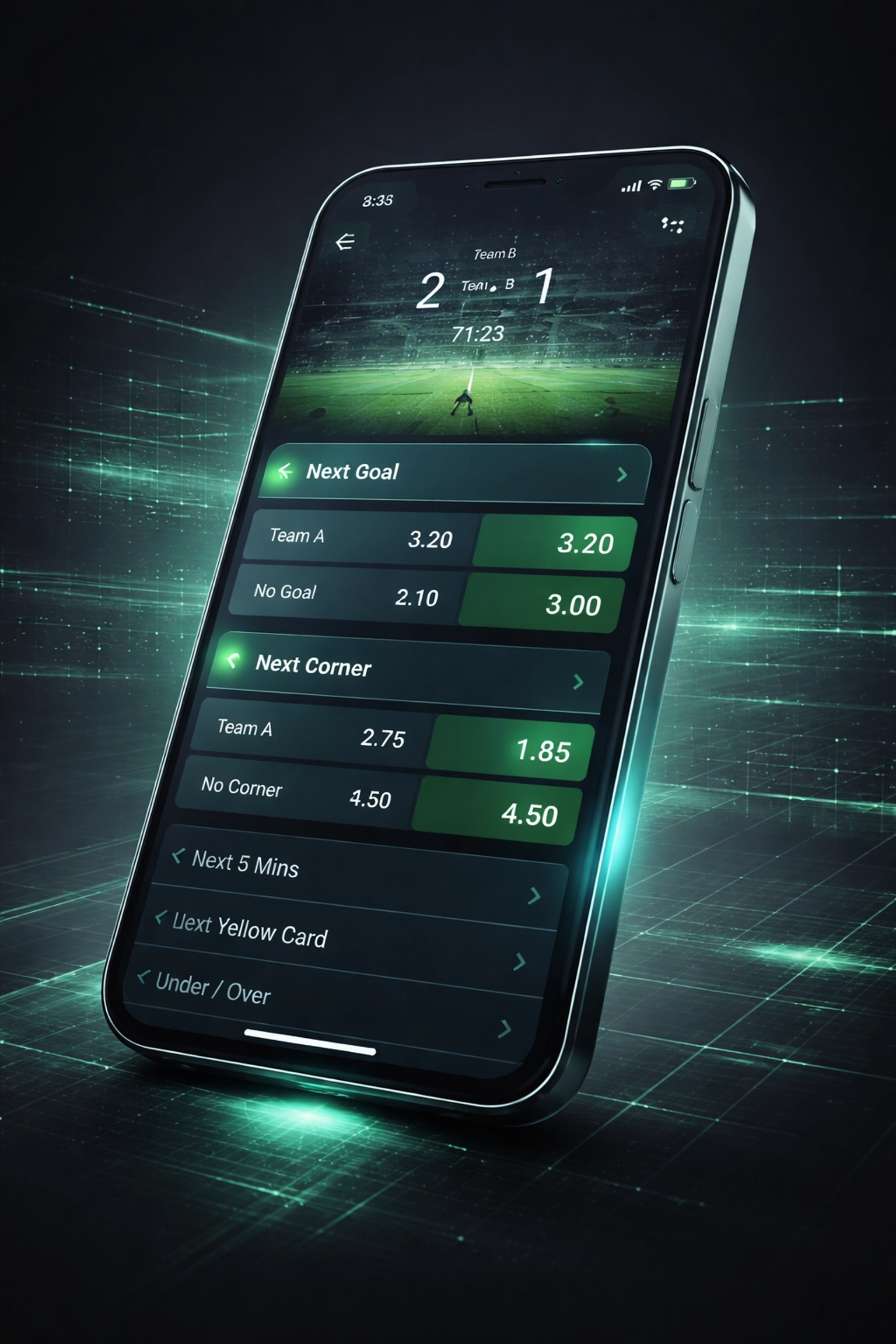
Micro-betting refers to in-play markets on short-term events within a match. Instead of betting on the final score, you’re betting on what happens in the next sixty seconds. Next goal scorer. Next team to win a corner. Next booking.
The appeal is obvious. Fast action. Instant results. You don’t wait ninety minutes to find out if you’ve won.
The problem? Speed works against you.
Operators have reported session durations increasing by up to 30% when micro-betting is available. Users place significantly more wagers: some platforms see over a 230% increase in average bets per match. That’s not a coincidence. These markets are designed for volume, not value.
But that doesn’t mean value doesn’t exist. It just means you need to work harder to find it.
The Problem With Most Micro-Bettors
Most people treat micro-betting like entertainment. A few quid here and there. No real strategy. Just vibes and gut feelings.
That’s exactly what bookmakers want.
When you bet without calculating expected value, you’re essentially donating margin to the house. And in fast-moving markets, that margin can be brutal. Bookmakers adjust odds in real-time using algorithms far quicker than any human can react.
The speed and frequency of micro-bets creates a compounding problem. While individual stakes appear small, placing fifty £2 bets across related props can create exposure equivalent to a £100 traditional bet: except with significantly worse odds overall.
So does micro-betting work? For operators, absolutely. For bettors without a system? Rarely.
Understanding Expected Value in Next-Goal Markets
Expected Value (EV) is the foundation of profitable betting. It tells you whether a bet is worth making over the long run.
The formula is straightforward:
EV = (Probability of Winning × Potential Profit) – (Probability of Losing × Stake)
If EV is positive, the bet has value. If it’s negative, you’re paying for the privilege of gambling.
Let’s apply this to a next-goal market.
Say Manchester City are playing at home against a struggling defence. The bookmaker offers 1.80 on City to score the next goal. You need to determine if that price reflects fair value: or if there’s edge available.
Step-by-Step EV Calculation for Next-Goal Markets
Here’s how to calculate true EV on a next-goal bet:
Step 1: Estimate the True Probability
This is where most bettors struggle. You need to estimate the actual likelihood of the outcome occurring: not what the bookmaker tells you.
Factors to consider for next-goal markets:
- Current match state (score, time remaining, momentum)
- xG flow (which team is creating better chances?)
- Team strength (home/away form, attacking output)
- Recent patterns (goals per 15-minute segment historically)
- Tactical context (is one team chasing? Sitting deep?)
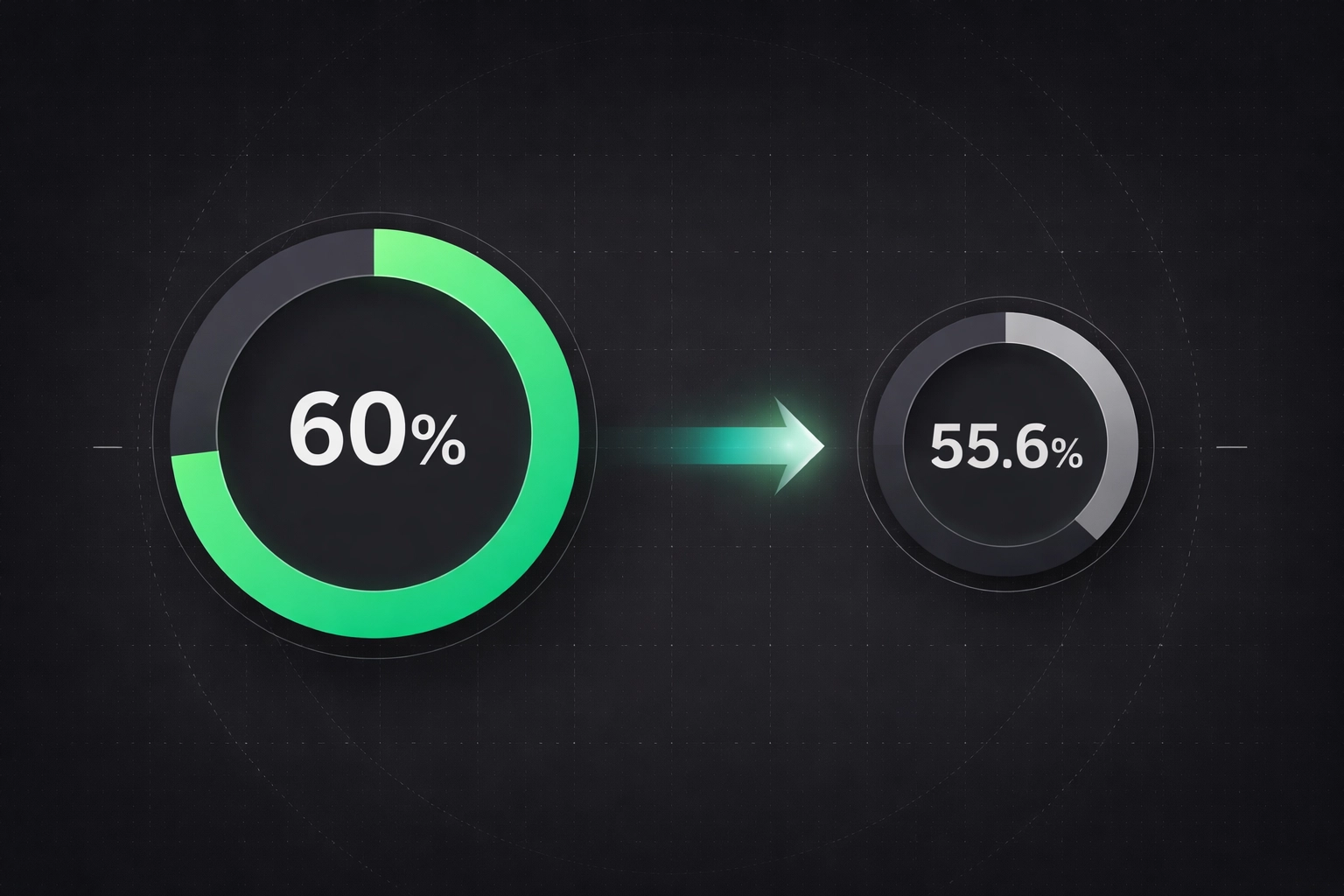
Let’s say your analysis suggests City have a 60% chance of scoring the next goal.
Step 2: Convert Odds to Implied Probability
The bookmaker’s odds of 1.80 imply a probability of:
Implied Probability = 1 / Decimal Odds
Implied Probability = 1 / 1.80 = 55.6%
Step 3: Compare and Calculate EV
Your estimated probability: 60%
Bookmaker’s implied probability: 55.6%
There’s a gap. That gap is your potential edge.
EV = (0.60 × £0.80) – (0.40 × £1.00)
EV = £0.48 – £0.40
EV = +£0.08 per £1 staked
A positive EV of 8%. Over hundreds of bets, that compounds into real profit.
Why Manual EV Calculation Falls Short In-Play
Here’s the catch. That calculation assumes you have time to think.
In live next-goal markets, odds shift every few seconds. By the time you’ve run the numbers, the price has moved. Or the goal has already been scored.
This is precisely why in-play betting requires tools that work faster than human intuition.
Manual calculation works for pre-match analysis. But micro-markets demand automation.

How Live EV Tools Change the Game
Gecko Edge built its live EV tool specifically for this problem.
Instead of manually crunching numbers while the match unfolds, the system does the heavy lifting. It continuously analyses:
- Real-time match data
- Historical probability models
- Current bookmaker pricing
- Market movements and liquidity
When a positive EV opportunity appears in a next-goal or next-corner market, you see it immediately. No spreadsheets. No guesswork. Just clear signals based on actual mathematics.
The difference between profitable bettors and everyone else often comes down to speed and accuracy. In micro-markets, you need both.
The Maths Behind Corner and Prop Markets
Next-goal isn’t the only micro-market worth analysing. Corners, cards, and throw-ins follow similar principles.
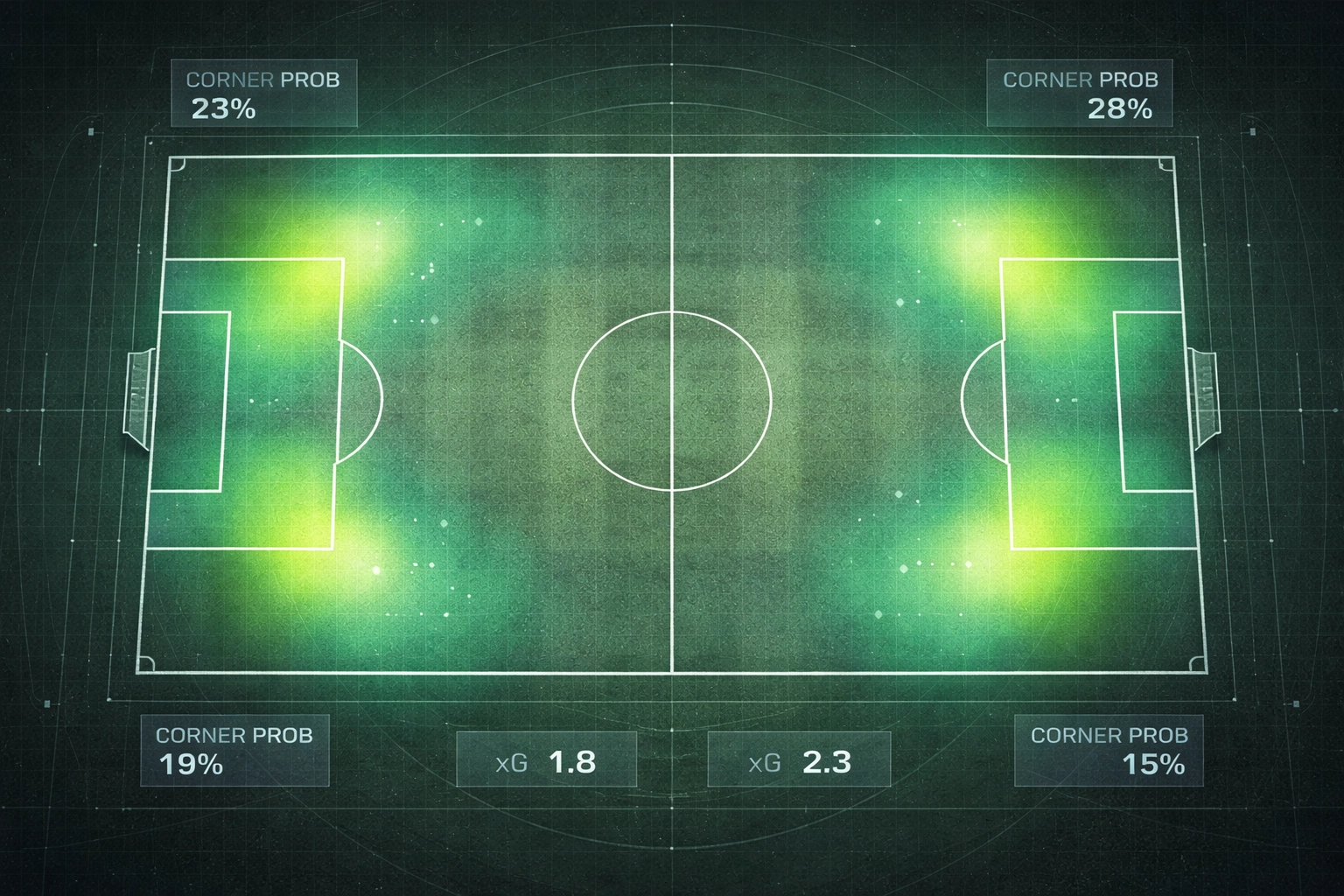
Take next-corner markets. The calculation approach is identical:
- Estimate true probability based on attacking patterns, possession zones, and historical corner rates
- Convert bookmaker odds to implied probability
- Calculate EV
The challenge with corners is variance. Goals are relatively rare events with clearer predictive signals. Corners happen frequently but are harder to model accurately.
This is where historical data becomes essential. Teams like Gecko Edge aggregate thousands of matches to identify patterns invisible to casual observers. Which teams consistently win corners when trailing? Which leagues see corner clustering in specific time periods?
These insights turn chaotic micro-markets into structured opportunities.
Common Mistakes in Micro-Betting EV Calculations
Even bettors who understand EV make errors in fast markets:
Overconfidence in probability estimates. Your 60% might actually be 52%. Small errors in probability create large errors in EV calculation.
Ignoring the vig. Bookmakers build margin into every price. A market priced at 1.80 / 2.10 isn’t offering fair value on either side. Factor this into your analysis.
Chasing volume over quality. More bets doesn’t mean more profit. Ten +EV bets will outperform a hundred neutral or negative EV bets every time.
Emotional adjustments. Watching a match creates bias. You see City pressing and assume the goal is coming. But the data might tell a different story.
Does Micro-Betting Actually Work? The Honest Answer
Yes: but only with discipline, data, and the right tools.
Micro-betting works for operators because most bettors treat it as entertainment. The speed triggers emotional decisions. The volume compounds losses.
But for bettors who approach these markets analytically? There’s genuine edge available. Bookmakers can’t perfectly price every next-goal market in real-time. Their algorithms make mistakes. Odds lag behind match developments.
Your job is to spot those mistakes before the market corrects.
That requires:
- Accurate probability modelling
- Fast EV calculations
- Emotional discipline
- Proper bankroll management
Gecko Edge exists to handle the first two. The second two are on you.
Final Thoughts
Micro-betting isn’t inherently good or bad. It’s a tool. The outcome depends entirely on how you use it.
If you’re clicking randomly on next-goal markets hoping for quick wins, you’re playing exactly the game bookmakers want you to play.
But if you’re calculating true EV, using live data tools, and treating micro-markets as mathematical puzzles rather than slot machines: the edge is there.
Find it. Calculate it. Act on it.
Smarter betting starts here.