

You’re watching a match. It’s 0-0 at the 60th minute. The favourite has had 14 shots. The underdog has parked the bus and barely crossed halfway. The in-play odds suggest the draw is becoming more likely by the minute.
But here’s the question that separates sharp bettors from everyone else: what’s actually happening beneath the scoreline?
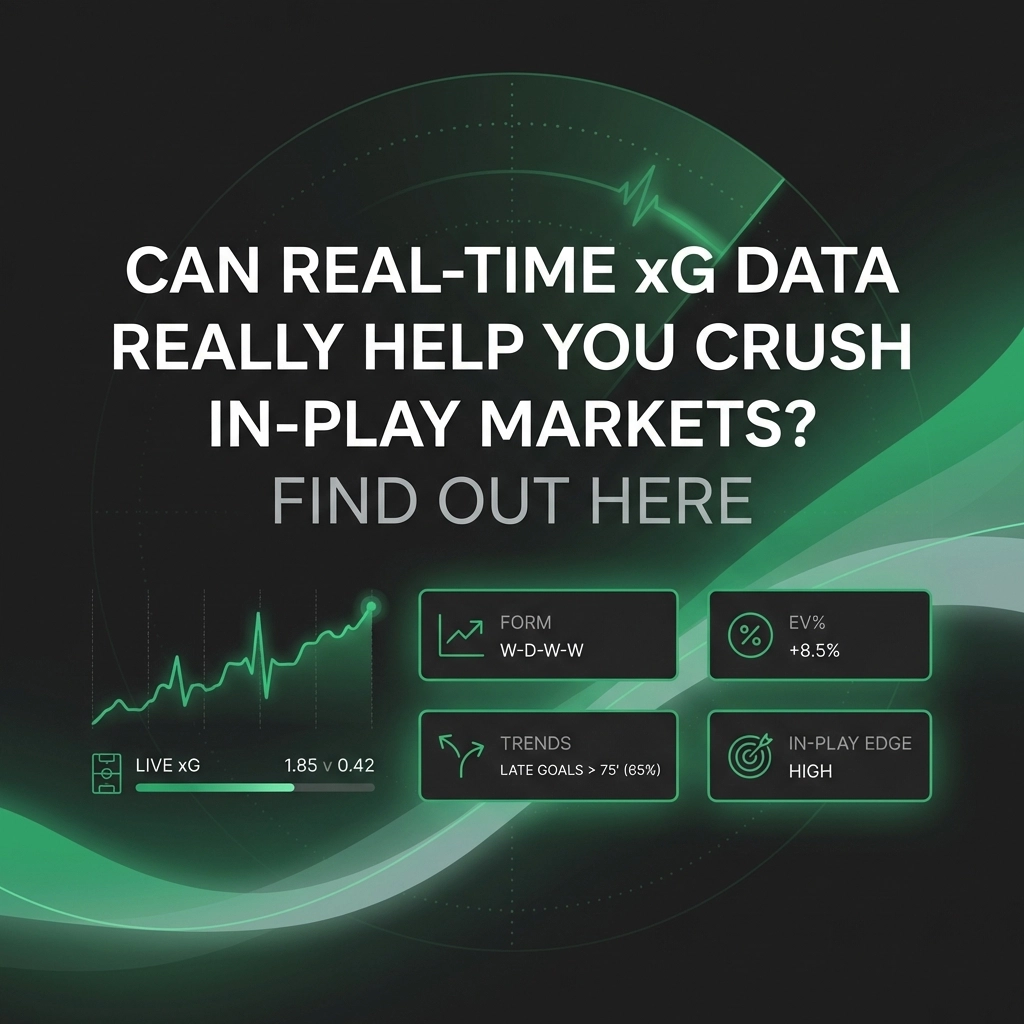
This is where xG data enters the conversation. And more specifically, whether accessing this data in real-time can genuinely give you an edge in live markets.
Let’s find out.
What Is xG and Why Does It Matter?
Expected Goals, or xG, measures the quality of a scoring chance. It assigns a probability to every shot based on factors like distance from goal, angle, body part used, and the type of assist.
A penalty might have an xG of around 0.76. A header from outside the six-yard box? Maybe 0.04.
Add up all the chances in a match, and you get a team’s total xG. It tells you what the scoreline probably should be, based on the opportunities created.
Why does this matter for betting?
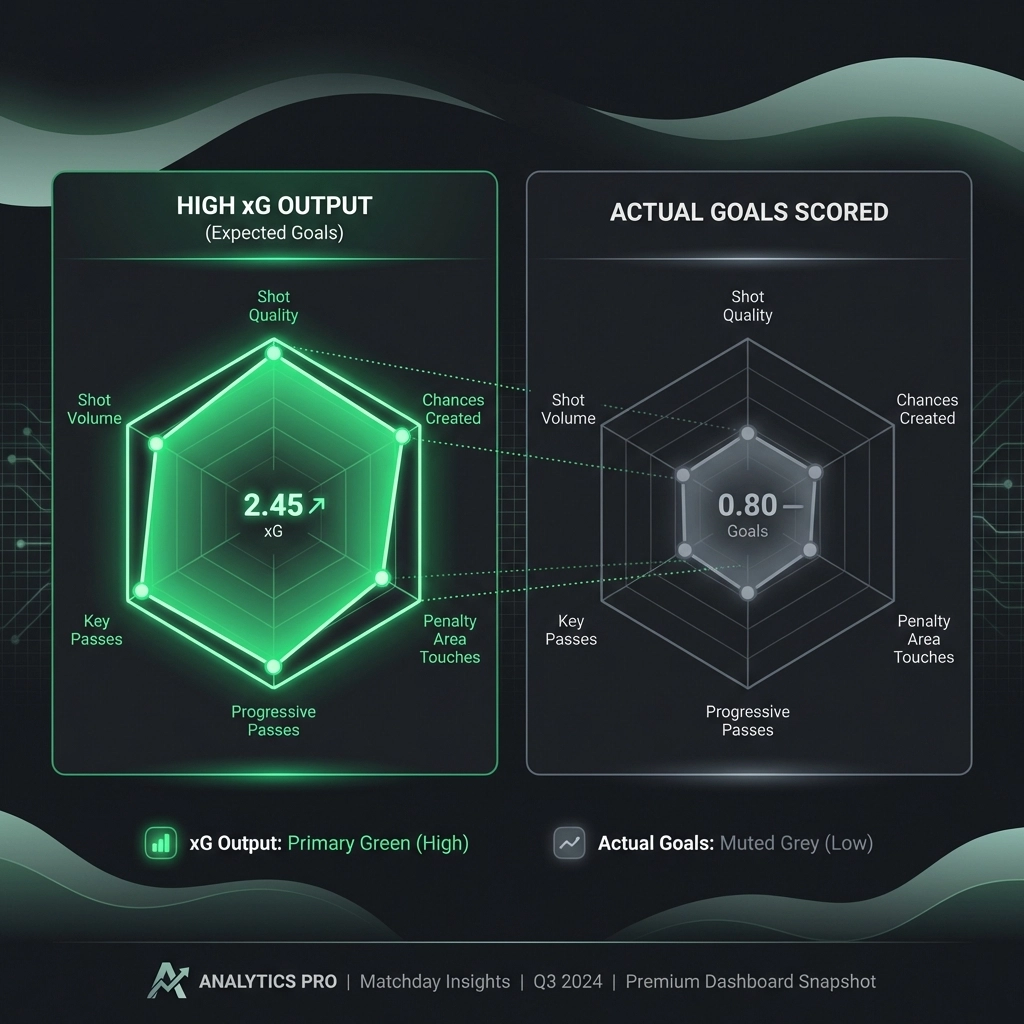
Because football is noisy. A team can dominate a match, create chance after chance, and still lose 1-0 to a lucky counter-attack. Over time, xG helps cut through that noise. It reveals which teams are consistently creating high-quality chances and which ones are living on borrowed time.

The Speed Problem in Live Betting
In-play markets move fast. A goal changes everything. A red card flips the script. Even a corner or a dangerous attack can shift odds in seconds.
Here’s the reality: even a few seconds’ delay in data can lead to inaccurate odds and unbalanced markets. Bookmakers invest heavily in speed because they know this. They react immediately to on-field events to protect their margins.
So if you’re betting in-play, you’re already in a race. The question is whether xG data can help you see something the market hasn’t priced in yet.
Where xG Creates Real Value
Let’s be clear about something. xG isn’t a crystal ball. It doesn’t predict what will happen next. But it does help you understand what’s likely to happen if the current pattern continues.
Here’s how that translates to value:
1. Spotting underperforming teams
A team with an xG of 2.1 but only one goal is probably due some luck. If the in-play odds are drifting against them, you might be looking at value.
2. Identifying overperforming teams
Conversely, a team clinging to a 1-0 lead with an xG of 0.3 is skating on thin ice. The market might be overconfident in them holding on.
3. Comparing xG to bookmaker odds
This is where it gets interesting. If a team consistently creates high xG but the odds don’t reflect that, you’ve found a potential edge. The market is undervaluing their threat.
Research into xG predictability shows that betting on teams with high predictability scores: where xG closely matches actual outcomes over time: tends to produce the highest ROI. Consistency matters.
Can You Actually Use xG in Real-Time?
This is where we need to be honest.
Most publicly available xG data updates after the match, not during it. The detailed models that assign probabilities to every shot require post-match analysis. You’re not getting a live xG feed on most free platforms.
However, some services do provide real-time or near-real-time xG updates. These are typically premium tools designed for serious bettors and traders.
The practical challenge is this: even if you have real-time xG data, you still need to process it quickly and act before the market adjusts. That’s not easy when you’re also watching the match and managing your positions.
This is where technology starts to matter.
How Technology Changes the Game
Manual analysis has limits. You can watch a match, track shots, and make educated guesses about xG. But you can’t compete with algorithms that process data instantly.
This is the gap that tools like Gecko Edge are designed to fill.
By combining AI-powered analysis with real-time match data, Gecko Edge helps you see patterns that would take hours to identify manually. It’s not about replacing your judgement. It’s about giving you better information, faster.
Think of it as having a second pair of eyes. One that never blinks, never gets distracted, and processes probability in the background while you focus on the match.

The Honest Limitations
Let’s not oversell this.
Real-time xG data is useful, but it’s not a guaranteed edge. Here’s why:
Markets are efficient
Bookmakers have access to the same data: often faster. They adjust odds quickly. Finding genuine value requires more than just having xG numbers.
xG has blind spots
It doesn’t account for game state perfectly. A team chasing a goal plays differently than one protecting a lead. Context matters.
Execution is hard
Even if you spot value, you need to act fast. Hesitation costs money. And emotional decisions during live matches can undo good analysis.
The bettors who profit from in-play markets aren’t just using xG. They’re combining it with other signals: possession, press intensity, tactical changes, player fatigue. xG is one piece of a larger puzzle.
A Practical Approach to In-Play xG Betting
If you want to test whether real-time xG data can improve your in-play results, here’s a sensible starting point:
Start with pre-match research
Know the xG trends for both teams before kick-off. Which side consistently overperforms? Which one creates chances but fails to convert? This context helps you interpret what happens during the match.
Watch for patterns, not single shots
One big chance doesn’t change everything. But sustained pressure with high-quality opportunities does. Look for accumulating xG, not isolated moments.
Compare to the market
If the xG story contradicts the odds, dig deeper. Is the market missing something? Or is there context you’re not seeing?
Set clear triggers
Decide in advance what conditions would prompt a bet. This reduces emotional decision-making. For example: “If Team A reaches 1.5 xG before the 60th minute while trailing, I’ll back them to score next.”
Track your results
Keep a record. Not just wins and losses, but why you placed each bet and whether your xG analysis was accurate. This is how you learn.
The Bottom Line
Can real-time xG data help you crush in-play markets?
The honest answer: it can help, but it’s not magic.
xG is a powerful tool for understanding what’s really happening in a match. It cuts through the noise of scorelines and reveals underlying patterns. Combined with speed and discipline, it can absolutely improve your in-play decision-making.
But it’s not a shortcut. The edge comes from combining good data with good process. From knowing when to act and when to wait. From treating betting as a skill to develop, not a game to win.
Gecko Edge was built for bettors who think this way. Not looking for tips. Looking for tools. Not chasing luck. Building an edge.
Smarter betting starts with better questions. You’ve just asked a good one.