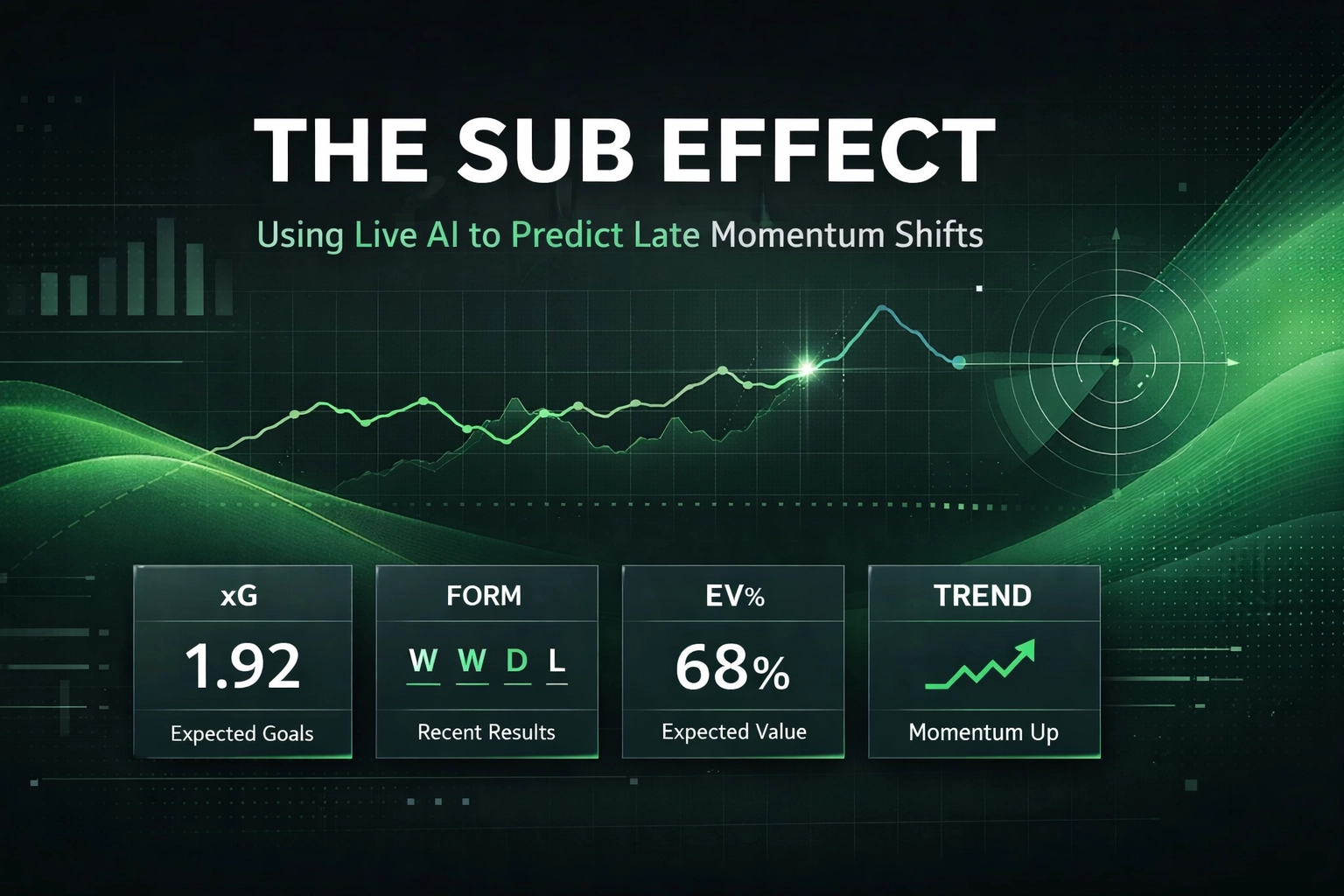
The Sub Effect; you’re watching a match. It’s tight. The tempo’s dropping. Then the board goes up. Fresh legs coming on. Within minutes, everything changes.
Most punters see a substitution and think nothing of it. Maybe they recognise the name. Maybe they don’t. But the data? The data sees something completely different.
When a player walks off and another walks on, the entire match profile shifts. Pace changes. Positioning adjusts. Passing patterns evolve. And if you’re betting live, that shift creates opportunity: if you know what you’re looking for.
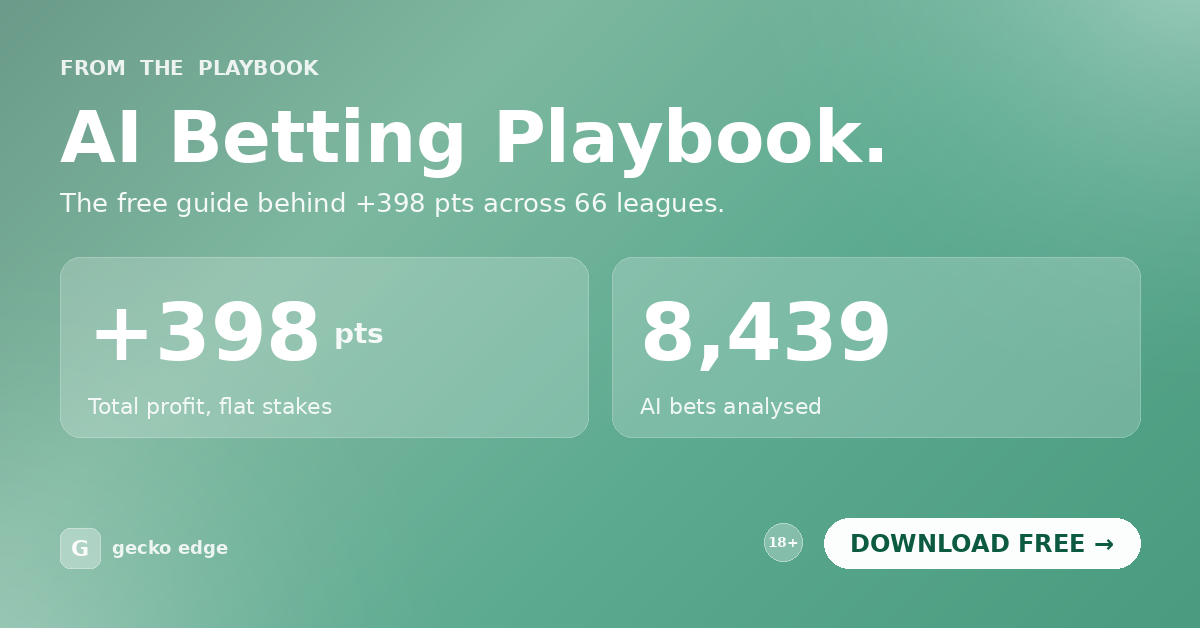
Gecko Edge has tracked 8,439 AI-generated bets and recorded +398pts of profit across 66 competitions. See how the model works →
That’s where Gecko Edge comes in.
Why Substitutions Change Everything
A substitution isn’t just a tactical tweak. It’s a hard reset on a chunk of the match data.
Think about it. A tired midfielder who’s been recycling possession for 60 minutes gets replaced by a forward runner who’s fresh and hungry. Suddenly, the team’s average sprint speed increases. The distance between lines shrinks. The opposition has to adjust their defensive shape.
All of that shows up in the numbers: immediately.
Live AI doesn’t care about reputation or transfer fees. It tracks what’s actually happening on the pitch. When a sub happens, the system doesn’t pause. It recalculates. It compares the new data stream to what came before. And it identifies the shift.
Most bettors wait to see the change. By then, the odds have moved.
What Live AI Tracks During a Sub
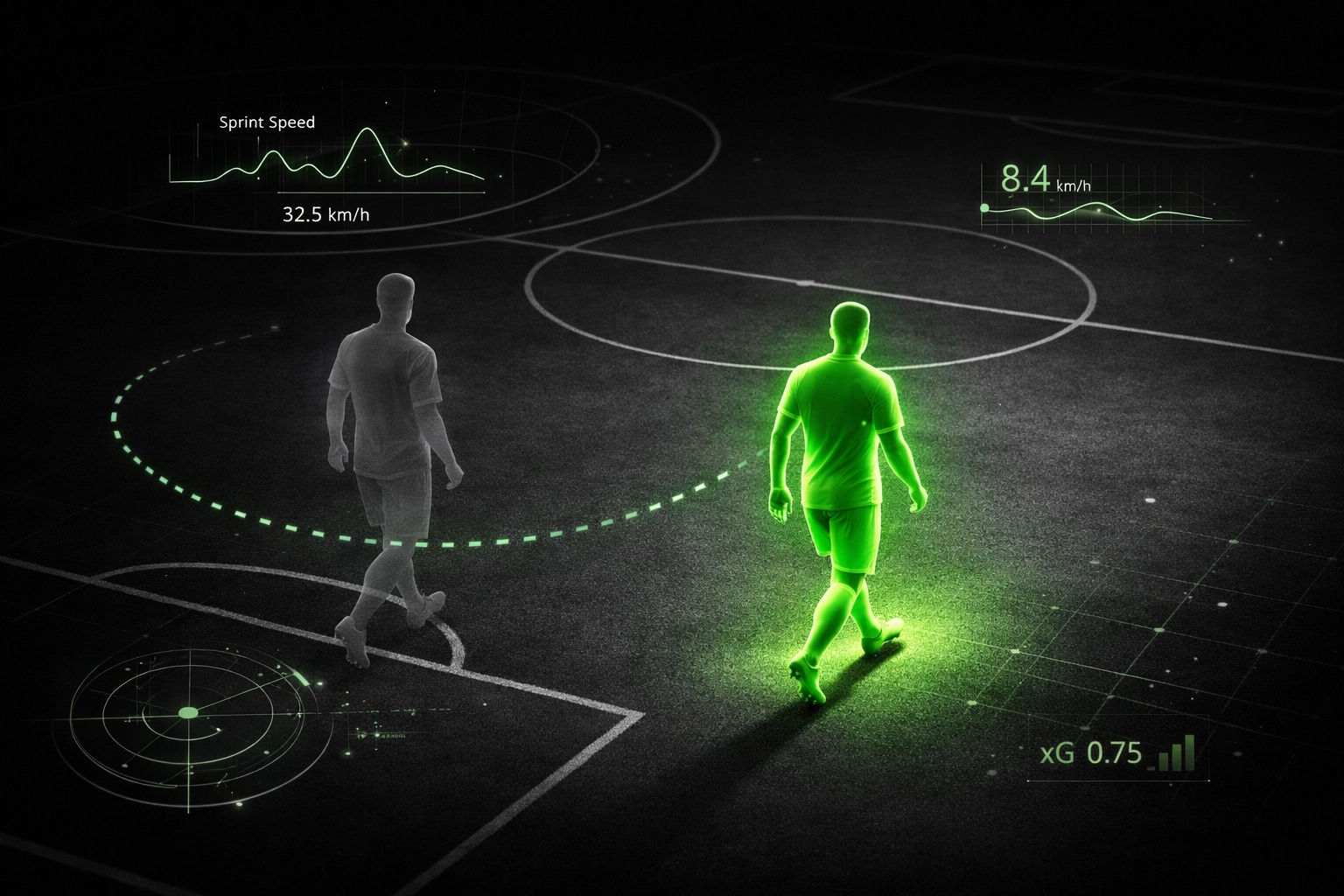
When a player leaves the pitch, Gecko Edge isn’t watching the tactical board. It’s watching the data feed. Here’s what changes in real time:
Pace metrics. Fresh legs mean higher tempo. The AI measures sprint frequency, possession turnover speed, and attacking transition times. If those numbers spike, momentum is building.
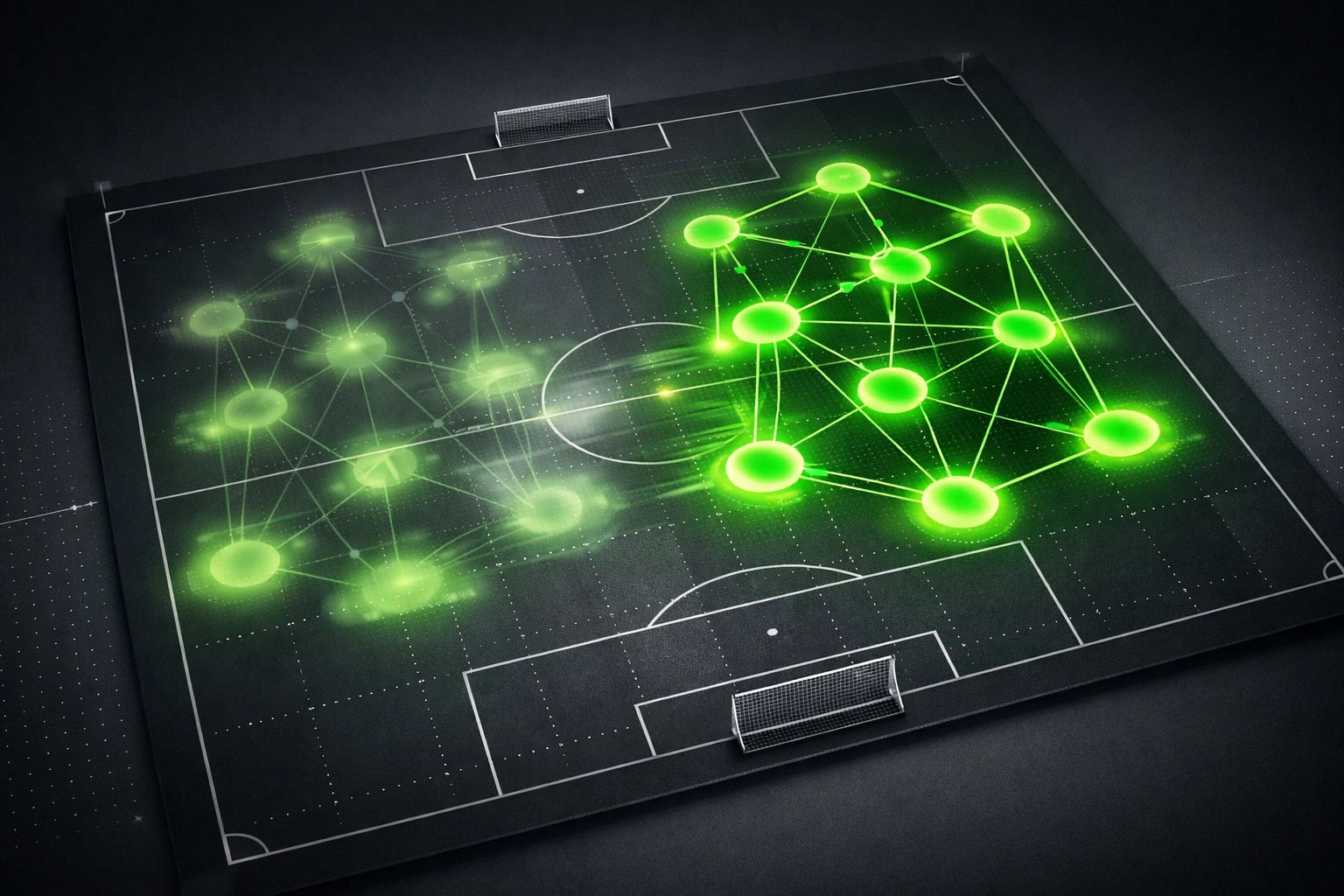
Positional density. A new striker might push higher. A defensive midfielder drops deeper. The AI maps player positioning and calculates how space is being used. Tighter lines often mean more pressure.
Shot volume trends. If a team makes attacking subs, shot frequency should increase. If it doesn’t, that’s a signal. The AI compares pre-sub and post-sub output within minutes.
Defensive engagement. A fresh defender often means more aggressive pressing. The system tracks tackles, interceptions, and duels won. If those numbers climb, the opposition’s rhythm gets disrupted.
All of this happens live. Not after the final whistle. Not in a post-match report. While the game’s still moving.
Reading the Momentum Shift
Here’s the thing most punters miss: not every sub creates momentum.
Sometimes a manager makes a change and nothing happens. The fresh player doesn’t get involved. The team’s shape stays the same. The data flatlines.
That’s valuable information.
If a team brings on an attacking player in the 70th minute but their expected threat doesn’t rise, that tells you something. Maybe they’re protecting a lead. Maybe the opponent’s defending well. Maybe the sub just isn’t clicking.
Gecko Edge doesn’t assume. It measures.
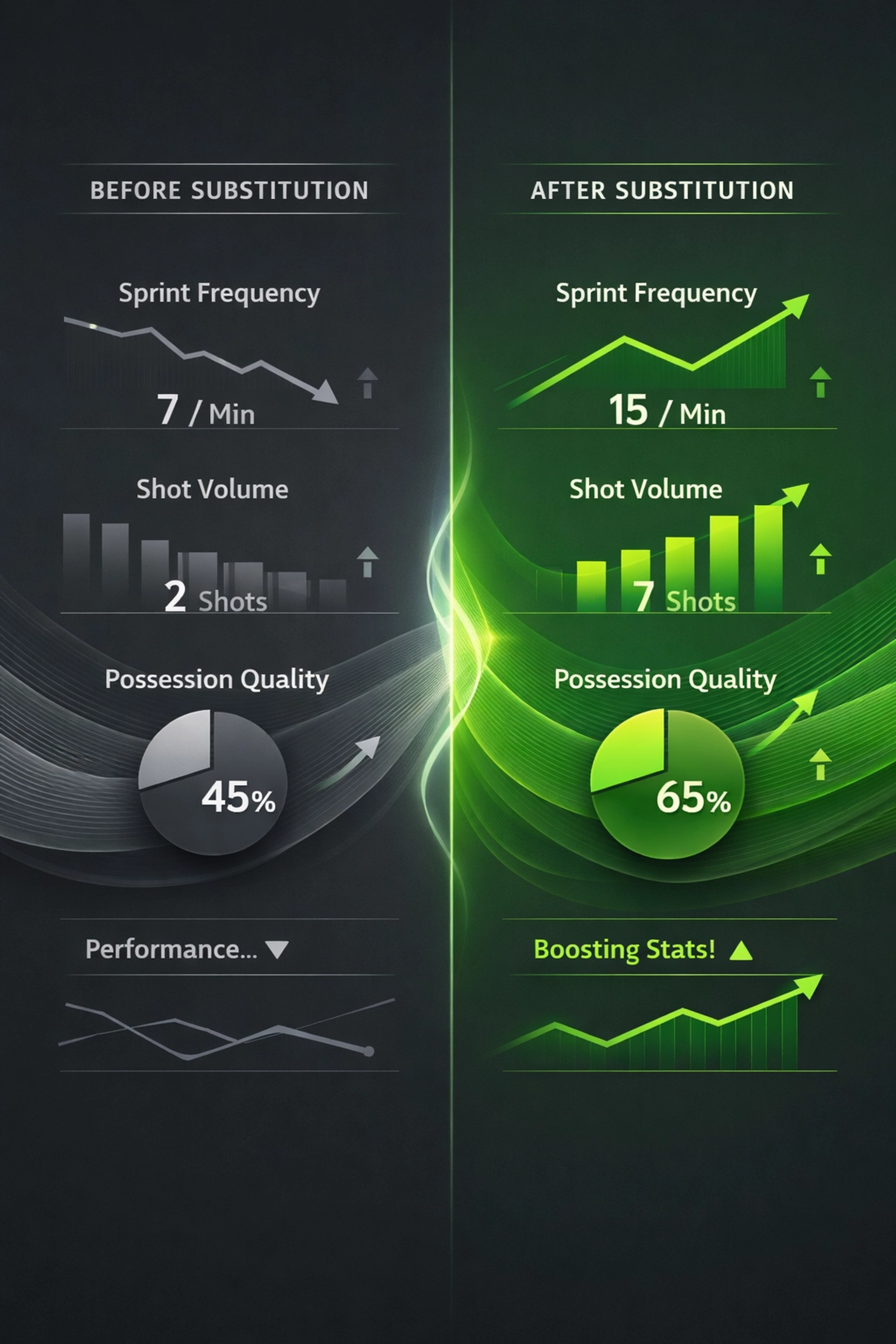
When momentum does shift, it shows up fast. Within five minutes of a sub, you’ll see changes in possession quality, final third entries, or defensive solidity. The AI compares these micro-windows to the match average and flags meaningful deviations.
That’s your edge. You’re not guessing whether fresh legs will matter. You’re watching the data confirm it: or contradict it.
Common Sub Scenarios and What They Mean
Let’s talk about the patterns you’ll see again and again.
The aggressive double sub. Two attackers on, two tired midfielders off. This usually signals intent. The AI should pick up increased forward movement, more crosses, more shots. If it does, late goals become likelier. If it doesn’t, the team’s probably out of ideas.
The defensive shield. An extra centre-back or holding midfielder comes on when a team’s protecting a lead. Watch for a drop in attacking output but an increase in defensive actions. If the data shows the shield working, betting against a comeback makes sense.
The impact substitute. A pacy winger or target man brought on late. These players often change games: but not always. The AI tracks whether they’re actually getting touches in dangerous areas. If they are, momentum’s building. If they’re isolated, it’s a non-event.
The tactical mismatch. Sometimes a sub exploits a tired opponent. A quick forward against a slow defender. A technical midfielder against a physical one. The data will show if the mismatch is creating chances or just looking good on paper.
You don’t need to be a tactical expert to spot these patterns. You just need to watch what the numbers are saying.
How Gecko Edge Processes Substitution Data
Live AI isn’t magic. It’s structure.
When a substitution happens, Gecko Edge runs a comparison. It takes the data from the minutes immediately before the change and contrasts it with the minutes after. Sprint distance. Touch density. Shot locations. Defensive pressure. All of it.
Then it benchmarks that shift against historical data. Not just from this match, but from similar matches, similar players, similar game states. The system knows how teams typically respond to late subs. It knows what momentum looks like when it’s real.
If the post-sub data aligns with a positive momentum pattern, the AI flags it. If the data stays flat or declines, it flags that too. Either way, you’re making decisions based on evidence, not instinct.
And because it’s live, you’re getting this information while the odds are still moving. Before the crowd catches on. Before the bookies tighten everything up.
When to Act on Sub-Related Opportunities
Timing matters more with substitutions than almost anything else in live betting.
Too early, and you’re guessing. Too late, and the value’s gone.
The sweet spot is usually two to five minutes after the change. That’s enough time for the data to show a trend but not so long that everyone else has noticed.
Watch for these signals:
Immediate impact. If a sub leads to three dangerous attacks in two minutes, that’s not luck. That’s a shift. The AI will catch it. You act.
Sustained pressure. One attack is noise. Five minutes of consistent territorial dominance is a pattern. When Gecko Edge confirms the pressure’s real, that’s when late-goal markets become interesting.
Defensive collapse. Sometimes the sub works for the wrong team. A fresh attacker exposes a tired defence, and suddenly the opposition looks vulnerable. The AI picks up the defensive metrics dropping. That’s your cue.
The key is patience. Don’t react to the substitution itself. React to what the data shows after the substitution. Let the system do the work. Then act with conviction.
The Reality Check
Not every substitution creates an edge. Not every late change leads to goals. Not every momentum shift is worth betting on.
That’s fine.
The point isn’t to bet on every sub. The point is to know when a sub actually matters. To separate the tactical noise from the genuine data shift.
Live AI gives you that clarity. It removes the guesswork. It shows you whether fresh legs are making a difference or just running around with no end product.
And when the data confirms a shift: when the numbers align with the opportunity: that’s when you move.
Not because you have a hunch. Not because the commentator’s excited. Because the system has measured the change and found value.
That’s the sub effect. That’s how you use live AI to predict late momentum shifts. And that’s how Gecko Edge helps you stay ahead when the game’s still in play.
1 comment