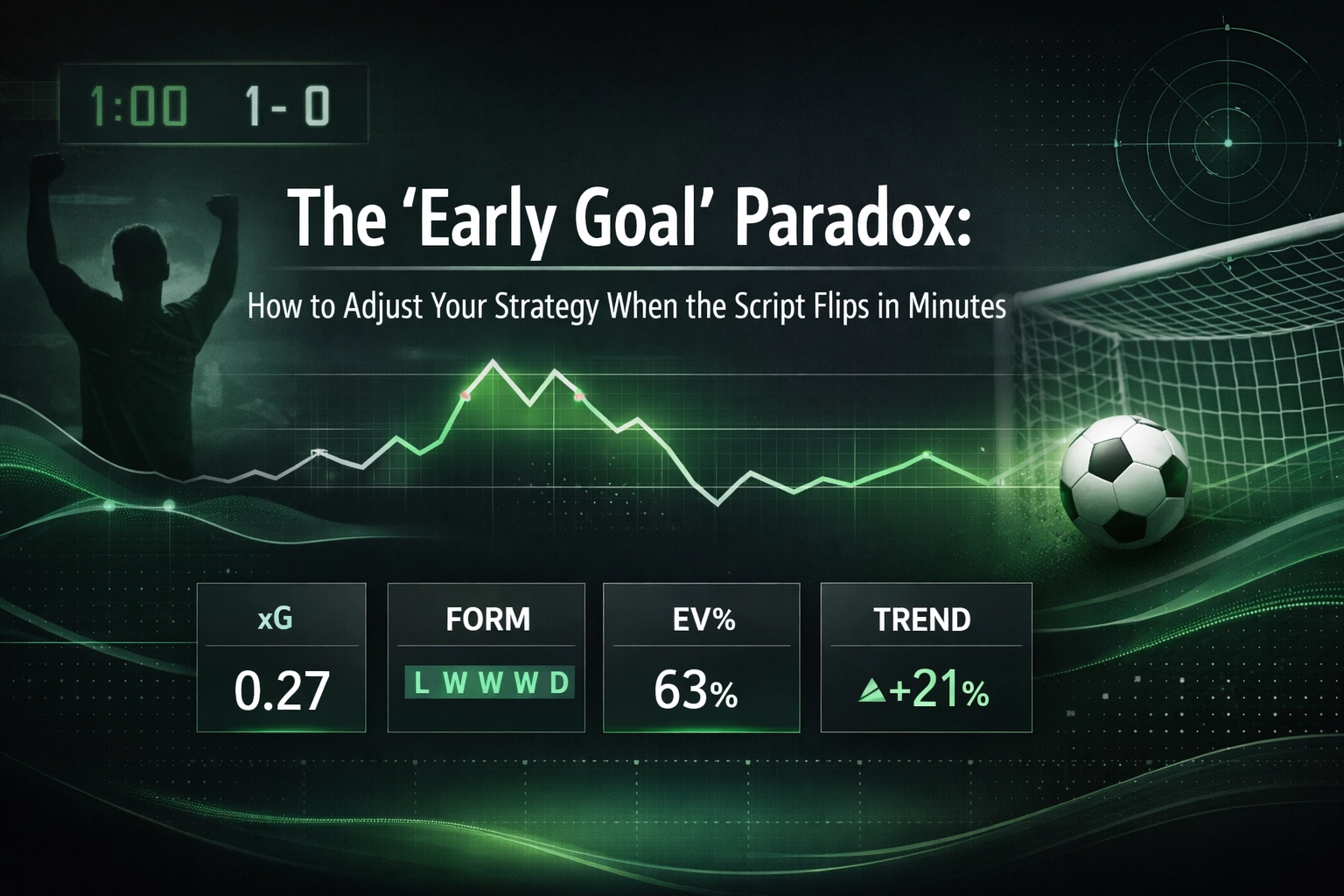
Early Goal…..you’ve done your homework. Spent an hour crunching xG trends, form lines, and defensive vulnerabilities. You’ve identified a cracking value bet on the away side. Then the home team scores in the 3rd minute.
Everything changes.
The odds swing. The crowd lifts. The entire flow of the match shifts. And suddenly, you’re sitting there wondering if your pre-match analysis just became worthless.
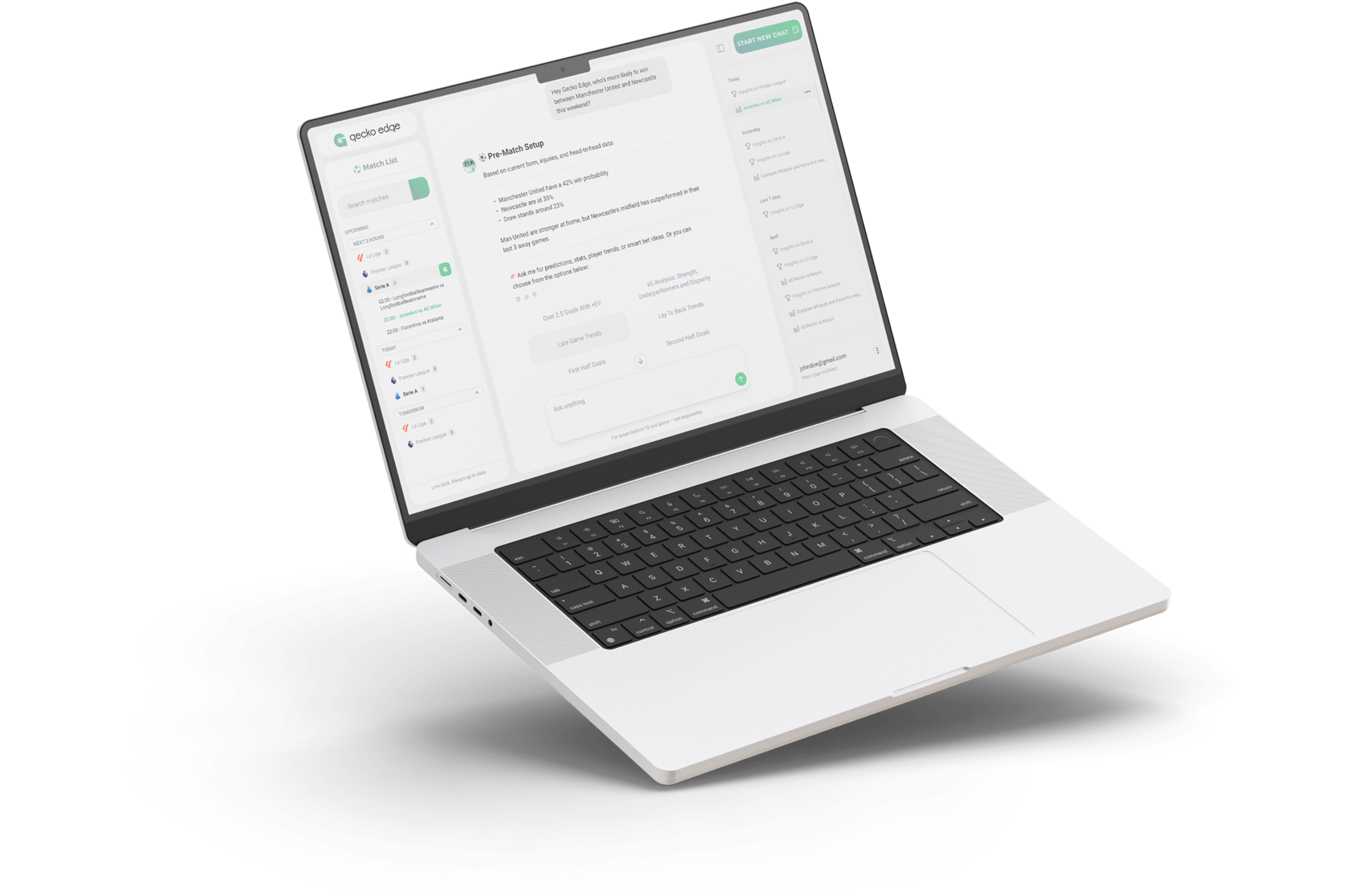
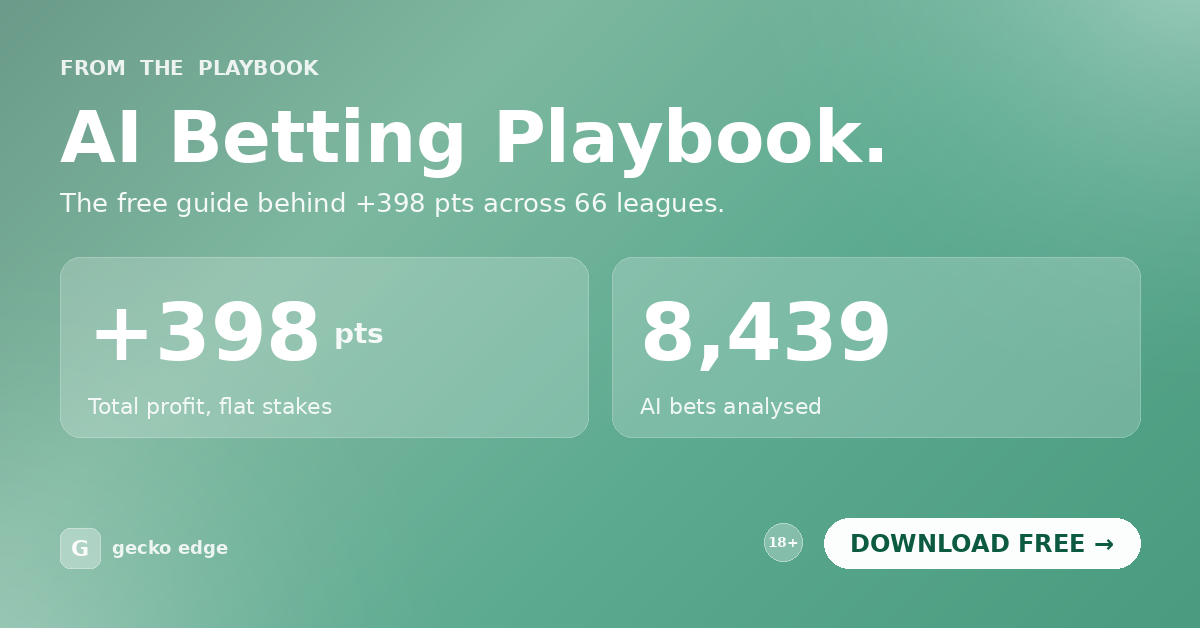
Gecko Edge has tracked 8,439 AI-generated bets and recorded +398pts of profit across 66 competitions. See how the model works →
Welcome to the early goal paradox. It’s one of the most common and most costly traps in football betting. But here’s the thing: it’s also one of the most predictable patterns once you understand what’s actually happening beneath the surface.
What Happens When Someone Scores An Early Goal
An early goal doesn’t just add one to the scoreline. It fundamentally alters the tactical setup of both teams.
The team that scored suddenly has options. They can sit deeper, invite pressure, and look to counter. Or they can push for a second to kill the game. The team that conceded? They’re forced to be more aggressive. They have to chase the game now, which means more space opens up.
This isn’t just theory. The xG landscape shifts immediately. A team that was expected to create 1.2 xG over 90 minutes might now be looking at 1.6 or 1.8: because they’re forced to commit bodies forward. Meanwhile, the team with the lead might see their xG reduce, but their counter-attacking threat increases.

Here’s what most bettors miss: the early goal doesn’t necessarily mean the better team scored. It might have been a deflection. A defensive error. A set piece from nothing. But the market reacts as if it was inevitable.
And that’s where the opportunity lives.
Why Your Pre-Match Analysis Just Got Complicated
Let’s say you backed an away team at 3.50 because your model showed they had the superior xG per shot, better defensive metrics, and were undervalued by 15%. Then the home side scores from a corner in the 5th minute.
Your first instinct might be to cash out. Cut your losses. Move on.
But think about this for a second. Has anything about the underlying quality of these teams actually changed? Not really. What’s changed is the game state. And game state is temporary.
If your pre-match model was solid, and the goal came from a low-probability event: say, a speculative shot that took a wicked deflection: then the value you identified hasn’t disappeared. It’s just been masked by noise.
The trick is knowing the difference between a goal that reflects genuine dominance and a goal that’s statistical variance. One should make you reconsider. The other should make you double down.
The Market Overreaction Window
The betting market is smart, but it’s not perfect. And it’s especially vulnerable in the first 20 minutes after an early goal.
Here’s why. When a goal goes in early, the odds adjust rapidly. Bookies need to protect themselves, so they slash the price on the team that scored and inflate the price on the team that’s trailing. But this adjustment is often mechanical. It’s not always based on deep tactical analysis or updated xG models.
This creates a window: usually about 10 to 15 minutes: where the market overcompensates.
You’ll see this most clearly in the Over/Under markets. An early goal makes punters think the floodgates will open. Over 2.5 goals suddenly looks like a certainty. But statistically? Matches with early goals don’t always end high-scoring. Sometimes the team that’s ahead shuts up shop. Sometimes the chasing team can’t break them down.
Gecko Edge tracks this window in real time. While the market is still reacting emotionally, the AI is recalculating xG trends, possession metrics, and expected goal chains. It identifies when the odds have swung too far and flags opportunities before the market corrects itself.
That’s not luck. That’s precision.
When to Hold and When to Fold
So when should you stick with your original bet, and when should you bail?
Here’s a simple framework.
Hold if:
- The goal came from a set piece or a defensive error (low xG event)
- The underlying stats still favour your pick (possession, shots, xG flow)
- The team that conceded has a track record of responding well when behind
- Your pre-match model was based on long-term data, not just one match
Fold if:
- The goal came from open play and reflected sustained pressure
- The conceding team is visibly rattled or tactically naive
- The opposition has momentum and is creating chances at will
- Your original thesis was marginal (thin value) and the game state has tilted too far
The key word here is “context.” You can’t make this call from a live score widget. You need to see how the teams are actually playing. Are they matching the expected patterns? Is the xG still trending in your favour?
This is where watching the match becomes non-negotiable. Or where real-time data makes all the difference.
How Real-Time Intelligence Changes Everything
Let’s be honest. Most of us can’t watch every match we bet on. And even if we could, we’re not able to calculate updated xG models in our heads while the game unfolds.
That’s the gap Gecko Edge fills.
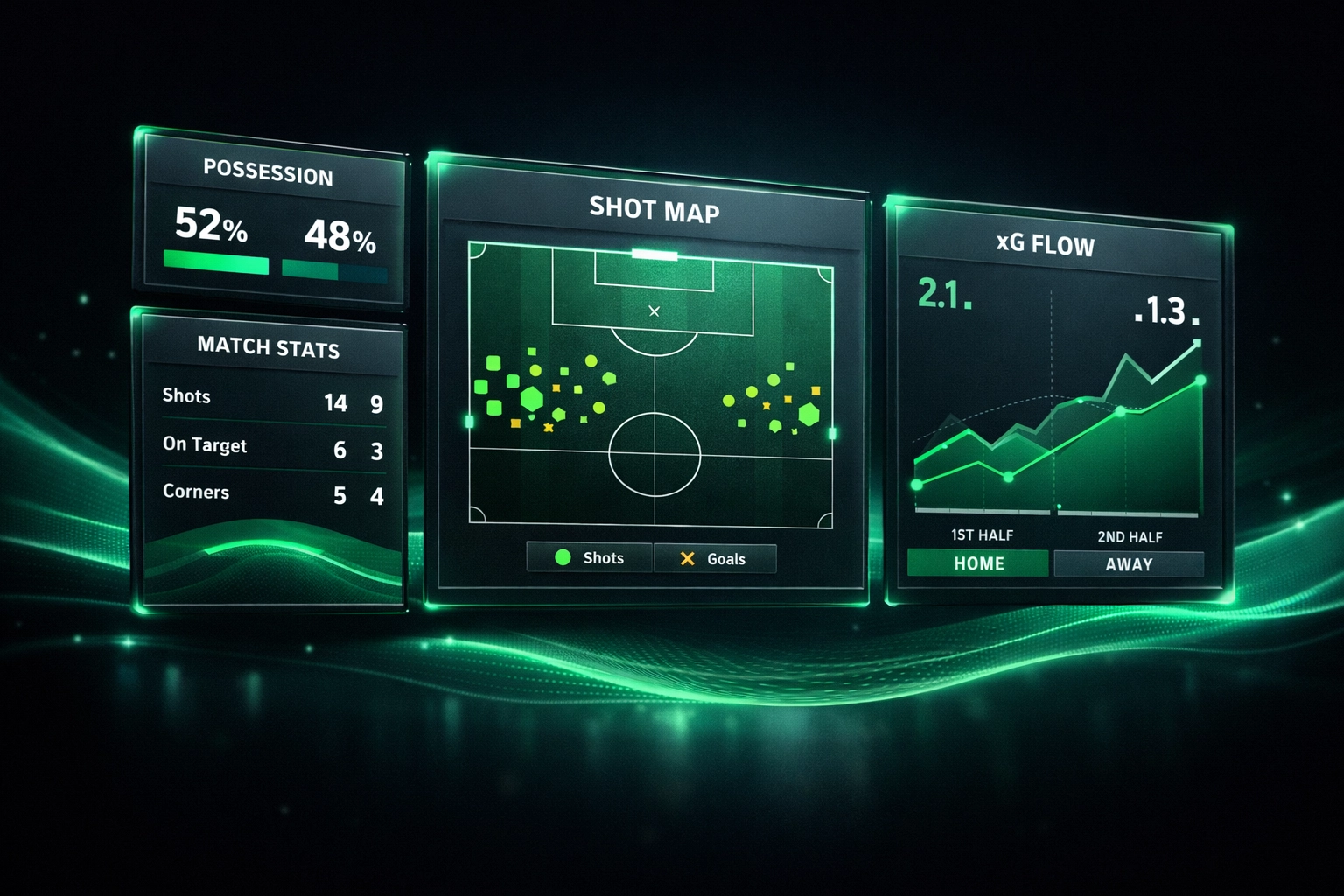
When an early goal lands, the platform doesn’t just update the scoreline. It recalibrates the entire predictive model. It factors in:
- How the goal was scored (open play, set piece, counter)
- Whether it aligns with pre-match xG projections
- How both teams have historically responded to early goals
- Real-time possession, shot quality, and defensive metrics
Then it tells you whether the market has overreacted. Whether your original bet still holds value. Whether a new opportunity has opened up on the other side.
This isn’t guesswork. It’s not “backing your gut.” It’s AI-powered in-play intelligence that adapts as fast as the match does.
And here’s the thing: most bettors don’t pivot. They either panic and cash out too early, or they stubbornly hold a losing position because they can’t let go of their pre-match thesis. Both mistakes are expensive.
Gecko Edge gives you a third option: adapt intelligently. Stay flexible without being reactive. Adjust your strategy based on evidence, not emotion.
The Psychological Trap
There’s another layer to this that nobody talks about. The early goal paradox isn’t just a tactical challenge. It’s a psychological one.
When your bet is losing inside 10 minutes, your brain shifts into defence mode. You start looking for reasons to exit. You focus on everything that confirms your bet is dead and ignore signals that it might still be alive.
Behavioural economists call this “loss aversion.” We feel the pain of losing more intensely than the pleasure of winning. So we make irrational decisions to avoid that pain: even when the rational move is to hold.
The antidote? Remove yourself from the emotional equation. Let the data make the call. That’s not being cold or mechanical. It’s being disciplined.
And discipline, over time, is what separates profitable bettors from everyone else.
The early goal paradox isn’t a problem. It’s a pattern. And once you see the pattern clearly, it becomes an edge.
Don’t abandon your analysis the second the script flips. Don’t double down blindly either. Instead, reassess. Use real-time data. Trust the process you built before the match kicked off.
Because the best bettors don’t just survive the chaos of an early goal. They exploit it.
And with Gecko Edge (learn more here), you’ve got the tools to do exactly that.