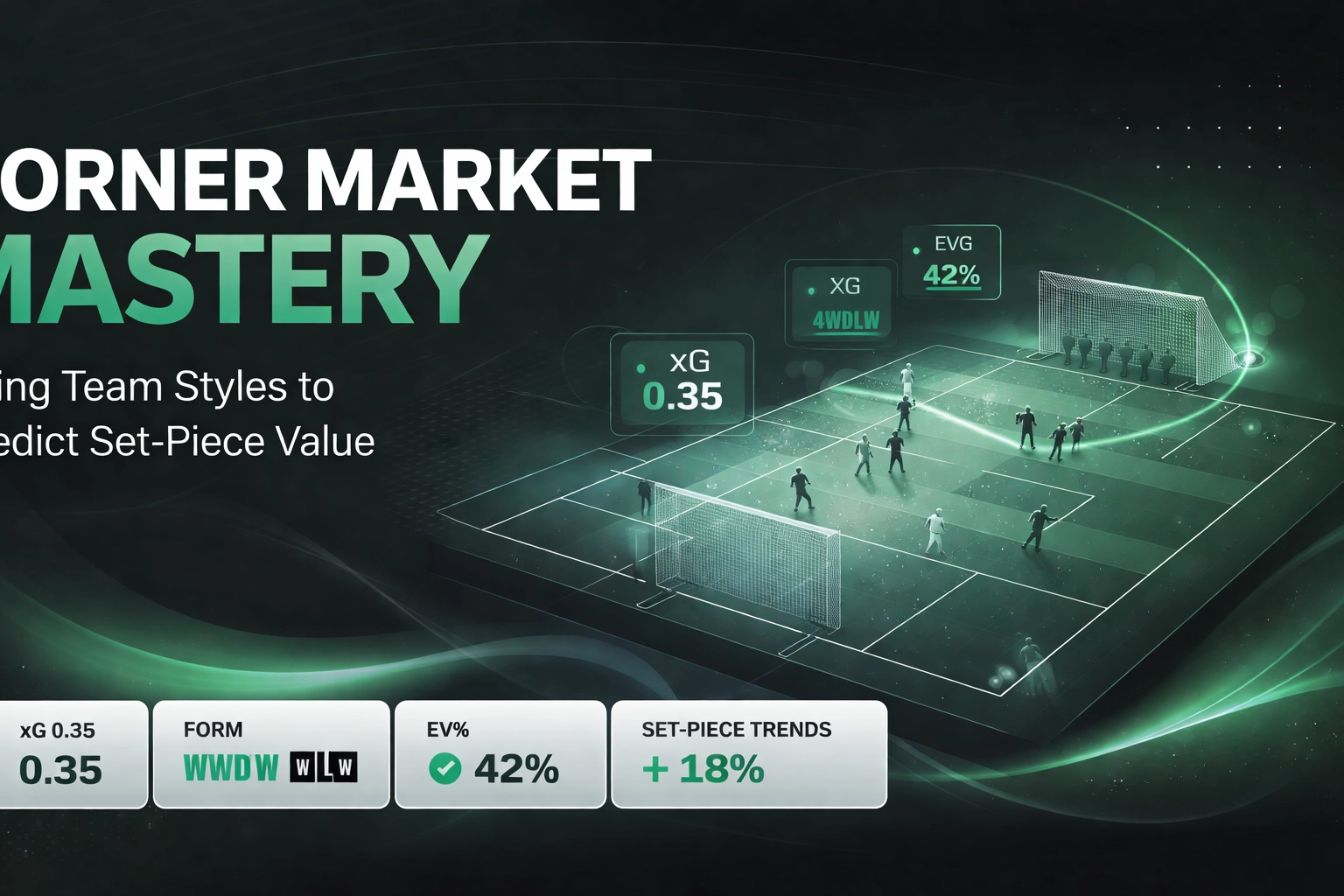
The Corners Market is the most overlooked betting market in football. While everyone obsesses over goals, cards, and match outcomes, the corner market sits quietly in the background: inefficiently priced and full of value.
Here’s the thing: corners aren’t random. They’re a direct product of how teams play. Wing-heavy attacks, high pressing systems, and defensive blocks all feed into corner counts in predictable ways. Once you understand the connection between team styles and set-piece frequency, you stop guessing and start finding edges.
This is where predictive football models earn their keep. And it’s exactly where Gecko Edge does its best work.
Gecko Edge has tracked 8,439 AI-generated bets and recorded +398pts of profit across 66 competitions. See how the model works →
Why Bookmakers Undervalue the Corners Market
Let’s be blunt: bookmakers don’t care about corners as much as they care about match results.
The 1X2 market moves millions. Corners Market? A fraction of that volume. This means less analytical firepower gets directed at corner lines. Odds are often standardised across similar fixtures without deep tactical analysis.
This creates inefficiency. And inefficiency is where sharp bettors make money.
Research shows that favourites win more corners than their opponents in roughly 63.6% of Premier League matches. That’s a strong baseline: but it’s just the starting point. The real value comes from understanding why certain teams generate corners and when those patterns deviate from bookmaker expectations.
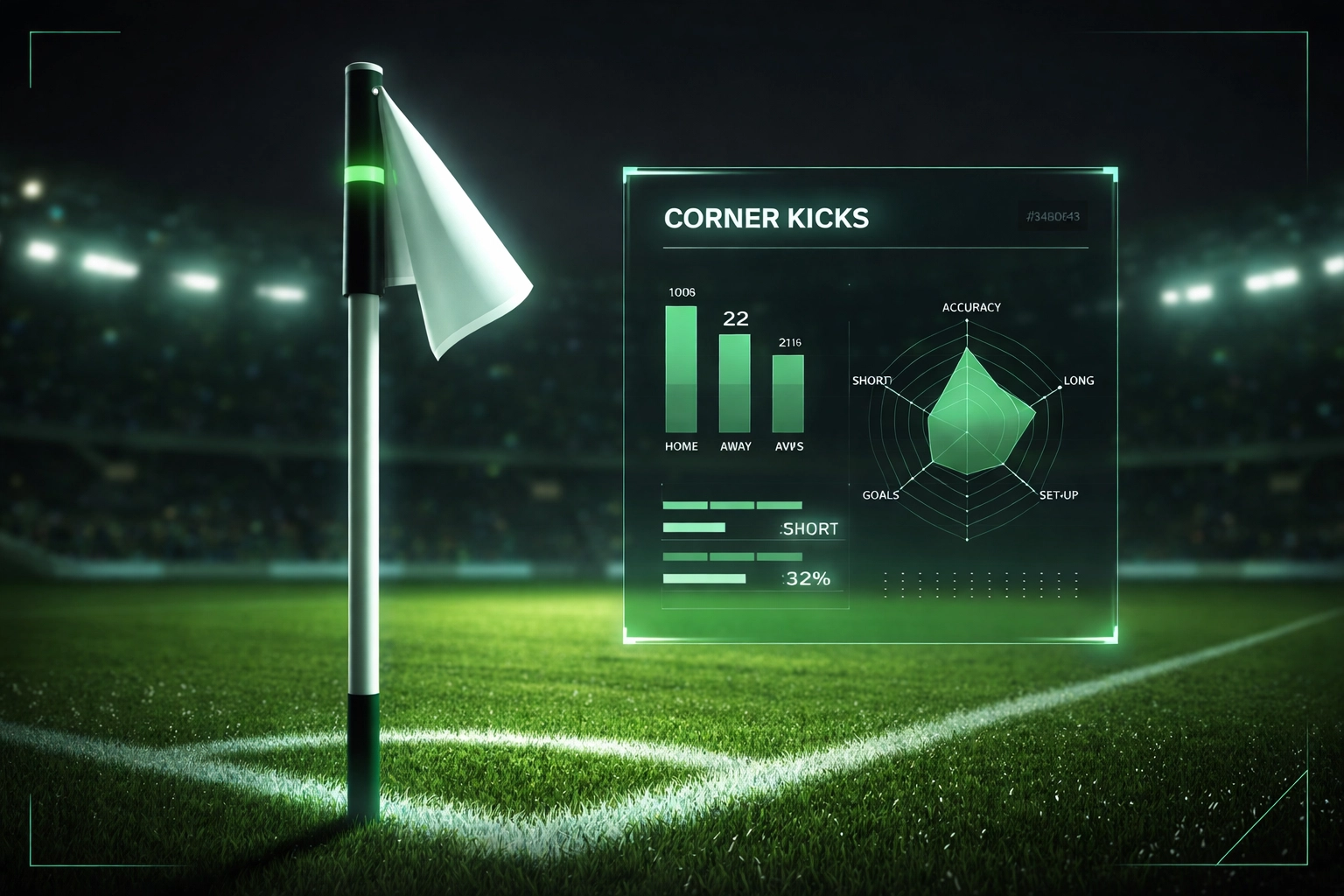
The Team Style Framework
Corners don’t appear from nowhere. They’re the byproduct of tactical choices. Here’s how to break it down.
Width and Wing Play
Teams that stretch the pitch horizontally generate more corners. It’s simple geometry.
When wingers hug the touchline and fullbacks overlap, crosses come in from wide angles. Defenders block them. Goalkeepers tip them over. Corners follow.
Look for teams with:
- High crossing volume
- Overlapping fullbacks as a tactical staple
- Wingers who stay wide rather than drifting inside
These patterns are consistent. A team built around wing play will produce corners week after week, regardless of the opponent.
Possession and Tempo
Here’s a finding that surprises most bettors: possession is a stronger predictor of corner counts than league position.
A mid-table team that dominates the ball will often win more corners than a top-six side that sits deep and counters. Why? Because sustained possession leads to more entries into the final third, more shots, and more defensive blocks.
High-tempo possession football is a corner machine. Slow, patient build-up less so.
Gecko Edge tracks these possession patterns across leagues, identifying which teams consistently create the conditions for high corner counts: even when their league standing might suggest otherwise.
Defensive Shape and Pressing
Defence matters too. Teams that sit deep and invite pressure will concede more corners. They’re absorbing attacks, blocking shots, and deflecting crosses.
Conversely, high-pressing teams create corners for themselves. They win the ball high, launch quick attacks, and force rushed clearances.
The best opportunities often appear when a possession-dominant, high-crossing team faces a low-block defensive side. Both factors push the corner count upward.

Finding Value in Corners Markets
Understanding team styles is one thing. Turning that understanding into profitable bets is another.
Here’s a framework that works.
Step 1: Baseline the Teams
Before any match, establish each team’s corner profile:
- Average corners won per game (home and away)
- Average corners conceded per game
- Possession percentage
- Crosses attempted per 90 minutes
This gives you a baseline expectation. Most data platforms like WhoScored or SofaScore provide these metrics freely.
Step 2: Analyse the Matchup
Context changes everything.
A team that averages 5 corners per game might average 7 against low-block opponents and only 3 against high-pressing sides. Look for matchup-specific patterns rather than relying solely on season averages.
Ask yourself:
- Will this game be open or cagey?
- Which team will dominate territory?
- Are there tactical mismatches that favour one style?
Step 3: Compare to the Line
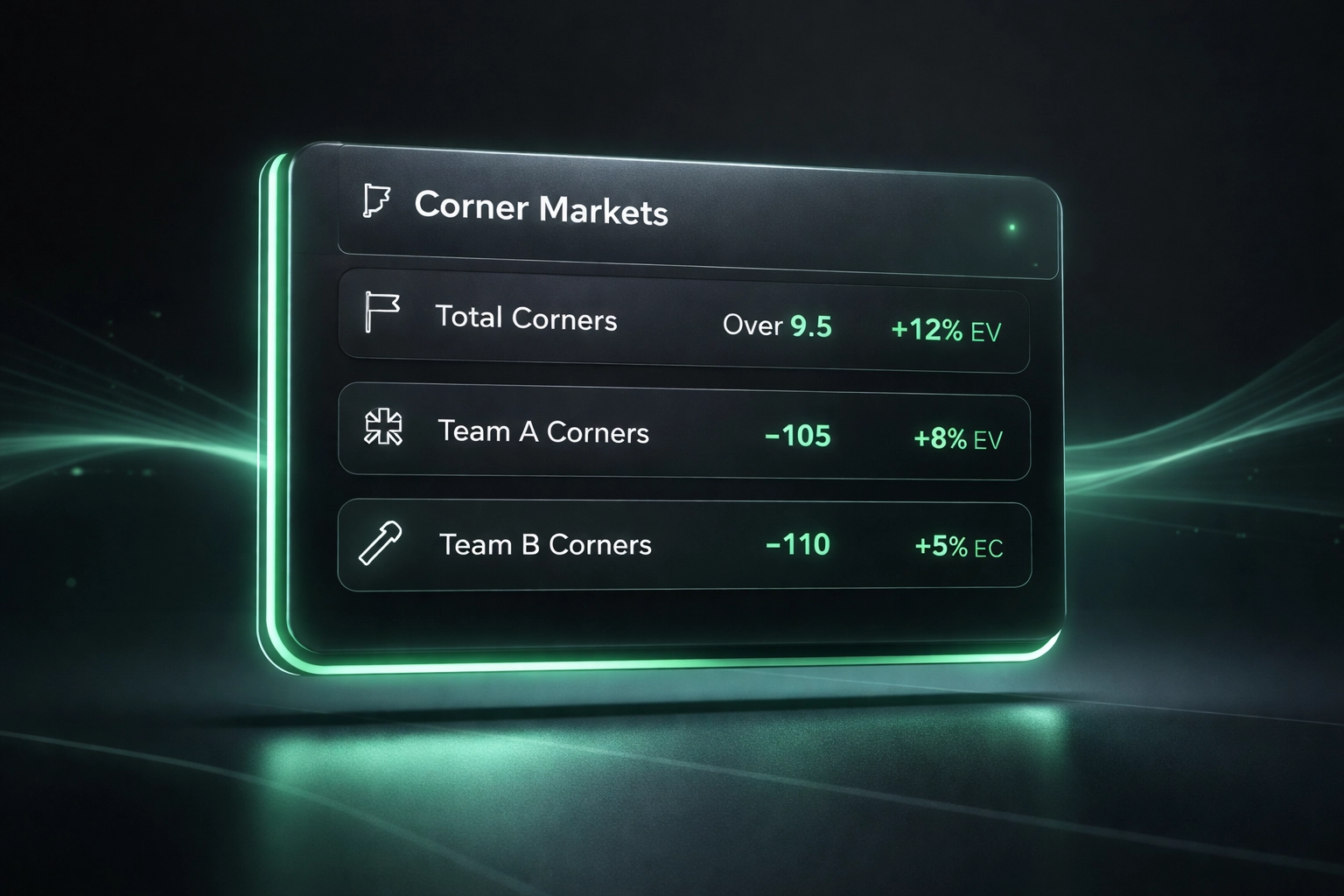
Once you have an expected corner count, compare it to the bookmaker’s line. If you expect 11 total corners and the over/under is set at 9.5, there might be value on the over.
But don’t stop there. Look at the odds. A line of 9.5 at evens is different from 9.5 at 1.70. You need positive expected value, not just a correct prediction.
This is where Gecko Edge becomes essential. Our predictive football models don’t just estimate corner counts: they calculate where the true edge lies based on current market pricing.

Advanced Patterns Worth Tracking
Once you’ve mastered the basics, dig deeper.
Corner Timing
Some teams generate corners early. Others only produce them when chasing a result late in games.
This matters for live betting. If a team typically wins most of their corners after the 60th minute, the pre-match over line might look poor: but the in-play line could offer value once the game settles.
Set-Piece Routines
Teams with varied corner routines: near-post flicks, short plays, back-post overloads: tend to take more corners because they view them as genuine scoring opportunities.
Arsenal is a prime example. Their corner routines are complex and rehearsed. They don’t waste set-pieces. This mentality often correlates with higher corner volumes because the team actively seeks them out.
Referee and League Tendencies
Referees influence corner counts indirectly. Strict officials who call more fouls near the box create more attacking free-kicks and corners.
Leagues also vary. Some competitions average 10+ corners per game. Others hover around 8. Make sure your model accounts for these baseline differences.
How Gecko Edge Identifies Corners Market Value
Manual analysis works. But it’s slow, inconsistent, and hard to scale.
Gecko Edge automates this entire process. Our AI scans team styles, possession data, crossing frequency, and defensive shapes across dozens of leagues. It identifies the patterns that correlate with corner production and flags matches where bookmaker lines look soft.
The result? You get betting corners market trends delivered before the odds shift. No spreadsheets. No guesswork. Just clean, data-driven football betting tips built on evidence.
If you’re serious about corner markets, you need a system that thinks faster than you can. That’s what we built Gecko Edge to do.
The Bottom Line
Corners aren’t random. They’re predictable: if you know where to look.
Team styles tell you everything. Width generates corners. Possession dominance generates corners. Low-block defences concede corners. High-pressing systems create corners for themselves.
Layer these insights on top of bookmaker inefficiency, and you’ve got a market that rewards disciplined analysis.
The question isn’t whether corner value exists. It’s whether you’re equipped to find it consistently.
Start by understanding team styles. Then let the data do the heavy lifting.
Smarter betting starts here. Gecko Edge can show you how.

2 comments