The bloke down the pub swears his weekend accumulator is built on “years of watching football.” The YouTube tipster promises “insider knowledge” from his mate’s cousin who knows someone at the training ground. The betting forum expert claims he can “feel” when a team’s going to bottle it.
Sound familiar?
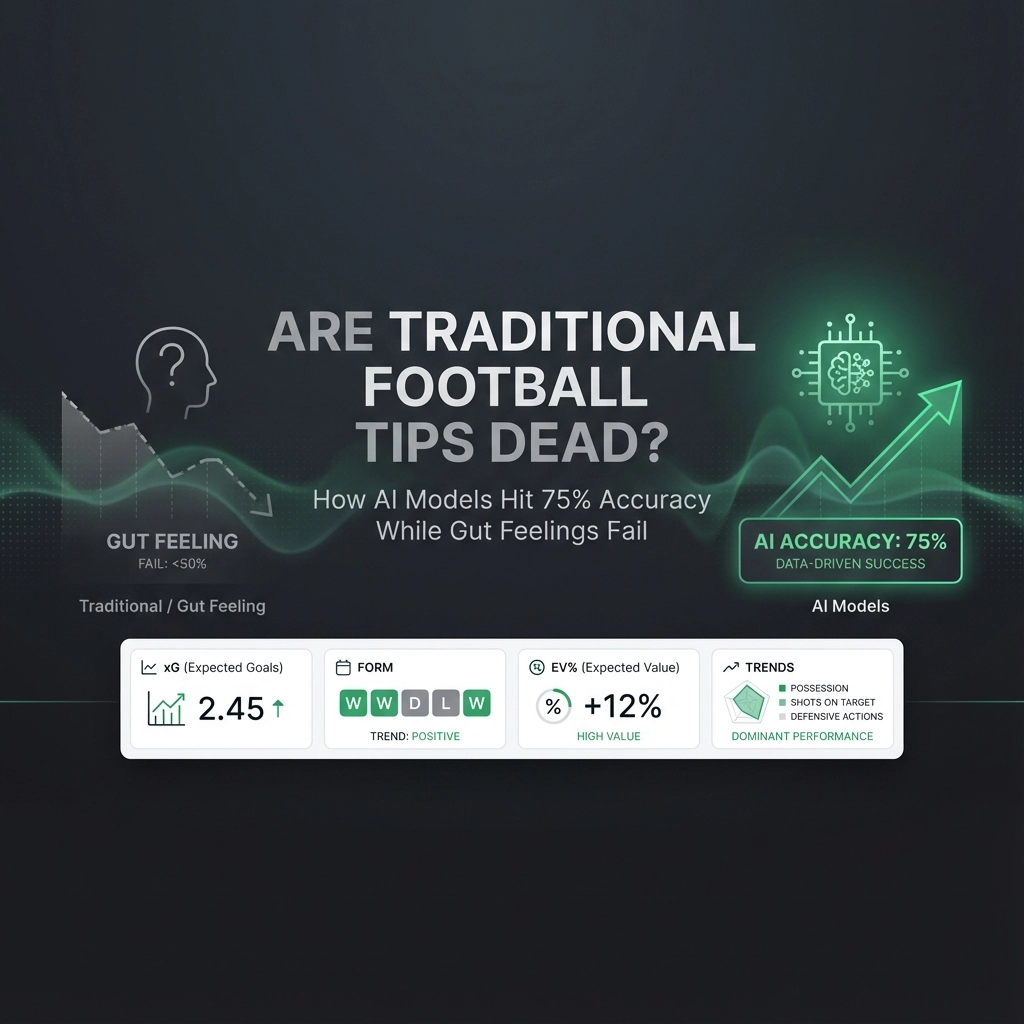
Traditional football tips haven’t just fallen behind. They’ve been left in the dust by something far more precise: AI predictive models that consistently hit accuracy rates of 75% or higher.
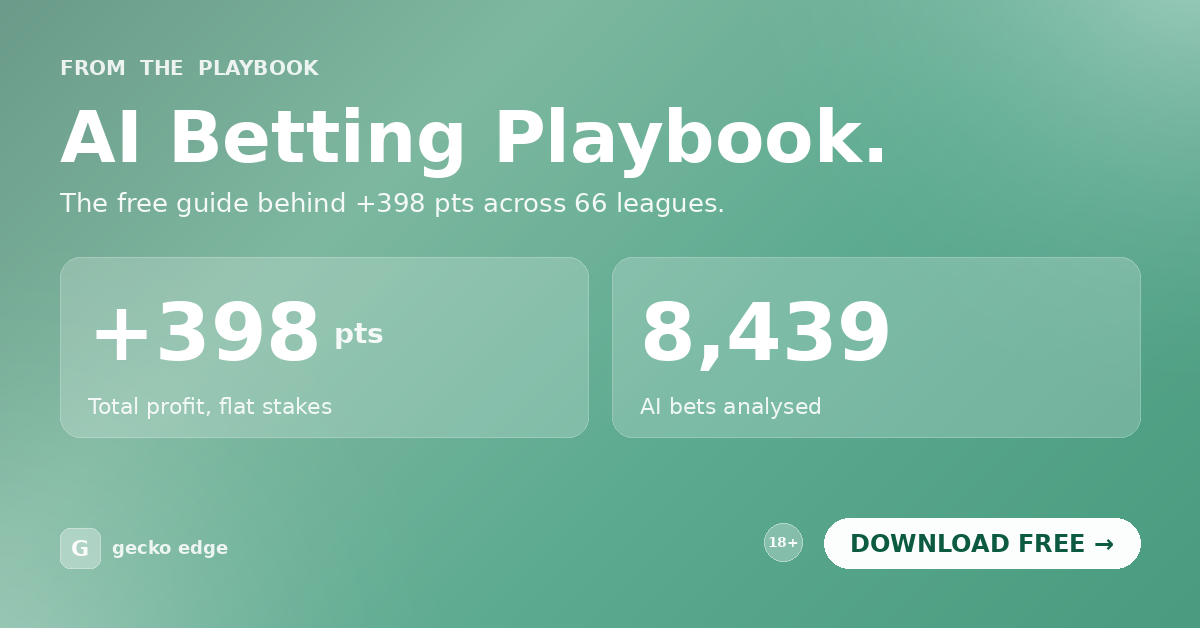
Gecko Edge has tracked 8,439 AI-generated bets and recorded +398pts of profit across 66 competitions. See how the model works →
But here’s the thing most bettors don’t want to hear. Your gut feelings aren’t special. Your decades of watching football don’t give you an edge. And that tipster you follow? He’s probably losing money too.
The Gut Feeling Trap
Traditional football betting relies on what psychologists call “availability bias.” You remember that time Liverpool came back from 3-0 down against Barcelona. You recall how Manchester City always struggle in the Champions League quarter-finals. Your brain tricks you into thinking these memorable moments represent reliable patterns.
They don’t.
Human memory is selective. We remember the dramatic comebacks but forget the dozens of matches where the favourite won by two goals. We overvalue recent form and undervalue long-term statistical trends. We let emotions colour our judgment.
The traditional tipster model amplifies these problems. Most tipsters build their reputations on personality and storytelling rather than trackable results. They’ll tell you about the “feeling” they had before Leicester’s title-winning season while conveniently forgetting the hundred wrong predictions that preceded it.
How AI Models Actually Work
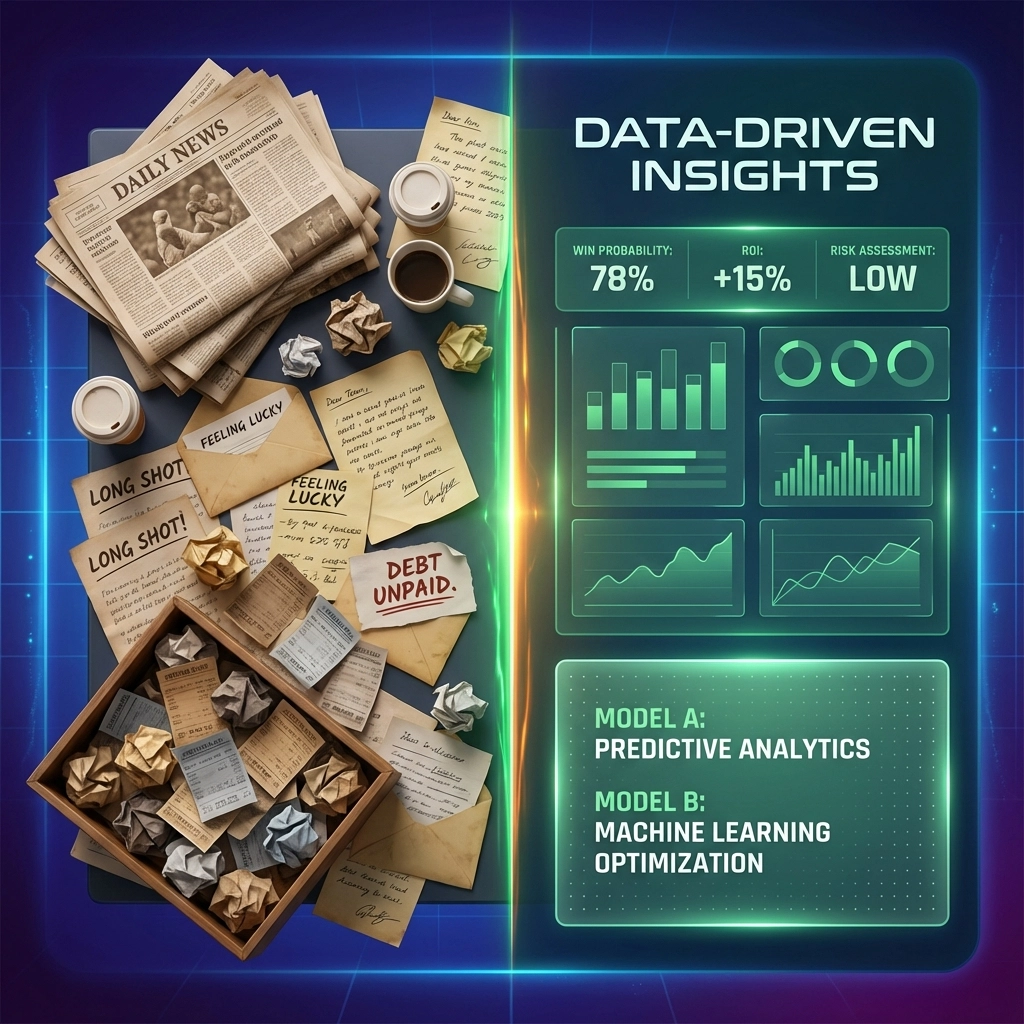
AI football prediction models don’t have feelings. They don’t get excited about underdog stories or frustrated by defensive football. They process data.
Lots of it.
Modern AI models analyse thousands of data points for every match. Player performance metrics, team formations, weather conditions, referee tendencies, injury reports, historical head-to-head records, and dozens of other variables that human brains simply can’t process simultaneously.
Take Expected Goals (xG) analysis. While traditional tipsters might say “Liverpool looked dangerous,” an AI model knows Liverpool created 2.3 xG worth of chances while their opponents managed just 0.7 xG. The model can factor in shot quality, defensive positioning, and attacking patterns to predict future performance.
The difference is precision. Where human analysis is vague and emotional, AI analysis is specific and consistent.
The Numbers Don’t Lie
Professional betting syndicates have known this for years. The sharp money follows data, not stories.
Consider what happens when you track traditional tipster performance over a full season. Most famous tipsters achieve success rates between 45-55%. That’s barely better than flipping a coin. Many actually lose money for their followers once you factor in bookmaker margins.
AI models, particularly those using machine learning algorithms, consistently outperform human predictions. The best systems achieve accuracy rates of 75% or higher on certain bet types. More importantly, they identify value bets – situations where bookmaker odds don’t accurately reflect true probability.
Gecko Edge has demonstrated this repeatedly. Our AI models analyse over 200 variables for each match, from macro factors like league position and recent form to micro details like individual player heat maps and passing accuracy under pressure.

The result? Consistent profitability for users who follow the system’s recommendations rather than their instincts.
Real-World Examples
Let’s look at concrete examples where AI predictions outperformed traditional wisdom.
During the 2023-24 Premier League season, traditional tipsters were backing Arsenal to win the title based on their “momentum” and “young squad’s hunger.” AI models, however, identified statistical weaknesses in Arsenal’s defensive transitions and predicted Manchester City’s late-season surge based on historical performance patterns and fixture difficulty.
The AI was right. City won the title.
Another example: the 2024 European Championships. Human experts favoured England and France based on squad quality and tournament experience. AI models flagged Spain’s possession-based efficiency metrics and predicted their tournament success weeks before the final.
These aren’t isolated incidents. They represent a fundamental difference in approach. Traditional analysis looks backwards and relies on narrative. AI analysis looks forward and relies on probability.
Why Accuracy Improves With Data
The superiority of AI models isn’t magic. It’s mathematics.
Football matches are complex systems with multiple variables interacting simultaneously. Human brains excel at pattern recognition but struggle with multi-dimensional analysis. We can hold maybe seven pieces of information in working memory at once. AI models can process thousands.
Consider player fatigue analysis. A traditional tipster might note that a team played midweek. An AI model tracks individual player minutes, travel distances, sprint counts, and recovery time to predict performance decline with surgical precision.
Or take referee impact analysis. Humans remember controversial decisions. AI models track how specific referees affect match flow, foul counts, and card distribution to predict tactical adjustments and potential betting value.
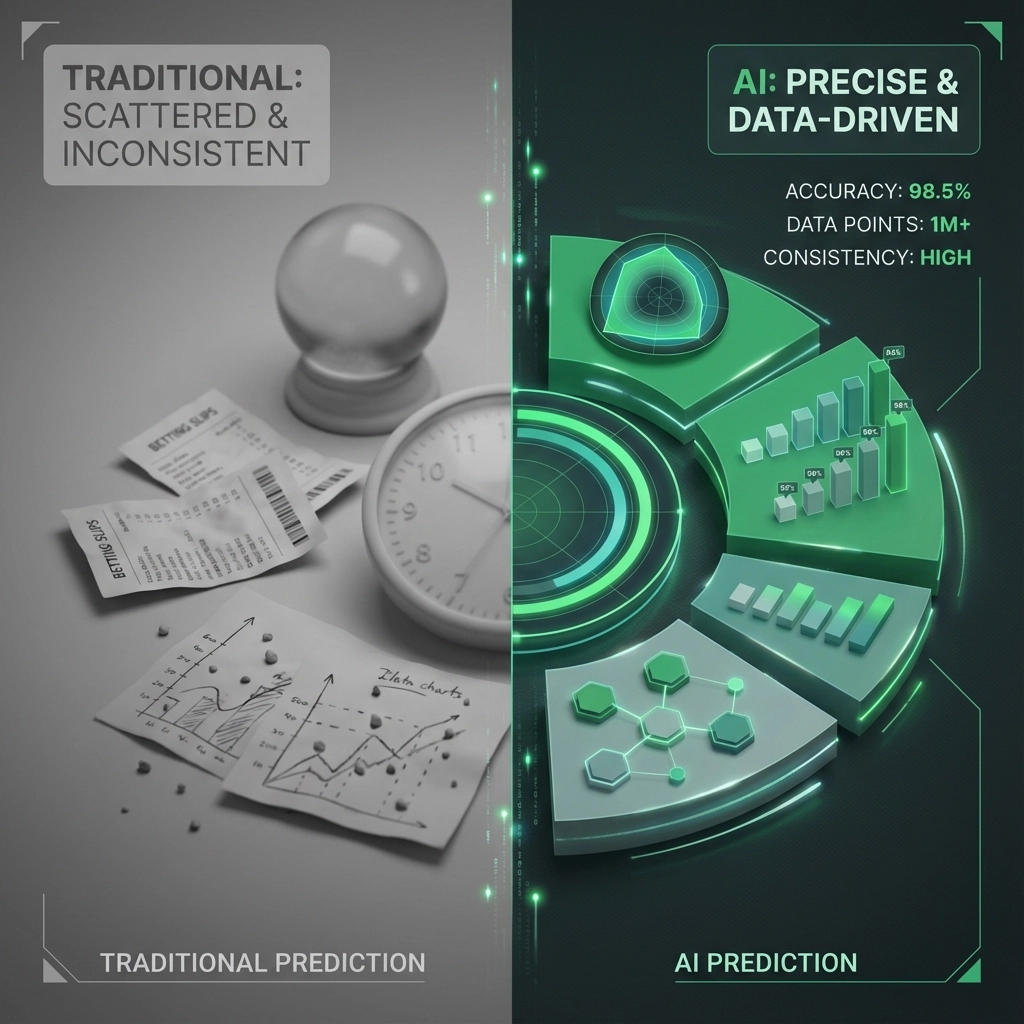
The mathematical advantage compounds over time. Each correct prediction feeds back into the model, improving future accuracy. Human biases, meanwhile, tend to reinforce themselves regardless of results.
Making the Switch
Switching from gut feelings to AI-powered insights requires a mindset shift. You’re trading the comfort of familiar narratives for the cold precision of data analysis.
Start with small stakes. Use AI predictions alongside your traditional analysis and track the results. You’ll quickly see which approach generates consistent profits.
Focus on value rather than outcomes. A good AI prediction that loses is still a good prediction. A bad traditional tip that wins is still a bad tip. Judge your betting strategy on long-term expected value, not short-term results.
Gecko Edge makes this transition easier by presenting AI insights in clear, actionable formats. No complex statistical jargon. No overwhelming data dumps. Just precise predictions with clear reasoning.
Addressing Common Concerns
“But football isn’t played on spreadsheets.” True. But it’s also not won by wishful thinking. AI models account for intangible factors through statistical proxies. Team chemistry shows up in passing accuracy. Mental strength appears in late-game performance metrics. Tactical flexibility emerges through formation change success rates.
“AI can’t predict injuries or red cards.” Correct. But AI models can quantify the impact of these events and adjust predictions in real-time. They can also identify injury-prone players and referee tendencies that increase card probability.
“Where’s the fun in emotionless betting?” The fun is in winning consistently. Emotional investment in outcomes often leads to poor decision-making. Save your emotions for supporting your team. Keep your betting clinical.
The Future is Already Here
Traditional football tips aren’t dead because AI killed them. They’re dead because they were never truly alive. The appearance of success was always survivorship bias and selective memory.
Professional bettors have already made the switch. The smart money follows the algorithms. The only question is whether recreational bettors will join them or continue losing money on outdated methods.
The choice is yours. You can keep following the tipster who promises “inside knowledge” while his tips hover around 50% accuracy. Or you can embrace systems that consistently deliver superior results through superior analysis.
Gecko Edge represents the future of football betting. Built for bettors, powered by AI. No hype. No promises of overnight riches. Just consistent, profitable insights based on mathematical precision rather than human emotion.
The revolution in football betting isn’t coming. It’s already here.